Forward Head Posture ("Nerd Neck"): Causes, Tests, and How to Fix It
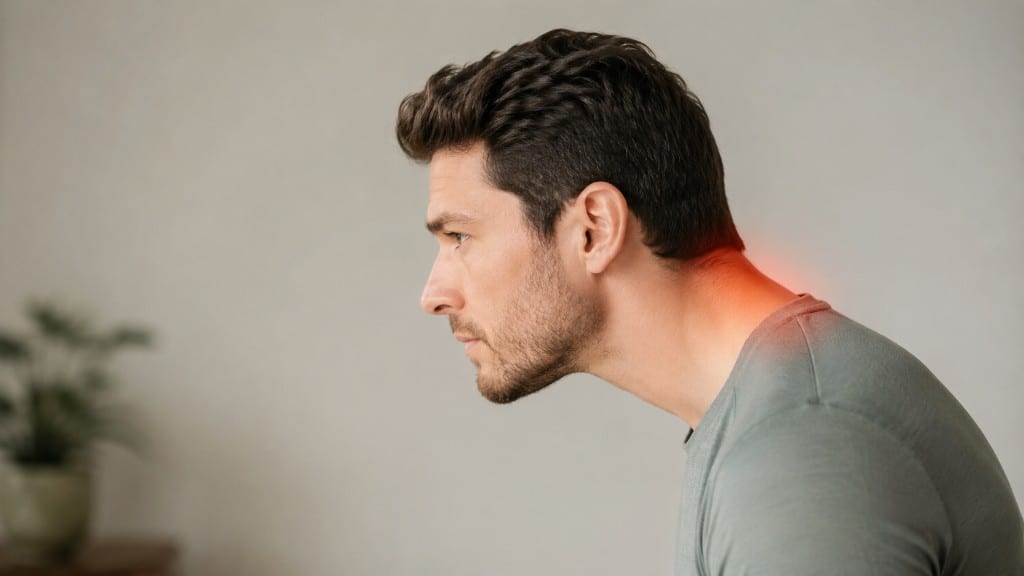
Forward head posture — often called "nerd neck" — is what happens when your head sits in front of your shoulders instead of stacked over them. Every degree the head drifts forward increases the load on the cervical spine and the muscles trying to hold it up. If you want to know how to fix forward head posture or how to fix neck posture after years at a screen, the approach is consistent: identify the drift, lengthen the tight tissues, strengthen the weak ones, and change the habits that reinforce the pattern.
What forward head posture looks like
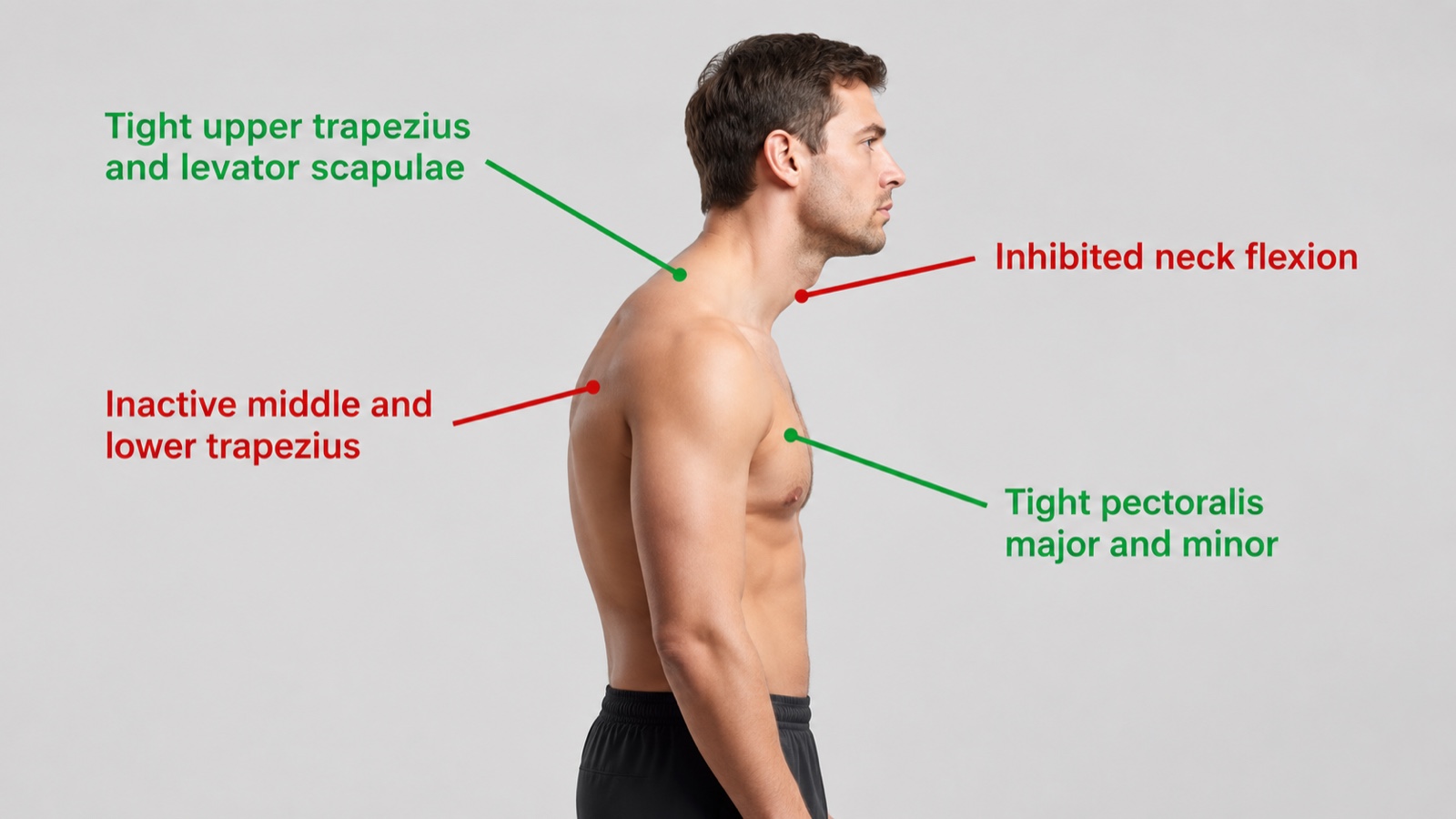
From the side, the opening of the ear should sit roughly over the shoulder. In forward head posture, the chin juts forward and the back of the neck looks shortened while the front looks lengthened. It often pairs with rounded shoulders as part of upper-crossed syndrome — the tight chest and upper-neck / weak front-neck and mid-back pattern described by Janda.
Our dedicated forward head posture condition page breaks down measurements and related deviations like head tilt and cervical tilt.
Why the head-forward position loads your neck
The head weighs about ten to twelve pounds. When it sits over the shoulders, the cervical spine and deep neck muscles share that load efficiently. As the head moves forward, leverage increases — the effective load on neck structures can rise sharply. That is why nerd neck often shows up as neck stiffness, upper-trap tension, or headaches after long desk sessions, even without a single injury event.
Causes of forward head posture
Modern habits are the usual driver:
- Screens below eye level — laptops on a desk, phones in your lap.
- Prolonged sitting with a rounded upper back, which pushes the head forward to keep the eyes level.
- Muscle imbalance — tight posterior neck and chest, weak deep neck flexors and mid-back stabilizers.
Phone-heavy use overlaps with text neck and neck posture — same pattern, same fix. Occasional looking down is fine; hours daily train the drift.
How to test for forward head posture
Wall test. Stand with heels, hips, and upper back against a wall. If the back of your head cannot lightly touch the wall without forcing your chin down, your head likely sits forward.
Side photo. Have someone photograph you from the side while standing relaxed, or use our posture scan for measured forward-head ratio and progress tracking.
Symptom check. Tension at the base of the skull, a habitual desire to "crack" your neck, or shoulders that creep up toward your ears during work often accompany the visible drift.
Tight muscles in forward head posture
The posterior neck and chest usually tighten first:
| Muscle | Role in the pattern | Learn more |
|---|---|---|
| Upper trapezius | Elevates and extends the neck; overworks when the head sits forward | upper trapezius |
| Levator scapulae | Pulls the shoulder blade up and contributes to neck extension | levator scapulae |
| Suboccipitals | Small muscles at the skull base; often hold chronic tension | suboccipitals |
| Sternocleidomastoid | Rotates and flexes the neck; can tighten with prolonged forward gaze | sternocleidomastoid |
Release and lengthen these before you expect strength work to stick.
Weak muscles to train
The deep neck flexors — longus colli and longus capitis — often inhibit when the larger surface neck muscles take over. Retraining them is central to how to fix neck posture long term. Mid-back muscles (rhomboids, lower trapezius, serratus anterior) help hold the shoulder girdle back so the head has a stable base.
The forward head posture fix routine
Run this sequence most days; add strength work three times per week.
1. Release and mobilize
- Gentle suboccipital release — use light pressure at the base of the skull, then a slow nod; stop if it provokes headache or dizziness.
- Upper trapezius stretch — side-bend away from the tight shoulder without forcing the neck.
- Levator scapulae stretch — add a small diagonal nod to ease the back and side of the neck.
2. Retrain head position
- Supine chin tuck — combine a small nod with a gentle backward glide; the supported hold builds deep front-neck endurance without forcing the chin down.
3. Support from the mid-back
Add floor angels or thoracic extension from the neck region hub so the head has a platform to sit on.
 Free programUpper Body Posture ResetLoosen a tight neck and chest, free a stiff upper back, and build the shoulder-blade control to sit and stand tall.See the plan →
Daily habits that prevent relapse
- Raise your monitor so the top third of the screen is at eye level.
- Hold your phone at chest height instead of dropping your gaze.
- Take a two-minute posture break every 30–45 minutes — stand, chin tuck, roll shoulders back.
- Check pillow height when side sleeping; too high or too low nudges the head forward overnight.
Most people see visible change in four to eight weeks with daily mobility and consistent ergonomics. For the full corrective framework, read How to Fix Your Posture.
Sources
This article draws on established clinical references:
- Muscles: Testing and Function, with Posture and Pain (5th ed.) — Kendall, McCreary, Provance, Rodgers & Romani
- Assessment and Treatment of Muscle Imbalance: The Janda Approach — Page, Frank & Lardner
- Postural Correction — Jane Johnson
Wellness, not medical advice. This article is educational. If you have pain, numbness, or a medical concern, see a qualified clinician.