Suboccipitals
Exercises that target the suboccipitals, grouped by whether they stretch or strengthen it.
The suboccipitals are four small paired muscles at the very base of the skull that connect the head to the top two vertebrae (the atlas and axis). Their main job is not big movement but fine control — making the tiny adjustments that keep your eyes level and your head balanced. They are unusually dense with muscle spindles, the sensors that tell your brain where your head is in space, so they play an outsized role in head-position awareness and balance.
With forward head posture and long hours at a screen, these muscles work overtime to tip the head back and keep the eyes horizontal as the skull drifts in front of the shoulders. Over time they tend to become short, stiff, and tender, and research links this suboccipital tension to headaches that start at the base of the skull (cervicogenic headaches).
They respond best to reducing the forward-head load rather than aggressive stretching — gentle chin-tucks and deep-neck-flexor training take the strain off, alongside light upper-neck mobility. See the forward head posture guides and chin-tuck drills for the corrective side of the work.
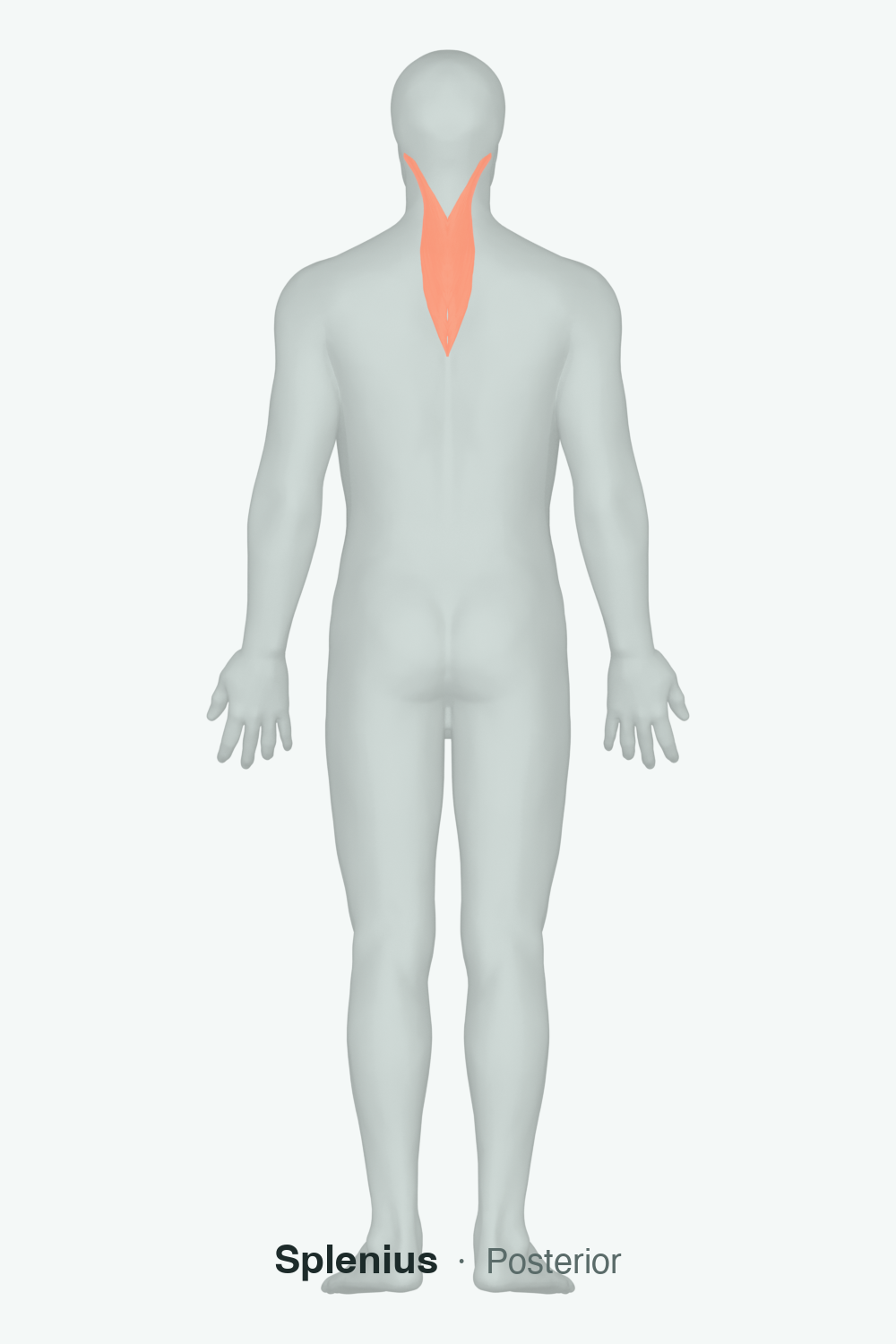
Stretch the suboccipitals
Frequently asked questions
Where are the suboccipital muscles?
They are four small paired muscles located deep at the base of the skull, connecting the occiput with the top two cervical vertebrae. They help control fine upper-neck and head movements.
Can tight suboccipitals cause headaches?
Tension around the upper neck can occur with some headaches, but headache causes vary and muscle tenderness does not establish the diagnosis. New, severe, unusual, or persistent headaches need appropriate medical assessment.
How should I release the suboccipitals safely?
Use light, comfortable pressure or supported relaxation rather than digging forcefully into the upper neck. Stop if the technique causes dizziness, nausea, visual changes, worsening headache, numbness, or tingling.