Forward Head Posture
Also known as: forward head, anterior head carriage, “tech neck”.
What it is
Forward head posture is when the ear is carried anterior to the shoulder line, so the head is held in front of the torso rather than balanced over it. Each inch of forward translation multiplies the load the neck extensors must hold, which is why it so often tracks with neck tension and a rounded upper back.
How to spot it
From a side-on photo, the ear (tragus) lines up clearly forward of the point of the shoulder. Our scan measures this as the horizontal offset of the ear from the shoulder, scaled to torso height.
Muscles involved
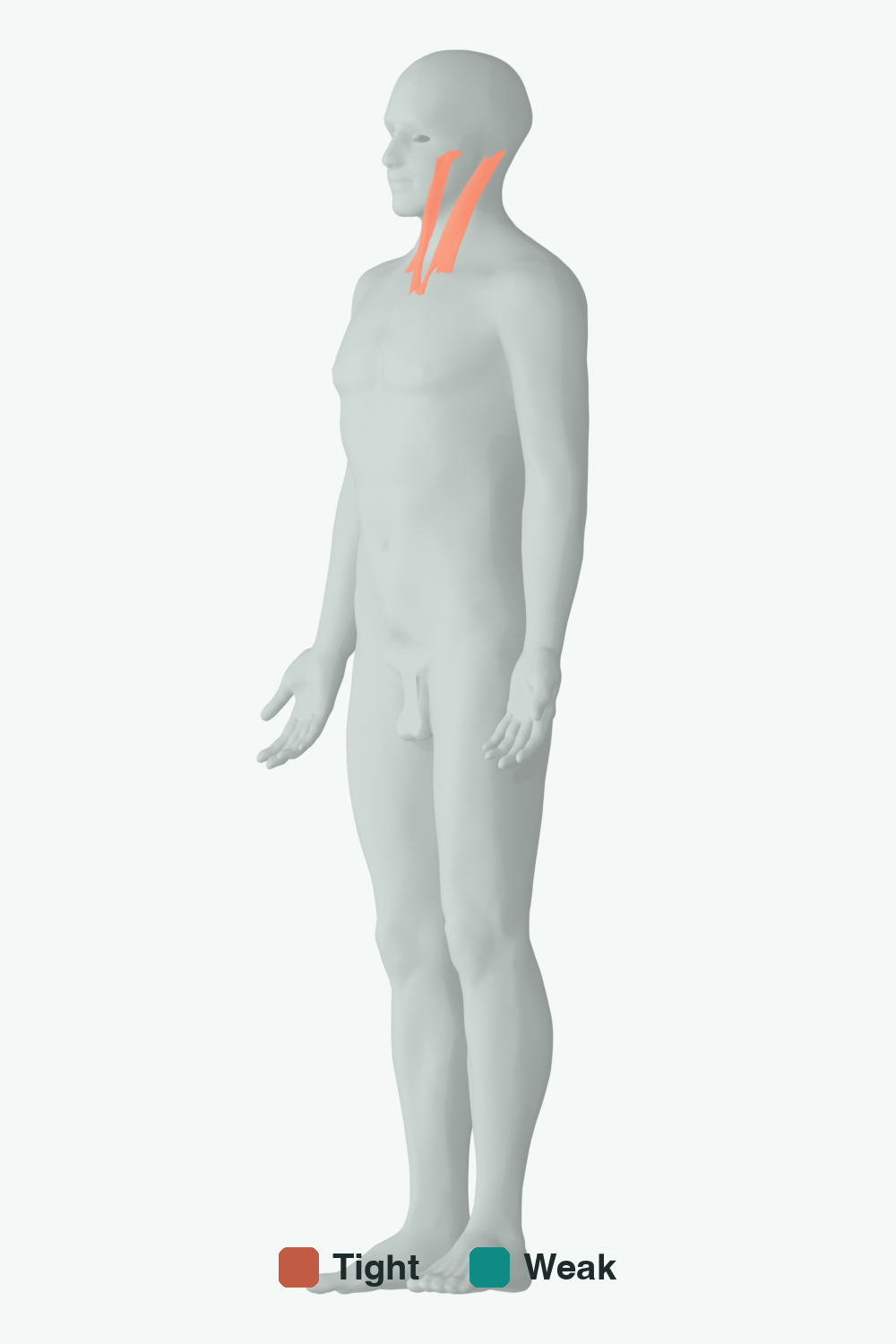
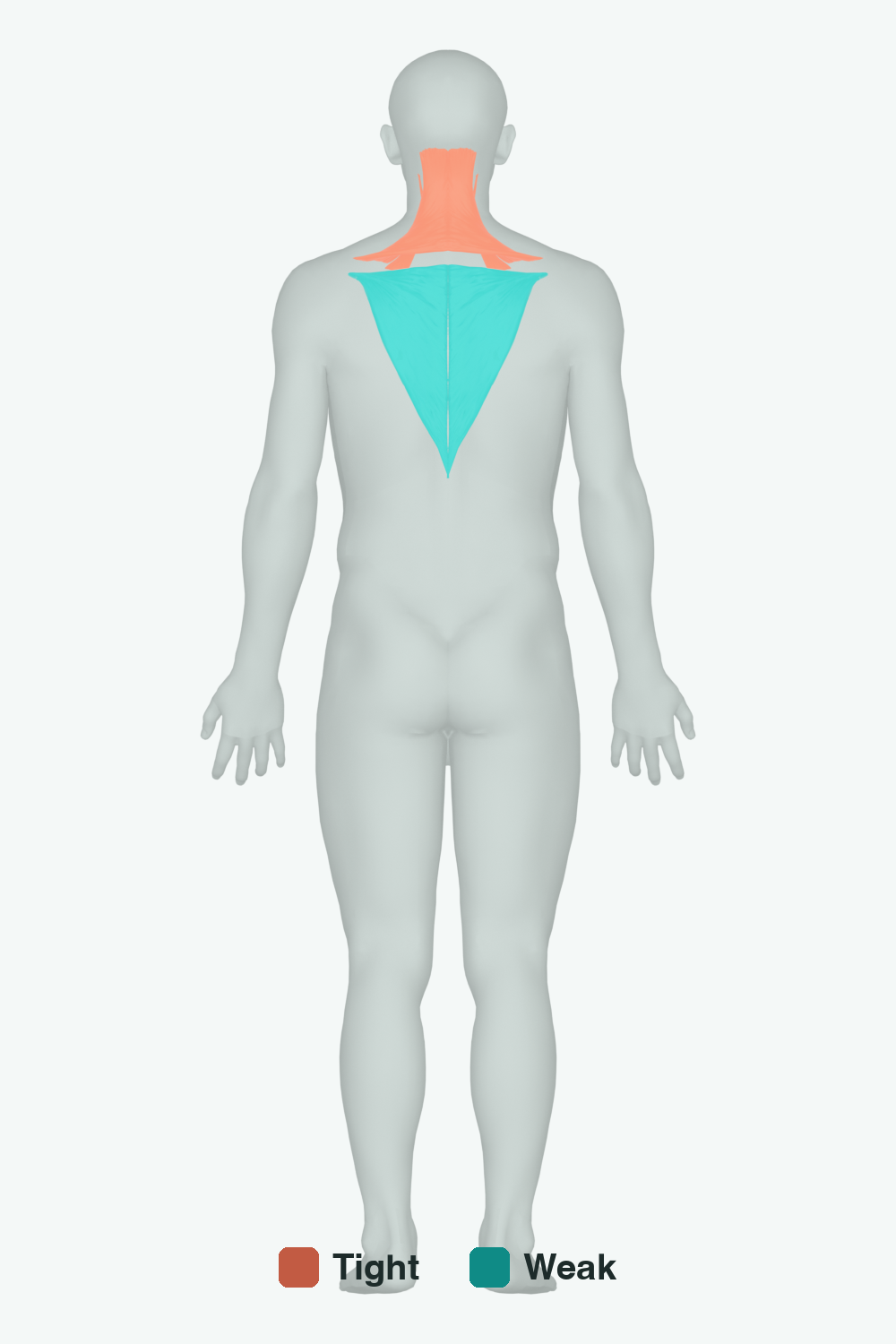
Coral = typically tight, teal = typically weak. Anatomical illustration from Z-Anatomy (derived from BodyParts3D), licensed under CC BY-SA 4.0.
Typically tight: suboccipitals, upper trapezius, levator scapulae, sternocleidomastoid
Typically weak: deep cervical flexors, lower trapezius
How to correct it
- Mobilize the suboccipitals and thoracic spine into extension.
- Activate the deep neck flexors with chin tucks (nod, don’t jut).
- Strengthen the lower trapezius to support the shoulder girdle.
- Address a rounded/kyphotic upper back at the same time — they reinforce each other.
Recommended exercises
Related muscles
Frequently asked questions
Is forward head posture the same as text neck?
Text neck is an informal label often used for neck discomfort or a forward-bent position during device use. Forward head posture describes the head resting in front of the shoulders. They can overlap, but neither term identifies the cause of pain.
Can chin tucks fix forward head posture?
Chin tucks can help practice a controlled head position and train low-load neck-flexor endurance, but they are not a complete or guaranteed fix. Upper-back mobility, screen setup, movement breaks, comfort, and overall strength may also matter.
Should my ears always line up perfectly over my shoulders?
No single photograph defines a perfect posture, and normal alignment varies. Use the ear-to-shoulder relationship as a repeatable screening reference, not a pass-or-fail rule. Comfortable movement and function matter more than holding one rigid pose.
When should forward head posture be assessed by a clinician?
Seek assessment when neck symptoms persist or worsen, follow an injury, or occur with severe headache, dizziness, balance changes, arm pain, numbness, tingling, or weakness.
Educational wellness content — not a diagnosis. See a clinician for pain or concerns. Run a posture scan to check your own alignment.