Head Tilt
Also known as: lateral head tilt, cervical side-bend.
What it is
A head tilt is lateral flexion of the neck: the head leans toward one shoulder while the face may still point forward. Small differences are common and can change with camera angle, shoulder position, visual focus, or a momentary pose. A repeatable tilt may be associated with habit or unequal comfort and mobility between the sides of the neck, but a photograph cannot establish the cause or show whether a particular muscle is short or weak. The scan therefore reports an observed alignment pattern, not a diagnosis. A new or fixed tilt, especially with pain, restricted movement, dizziness, balance changes, or symptoms into an arm, should be evaluated by a qualified clinician.
How to spot it
From a straight-on photo, the line through the eyes or ears slopes toward one shoulder. The scan estimates the angle after accounting for camera roll. Before interpreting it, confirm that the camera and shoulder line are reasonably level and that the person is looking straight ahead. Repeat the image after gently moving the neck and relaxing. A consistent tilt across attempts is more useful than one posed photograph.
Muscles involved
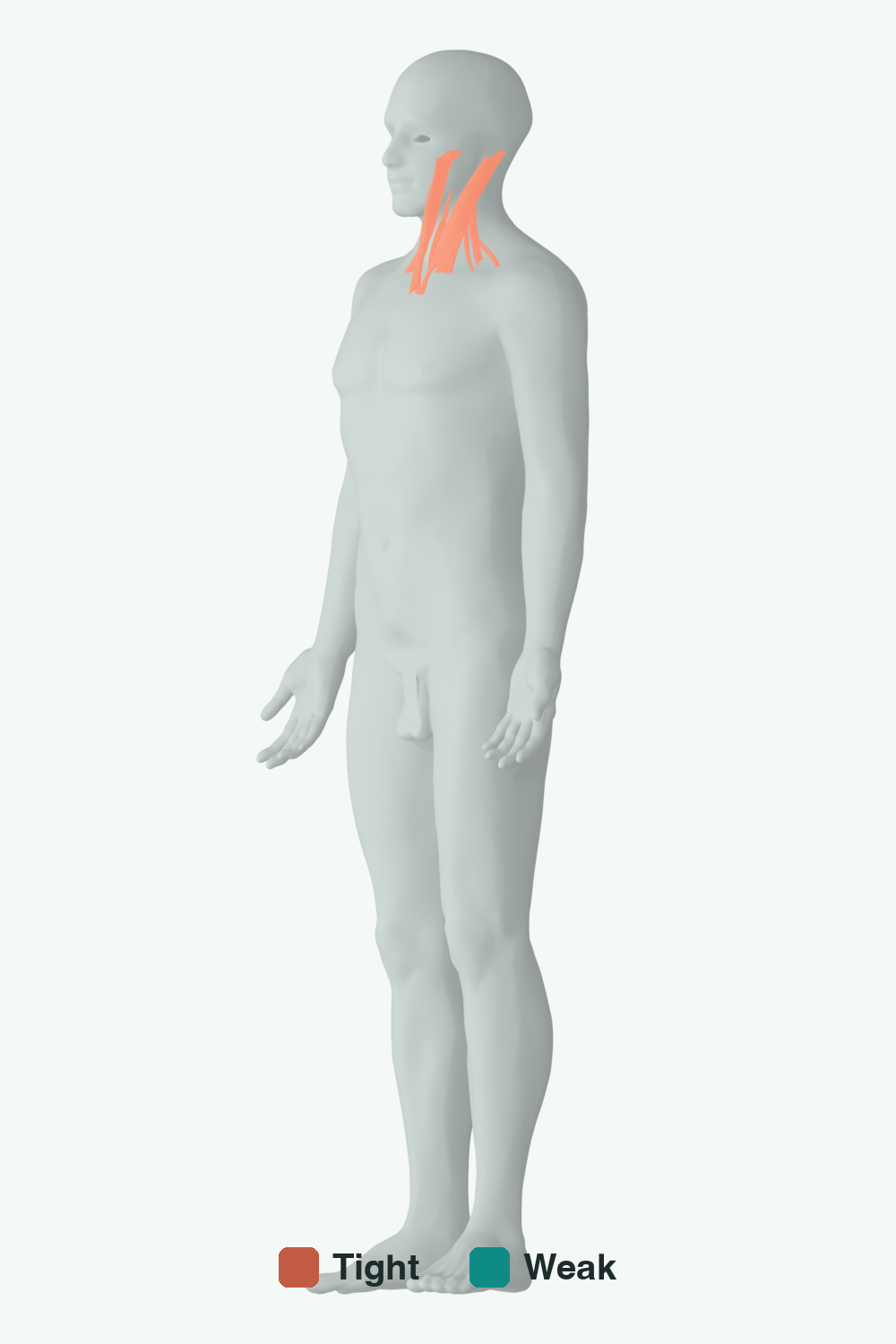
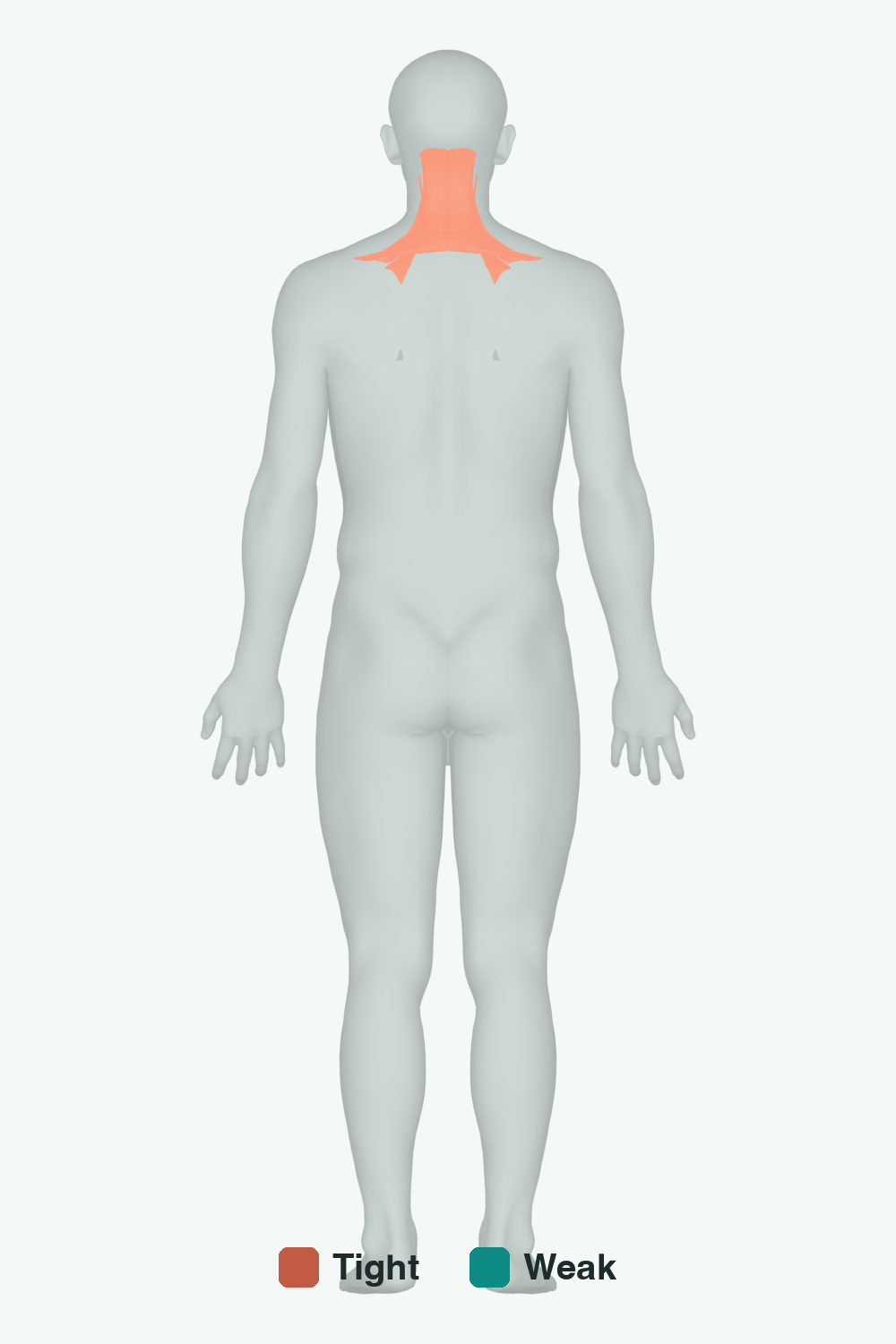
Coral = typically tight, teal = typically weak. Anatomical illustration from Z-Anatomy (derived from BodyParts3D), licensed under CC BY-SA 4.0.
Typically tight: upper trapezius, levator scapulae, scalenes, sternocleidomastoid
Typically weak: contralateral lateral neck flexors
How to correct it
- Explore gentle, comfortable side-bending in both directions rather than forcing the apparently tighter side.
- Use a light level-gaze cue during sitting and standing, allowing the shoulders to remain relaxed.
- Review screen position and one-sided habits, such as holding a phone between the head and shoulder, that may reinforce the tilt.
Recommended exercises
Related muscles
Educational wellness content — not a diagnosis. See a clinician for pain or concerns. Run a posture scan to check your own alignment.