Upper Trapezius Stretch
2 × 20s per side
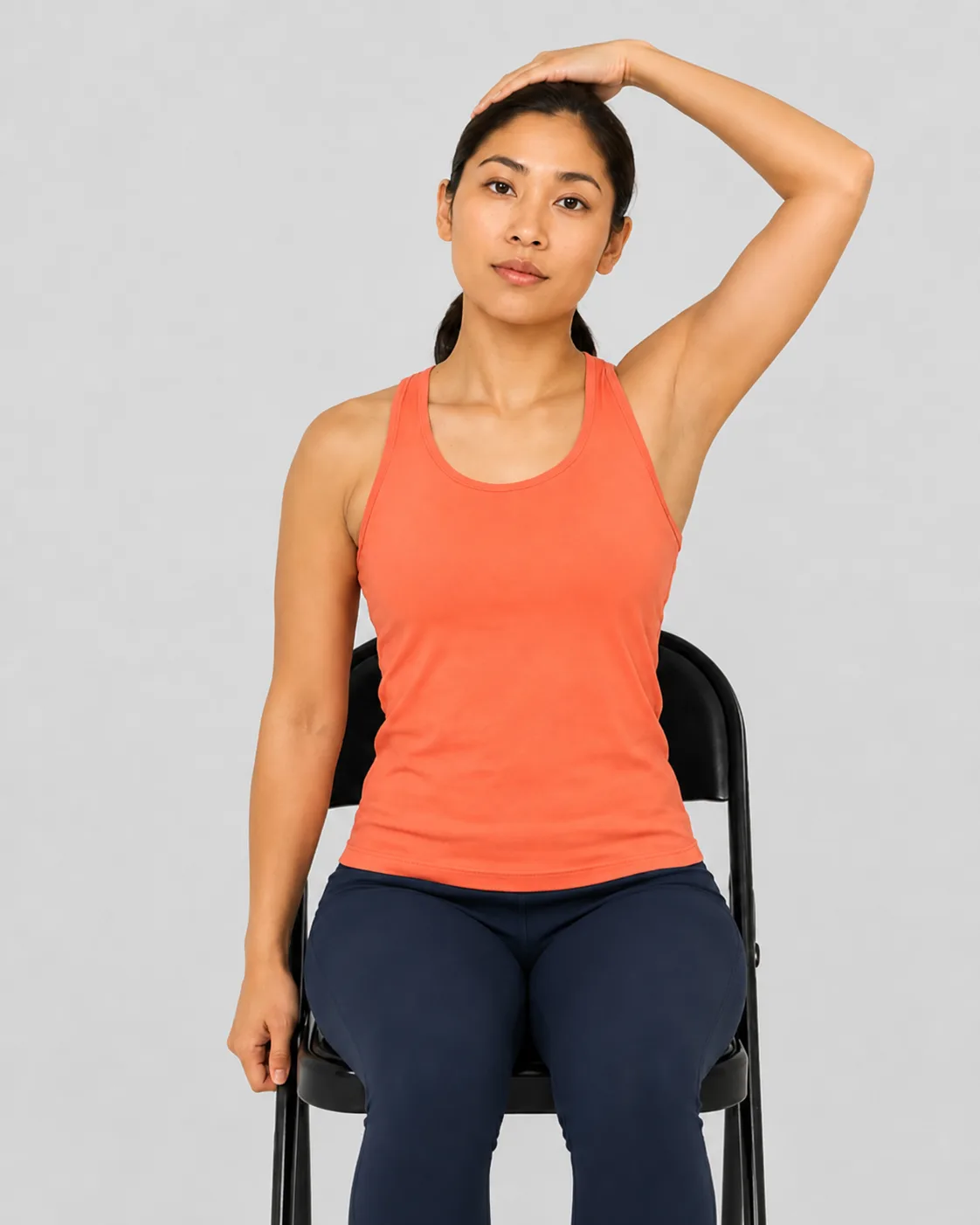
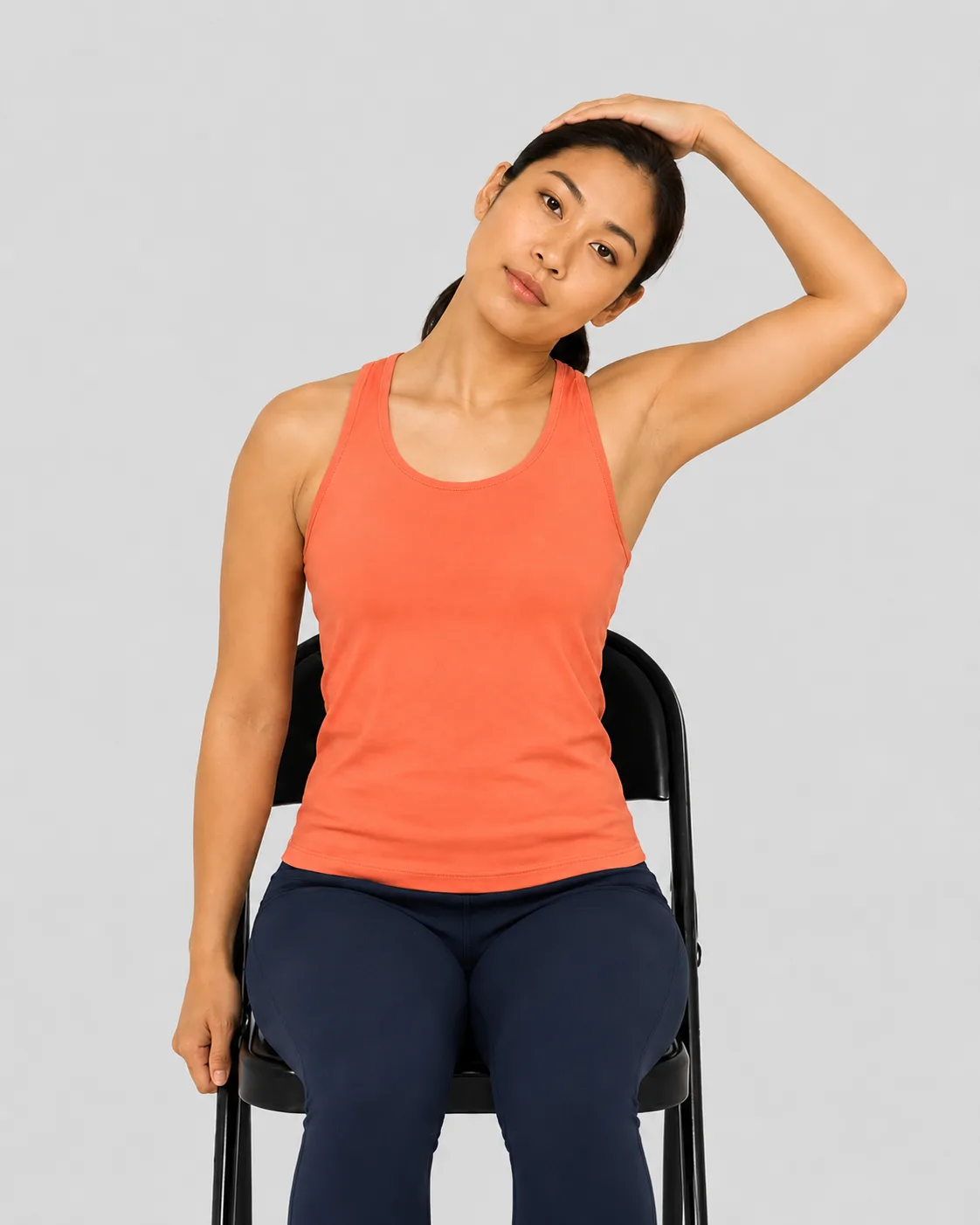
Seated lateral neck flexion stretch for the upper trapezius — anchor the same-side shoulder down, face forward, and guide the ear toward the opposite shoulder.
How to do it
- Sit upright near the front of a stable chair with both feet flat on the floor.
- To stretch the right side, hold the right side of the chair seat with your right hand or reach the right hand downward beside the chair.
- Allow the right shoulder to remain relaxed and lowered.
- Place your left hand lightly over the right side of your head.
- Keep your nose pointing forward and your chin level.
- Slowly bring your left ear toward your left shoulder.
- Stop when you feel a mild stretch across the top of the right shoulder and side of the neck.
- Hold while breathing normally, then release your hand and return your head slowly to the centre.
- Repeat on the opposite side.
Form cues
- Keep the face forward. Turning the face downward changes the emphasis toward the levator scapulae.
- Keep the stretching-side shoulder down rather than pulling the head harder.
- Sit tall and avoid leaning the torso sideways.
- Use only gentle hand pressure; the hand may simply rest on the head.
- Do not bounce or repeatedly pull farther into the stretch.
- Stop for dizziness, headache, sharp neck pain, shoulder pain, numbness, tingling or arm symptoms.
Why this exercise helps
The upper trapezius spans the back and side of the neck to the shoulder girdle and contributes to shoulder elevation and neck movement. Holding the stretching-side shoulder relaxed while gently side-bending the head away can create a stretch sensation across this region. Keeping the face mostly forward helps make the setup repeatable; rotating or flexing the neck changes which tissues feel the position. Use only light hand guidance and stop for dizziness, headache, sharp pain, or symptoms travelling into an arm.
Stop or modify if
- Rotating the face downward or toward the stretch direction. Keep the nose pointing straight ahead so the stretch targets the upper trapezius rather than the levator scapulae.
- Pulling the head hard with the guiding hand. The hand rests lightly on the head; let gravity and shoulder anchorage create the depth rather than applying force.
- Leaning the whole torso sideways to feel a deeper stretch. Keep the trunk upright — depth comes from genuine neck lateral flexion, not a side-lean.
Modifications and progressions
- If no chair is available, stand with the same-side arm tucked behind the back or held at the side with a slight downward reach — this depresses the shoulder passively.
- To increase the stretch mildly, exhale and allow the head to settle a small amount further with each breath rather than pulling harder with the hand.
Muscles worked
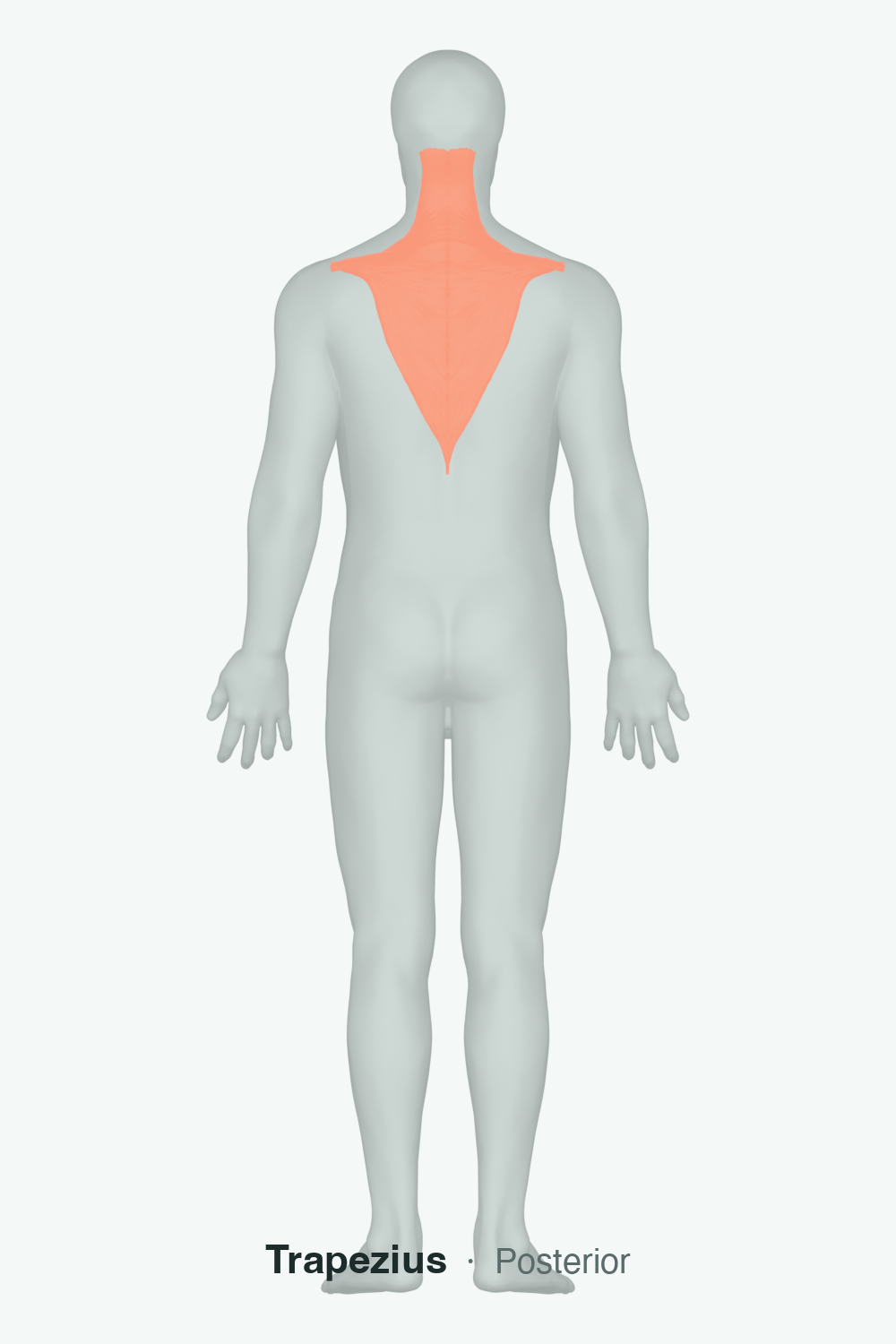
Stretches: upper trapezius
Part of a program
Part of Upper Body Posture Reset
This exercise is one move. Upper Body Posture Reset puts it in a plan — so you know what to do, in what order, and how much, week by week.
- Sequenced & dosed — the right exercises, in the right order, at the right volume.
- Progresses with you — difficulty ramps as you get stronger, not on a fixed calendar.
- Tracks your progress — see what's working and adjust over time.
Free · start with Week 1, no assessment needed
Related exercises
Frequently asked questions
What is the difference between the upper trapezius and the levator scapulae stretch?
Both muscles connect the neck and shoulder region. A face-forward side bend commonly emphasizes the upper trapezius area, while adding neck rotation and a downward gaze changes the sensation and may emphasize the levator scapulae region. Neither setup isolates one muscle completely.
Why is it important to anchor the shoulder down during the stretch?
If the stretching-side shoulder rises with the head movement, the side of the neck may not change position very much. A light chair hold or downward reach helps keep the shoulder relaxed and makes the side-bend easier to control. Do not pull the shoulder forcefully downward.
How long should I hold the upper trapezius stretch?
This page prescribes two comfortable 20-second holds per side. Use a shorter hold if needed and avoid bouncing or repeatedly pulling farther. Stop rather than waiting for sharp pain, dizziness, headache, or arm symptoms to settle.
Should I stretch both sides equally even if only one side feels tight?
Both sides can be practised within their own comfortable ranges, but they do not need to feel identical. Do not add extra force or volume solely because one shoulder appears higher in a photo. Persistent or painful asymmetry may benefit from individual assessment.