Rounded Shoulders
Also known as: protracted shoulders, shoulder protraction.
What it is
Rounded shoulders describe the upper arms and shoulder blades resting farther forward around the ribcage. This position commonly accompanies forward head posture and reduced upper-back extension, but it is also a normal part of many tasks and does not by itself mean the shoulders are damaged. A persistent resting pattern may be associated with chest-muscle stiffness, limited thoracic mobility, or reduced endurance and control around the shoulder blades. A static photo cannot determine which contributor matters most for an individual. Treat the scan as an alignment observation, not a diagnosis or prediction of injury. Shoulder pain, weakness, loss of motion, or symptoms extending into the arm or hand warrant assessment by a qualified clinician.
How to spot it
In a relaxed side view, the shoulder's bony point sits noticeably forward relative to the middle of the torso. The hands may also rest with their backs facing more forward, although arm rotation alone is not proof of rounded shoulders. Compare several natural standing photos rather than pulling the shoulders backward for the picture. The useful question is whether the forward position is repeatable and whether it changes comfortably with a gentle chest lift and relaxed shoulder-blade movement.
Muscles involved
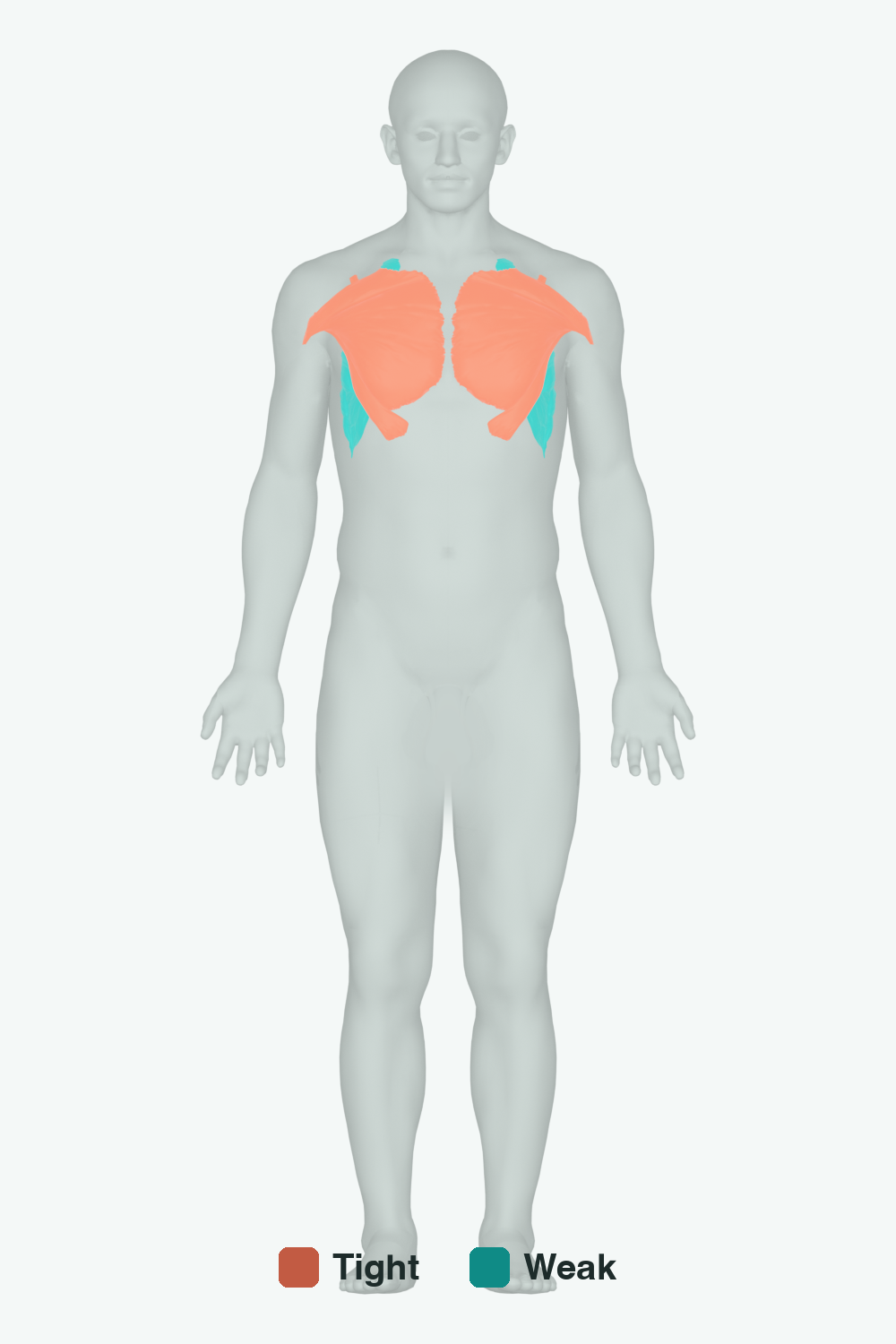
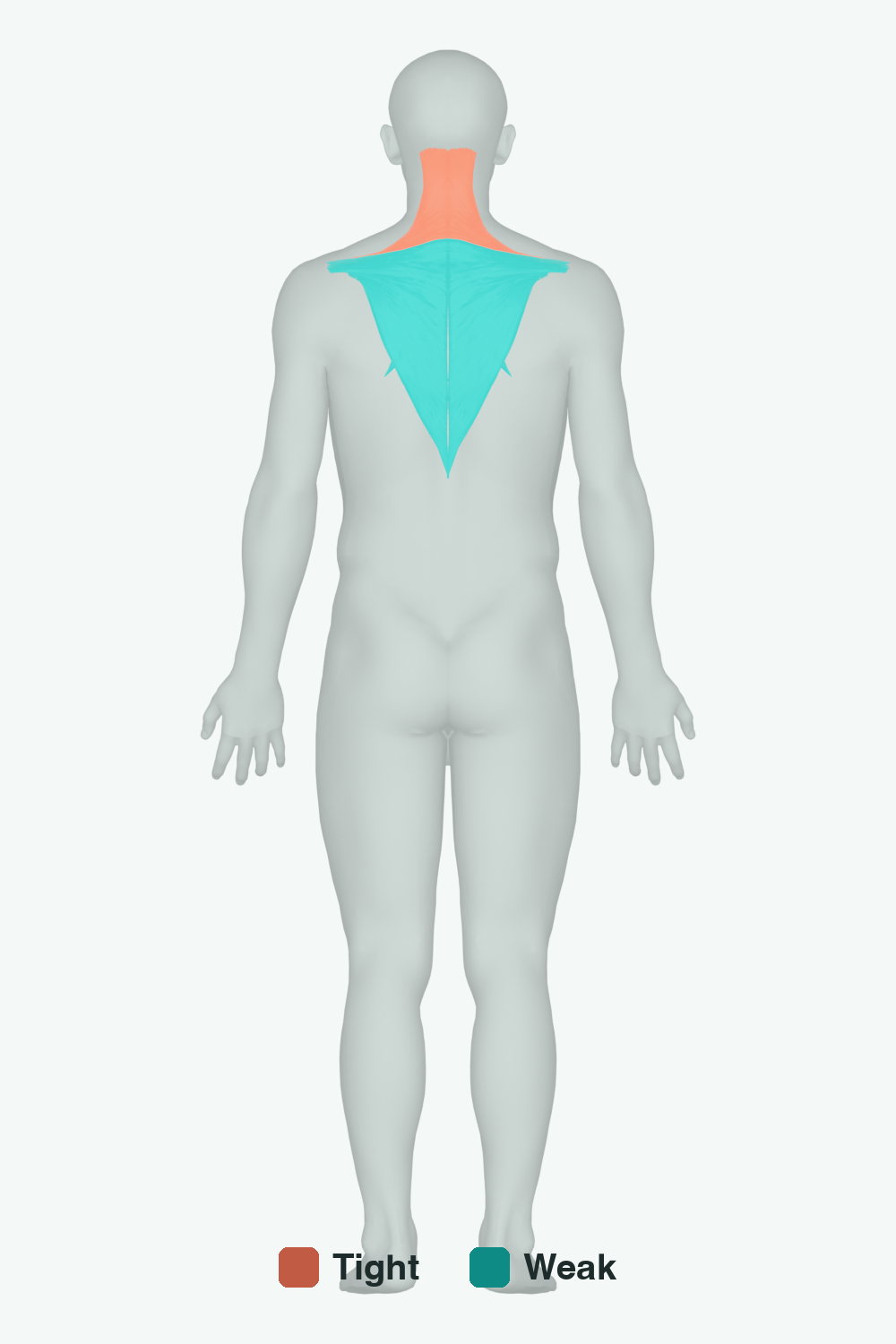
Coral = typically tight, teal = typically weak. Anatomical illustration from Z-Anatomy (derived from BodyParts3D), licensed under CC BY-SA 4.0.
Typically tight: pectoralis major, pectoralis minor, upper trapezius
Typically weak: middle trapezius, lower trapezius, rhomboids, serratus anterior
How to correct it
- Use comfortable chest mobility and pectoral stretches without forcing the shoulder joint forward.
- Build shoulder-blade control and upper-back endurance with rows, raises, or wall-slide variations suited to your current level.
- Practice thoracic extension and regular movement breaks if prolonged desk work reinforces the position.
- Avoid holding the shoulders rigidly pinched back all day; aim for varied, comfortable movement and sustainable control.
Recommended exercises
Related muscles
Frequently asked questions
Can rounded shoulders be corrected?
A flexible resting position can often change with mobility, strength, movement habits, and practice, but there is no single ideal shoulder position everyone must maintain. Focus on comfortable motion and useful capacity rather than forcing a permanent military-style posture.
Should I pull my shoulders back all day?
No. Constantly squeezing the shoulder blades can create unnecessary tension. Use brief alignment cues, vary your position regularly, and build enough upper-back and shoulder control to move comfortably through different tasks.
Do rounded shoulders cause shoulder pain?
Rounded shoulders and pain can occur together, but posture alone does not prove the cause. Training load, injury, sleep, sensitivity, strength, and shoulder motion can also matter. Persistent or worsening pain deserves an individualized assessment.
How long does it take to change rounded shoulders?
There is no universal timeline. Mobility may feel different within a session, while strength, endurance, and a habitual resting position usually require consistent practice over weeks. Progress should be judged by comfort and function as well as photographs.
Educational wellness content — not a diagnosis. See a clinician for pain or concerns. Run a posture scan to check your own alignment.