Levator Scapulae Stretch
stretchneckeasypassive
2 × 20s per side
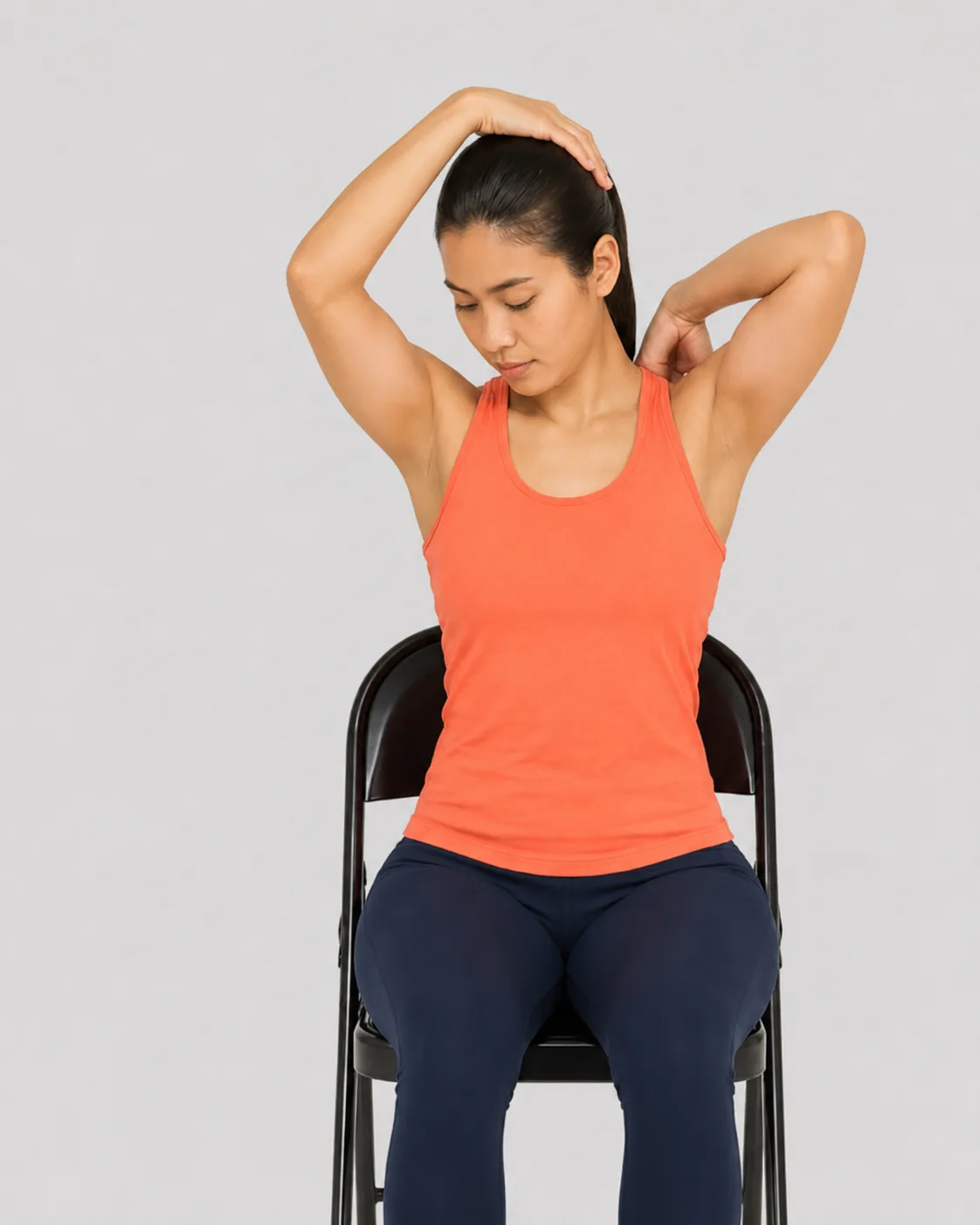
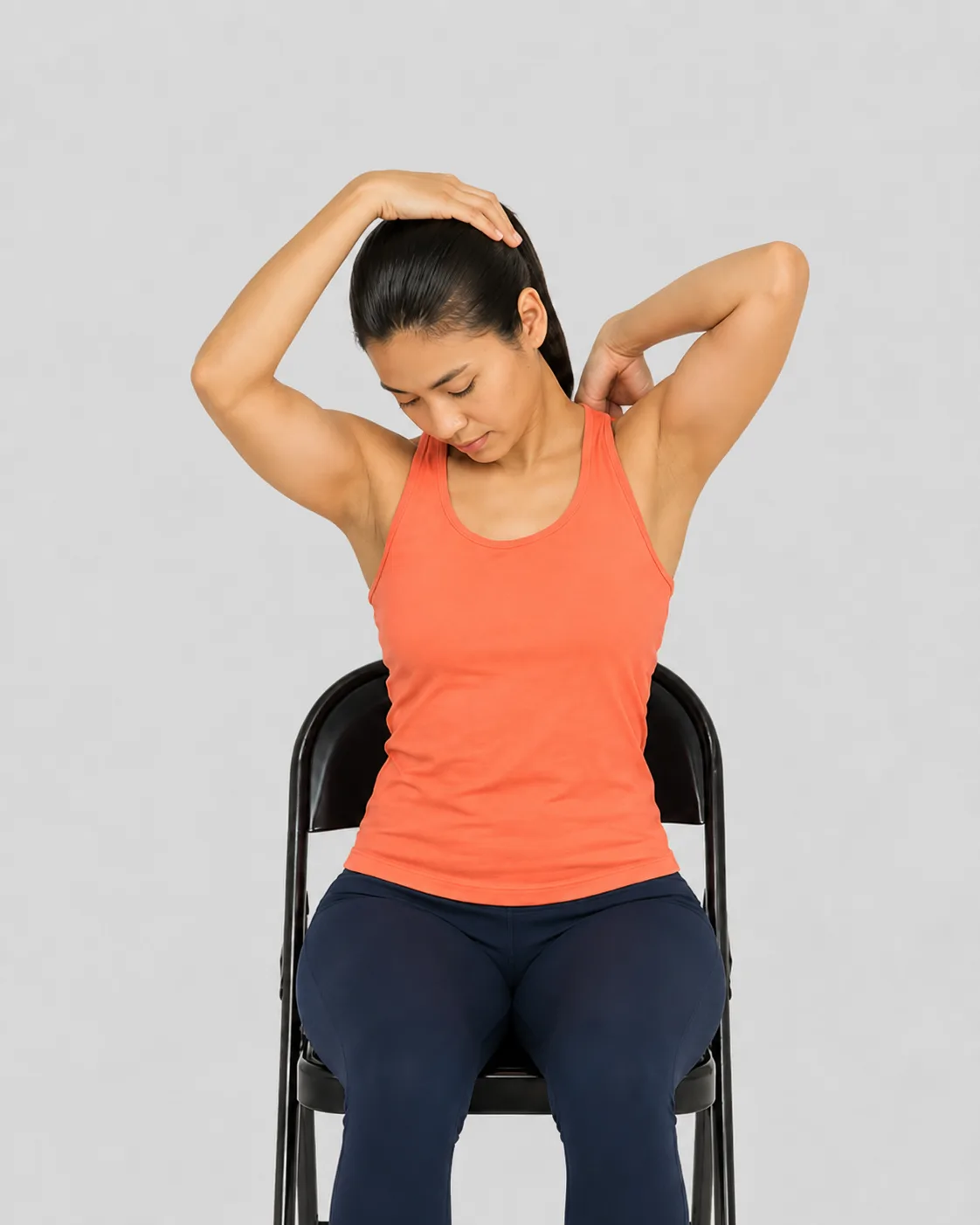
How to do it
- Sit upright on a stable chair with both feet supported and your torso facing forward.
- To stretch the right side, bend the right arm and place the hand behind the neck or upper back as shown.
- Keep the right shoulder relaxed rather than allowing the elbow or shoulder to lift forcefully.
- Turn your head approximately 30–45 degrees toward the left.
- Place your left hand gently over the back-right side of your head.
- Slowly nod your chin downward and guide your nose diagonally toward your left armpit.
- Stop when you feel a mild stretch along the back-right side of your neck, possibly extending toward the upper inner border of the shoulder blade.
- Hold while breathing normally.
- Release the guiding hand, lift your head gradually and return to the centre before changing sides.
Form cues
- Think, “look diagonally toward the opposite armpit.”
- The movement should combine a small rotation with diagonal downward flexion; do not simply pull the ear toward the shoulder.
- The overhead hand should provide only light guidance.
- Keep the chest facing forward and avoid rounding or rotating the torso.
- The behind-the-neck arm position is optional. Lower that arm if it causes shoulder discomfort, numbness or restricted breathing.
- Do not force the elbow upward or actively shrug the shoulder.
- Stop for sharp neck pain, headache, dizziness, shoulder pinching, numbness, tingling or symptoms travelling down the arm.
Muscles worked
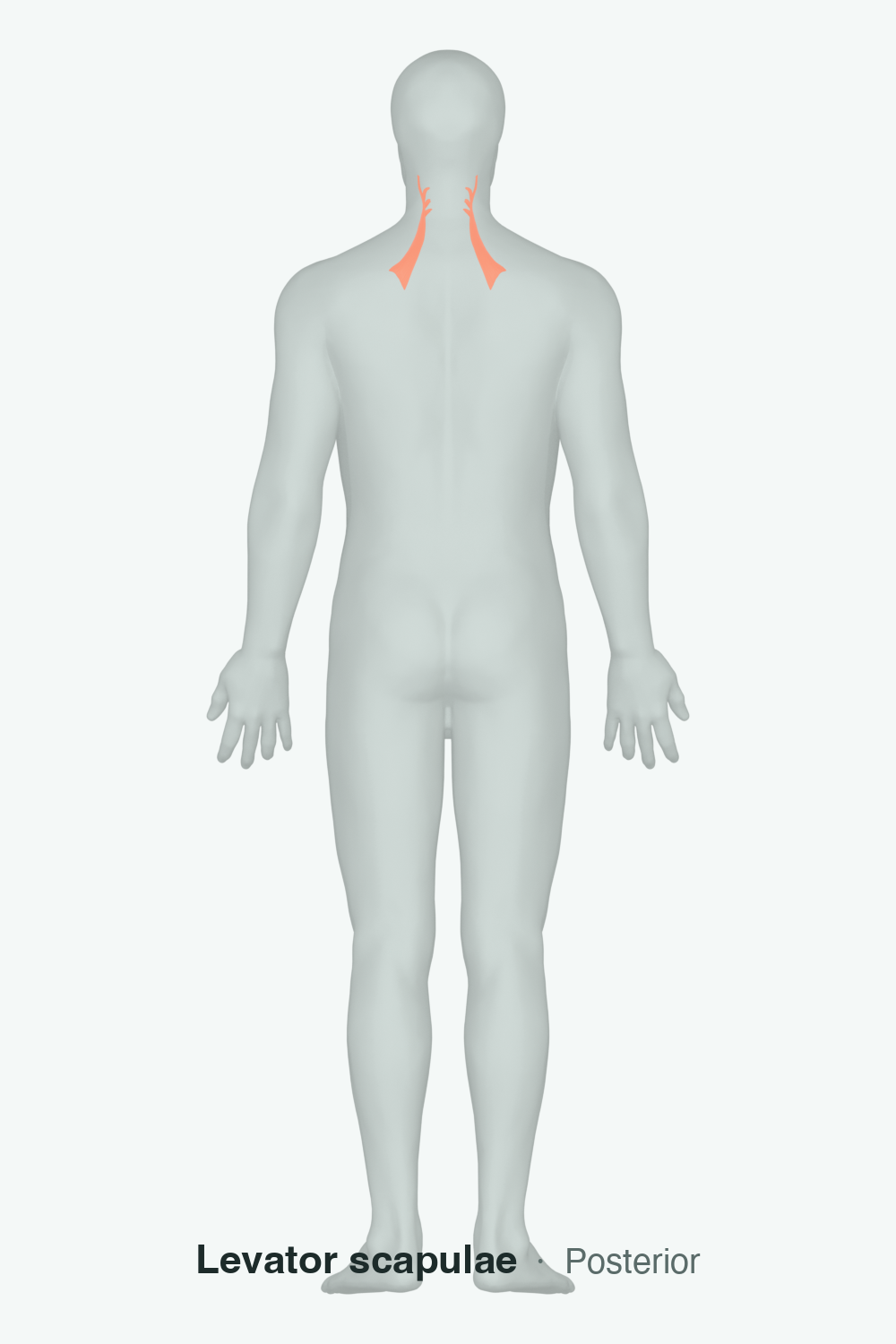
Stretches: levator scapulae
Part of a program
Part of Upper Body Posture Reset
This exercise is one move. Upper Body Posture Reset puts it in a plan — so you know what to do, in what order, and how much, week by week.
- Sequenced & dosed — the right exercises, in the right order, at the right volume.
- Progresses with you — difficulty ramps as you get stronger, not on a fixed calendar.
- Tracks your progress — see what's working and adjust over time.
See the program →
Free · start with Week 1, no assessment needed