Posture Conditions
The posture deviations our scan looks for, each with the muscles involved and a corrective plan. Educational, not a diagnosis.
12 conditions
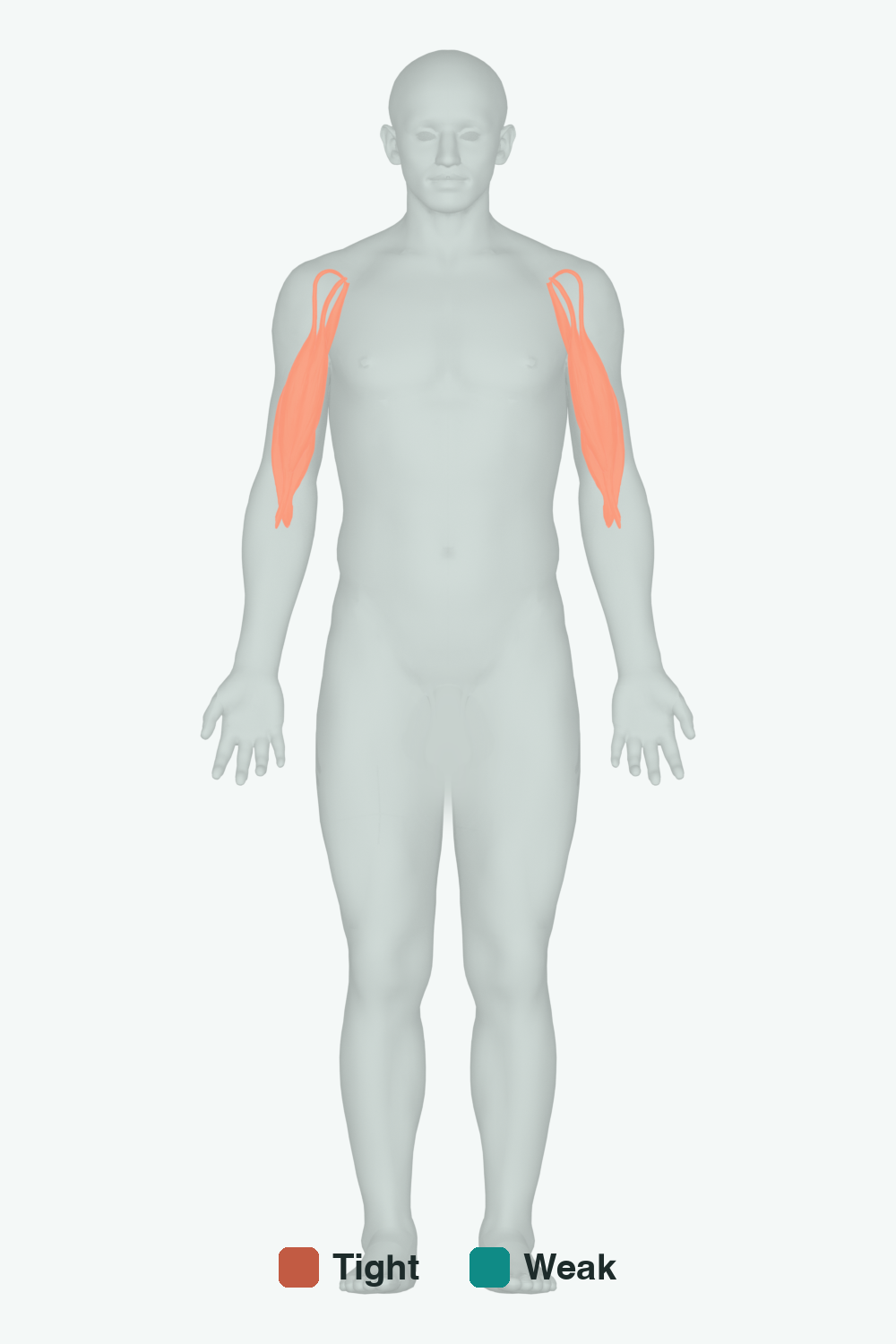
Bent Elbow (Resting Flexion)
One or both elbows remain noticeably bent when the arms hang relaxed, rather than resting close to straight.
Chin-Up / Chin-Down (Cervical Tilt)
The chin is habitually lifted or tucked down rather than resting near a level, comfortable gaze.
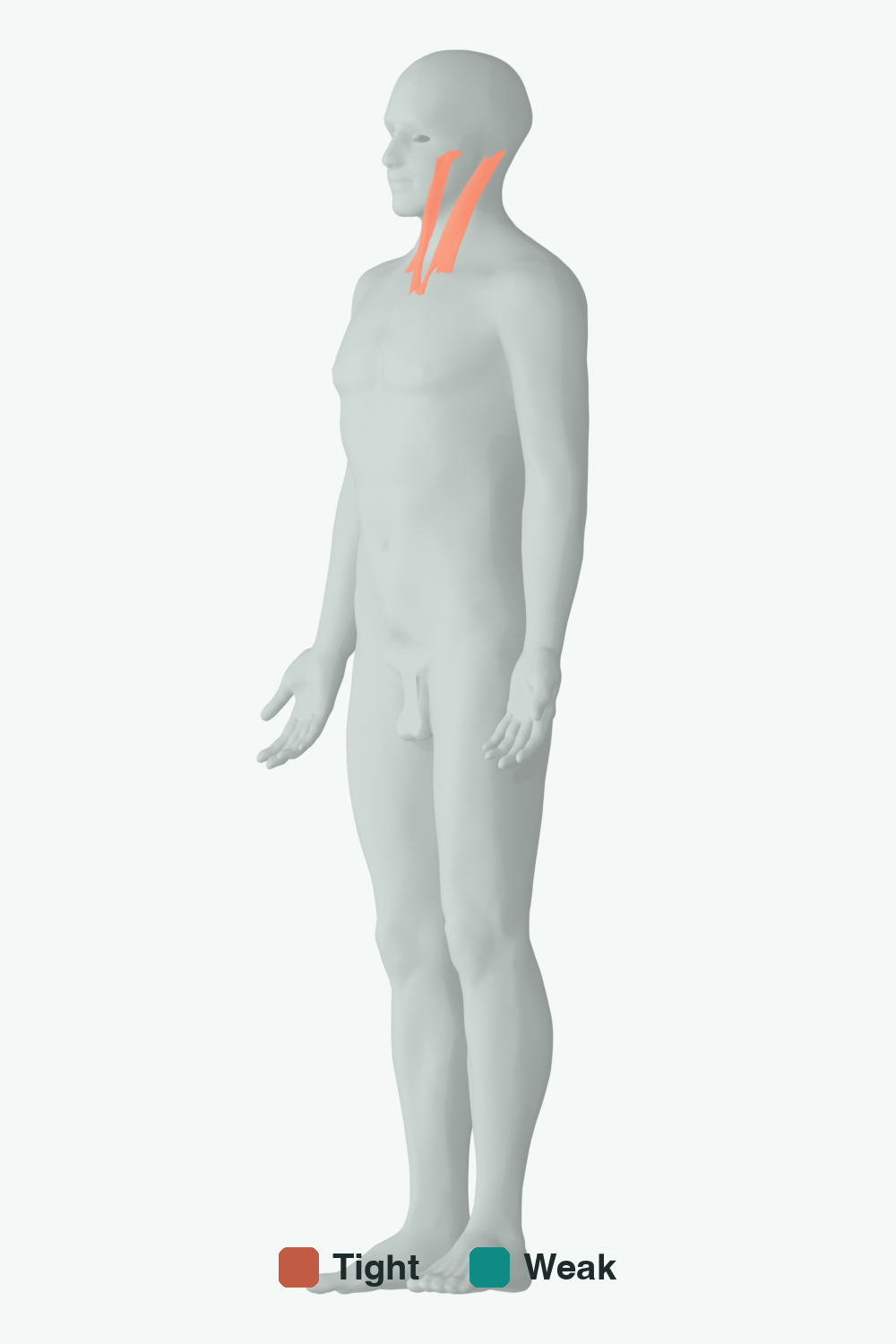
Forward Head Posture
The head sits in front of the shoulders instead of stacked over them — common with desk and phone use.
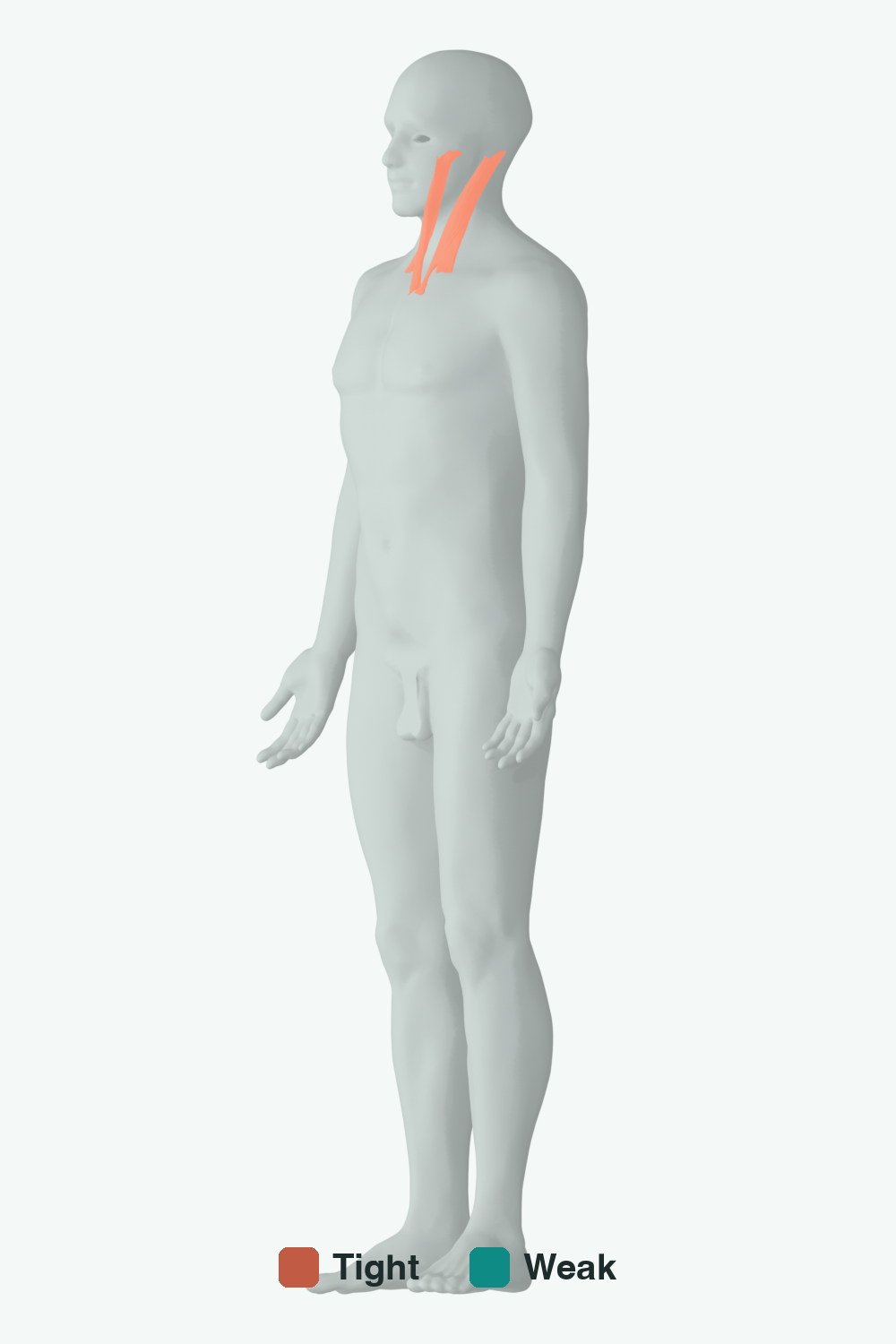
Head Rotation
The head repeatedly rests turned to one side rather than facing straight ahead.
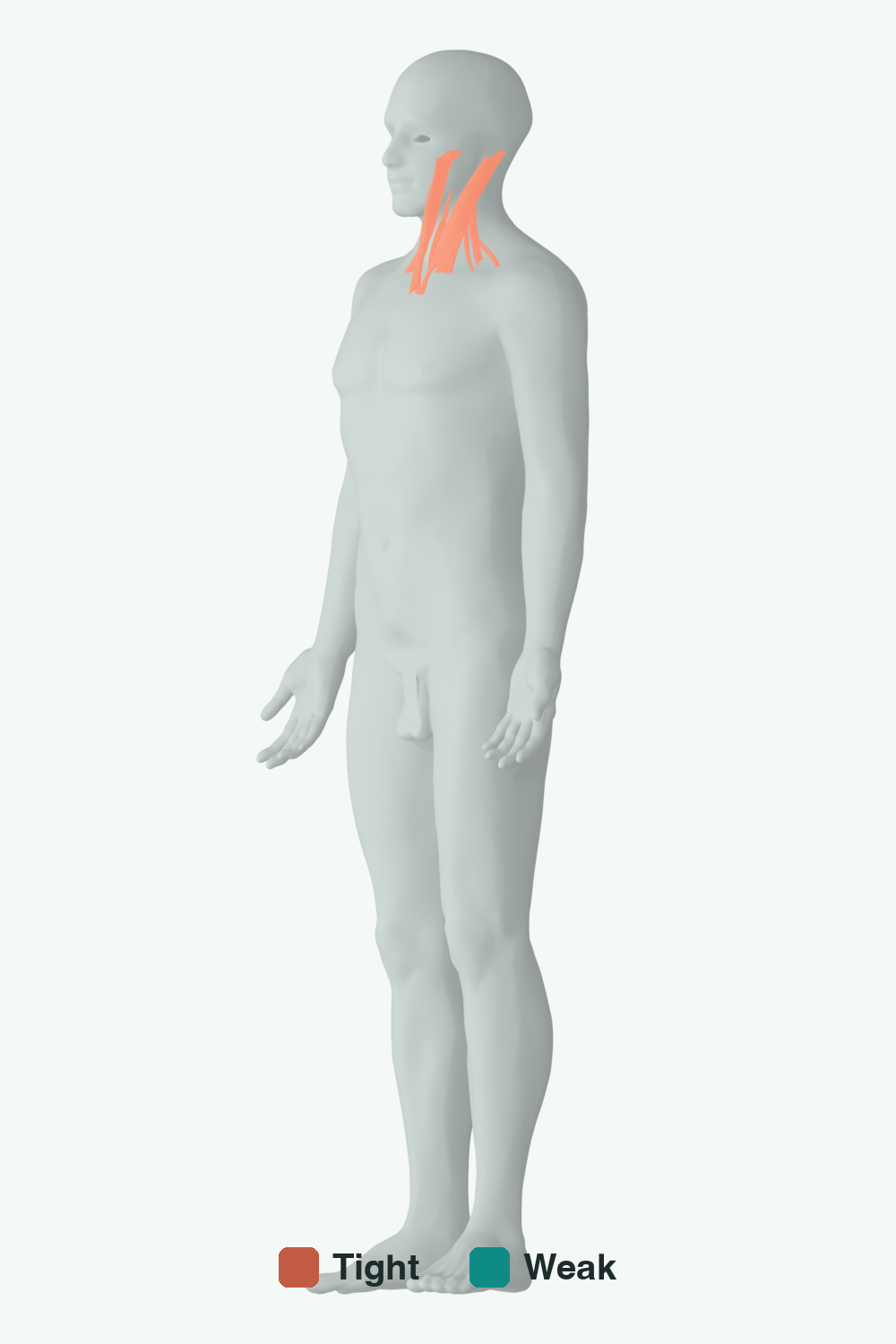
Head Tilt
The head rests side-bent toward one shoulder, tilting the eye and ear line away from horizontal.
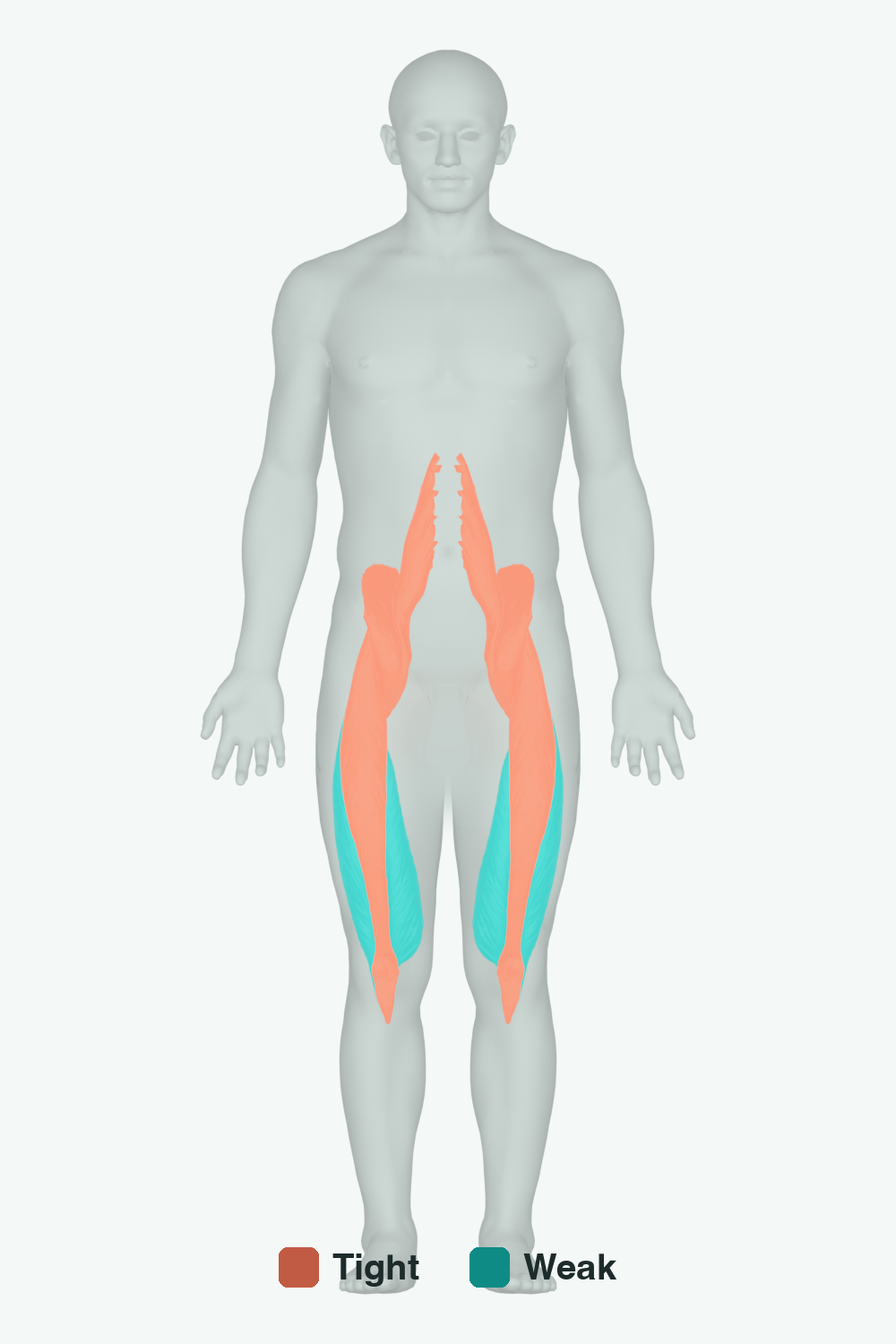
Standing Knee Bend
One or both knees remain slightly bent during relaxed standing instead of resting close to comfortable full extension.
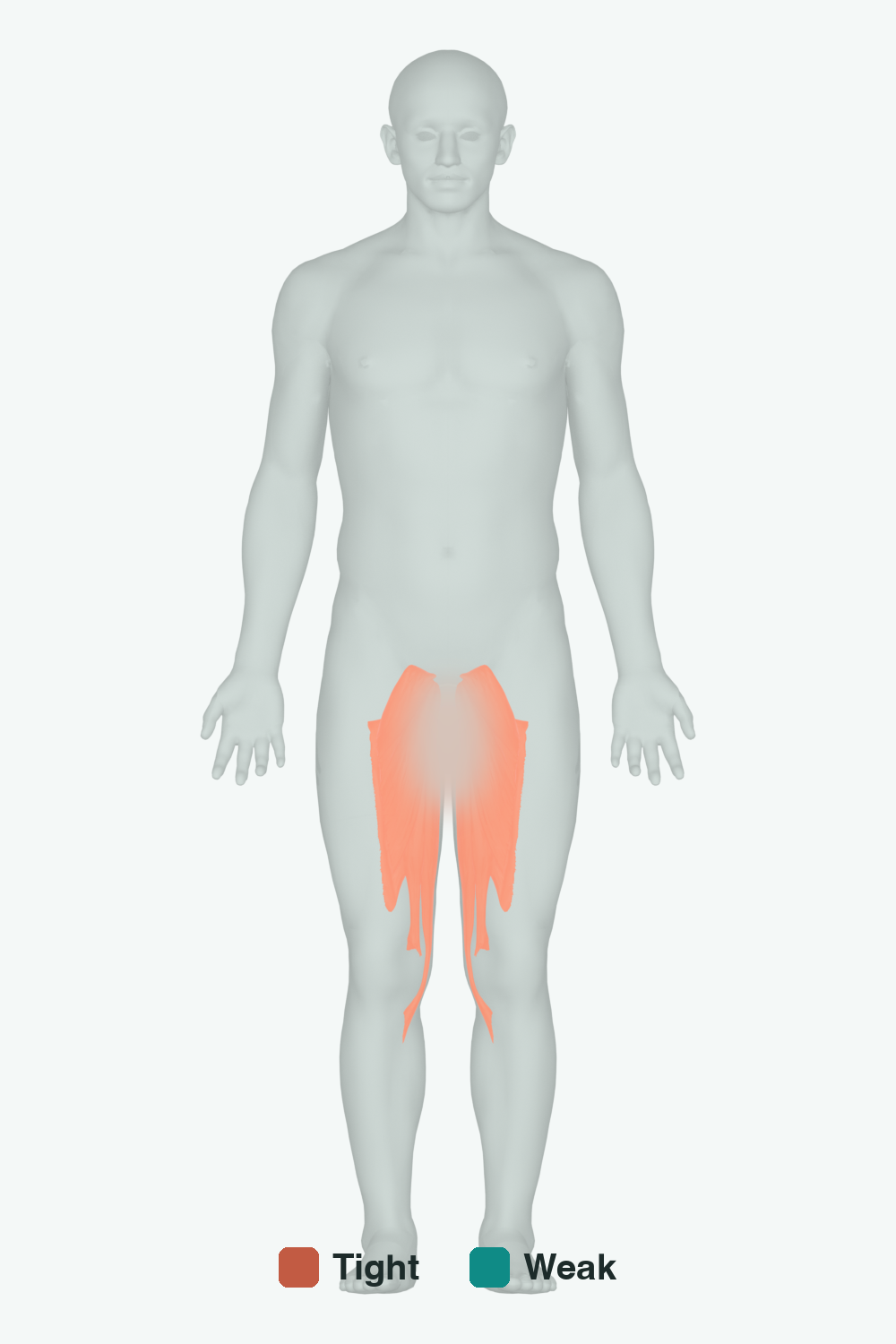
Knee Valgus (Knock-Knee)
The knees cave inward toward the midline instead of tracking over the toes.
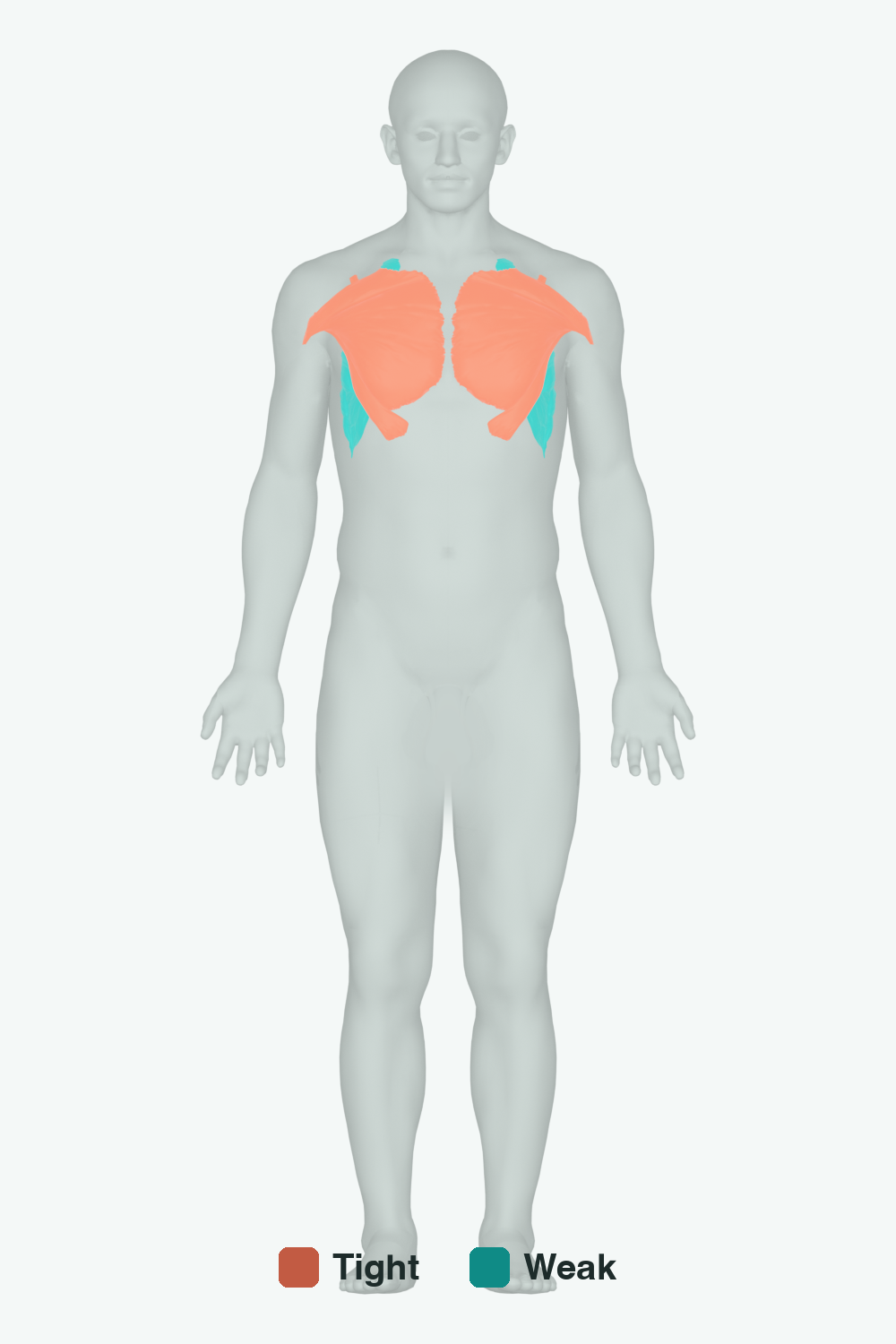
Rounded Shoulders
The shoulders rest forward of the torso, often alongside a rounded upper back or forward head position.
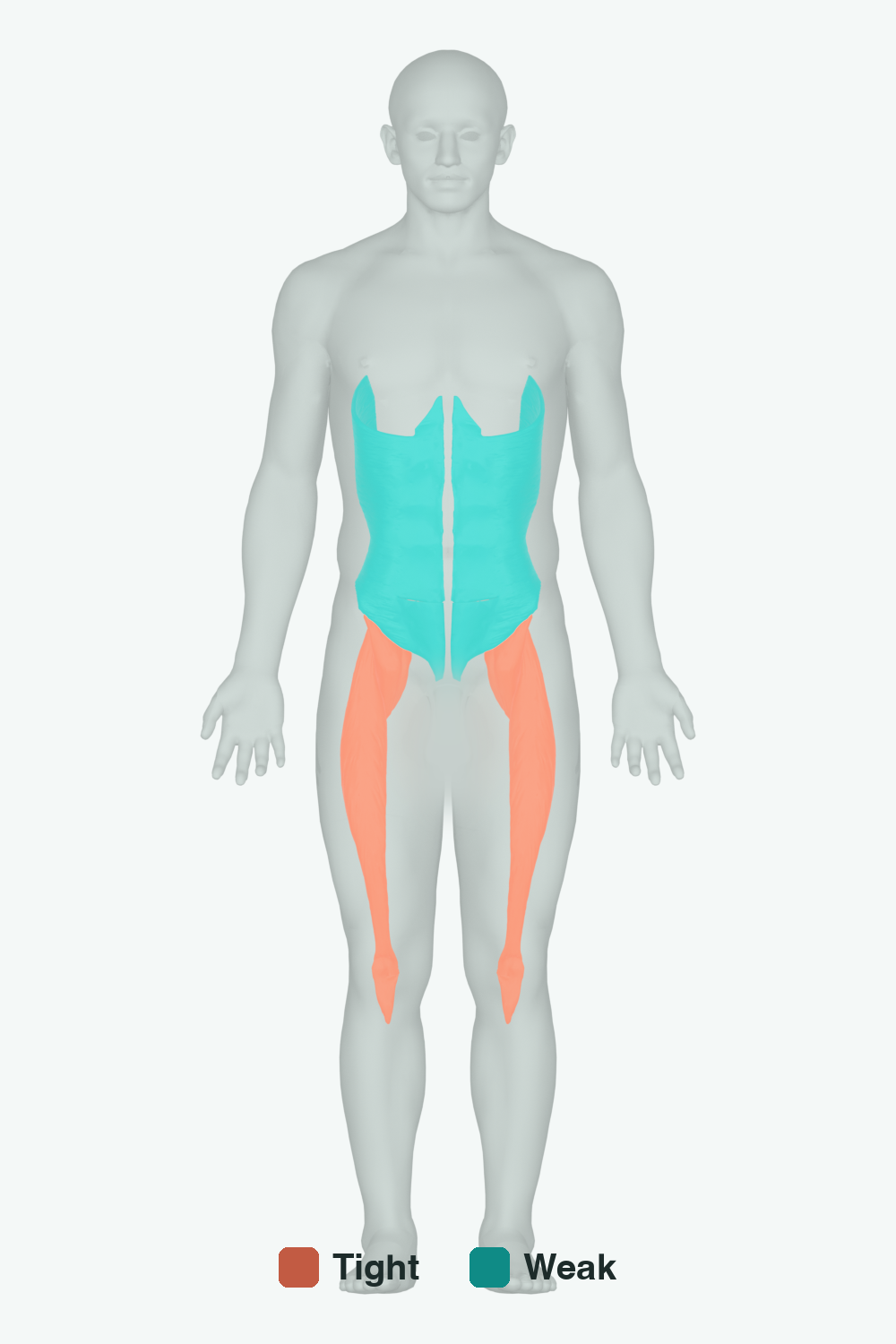
Trunk Lean
The torso rests inclined forward or backward rather than stacking close to vertical over the pelvis.

Trunk Shift (Lateral List)
The ribcage and shoulders rest shifted sideways relative to the pelvis instead of stacking over the hips.
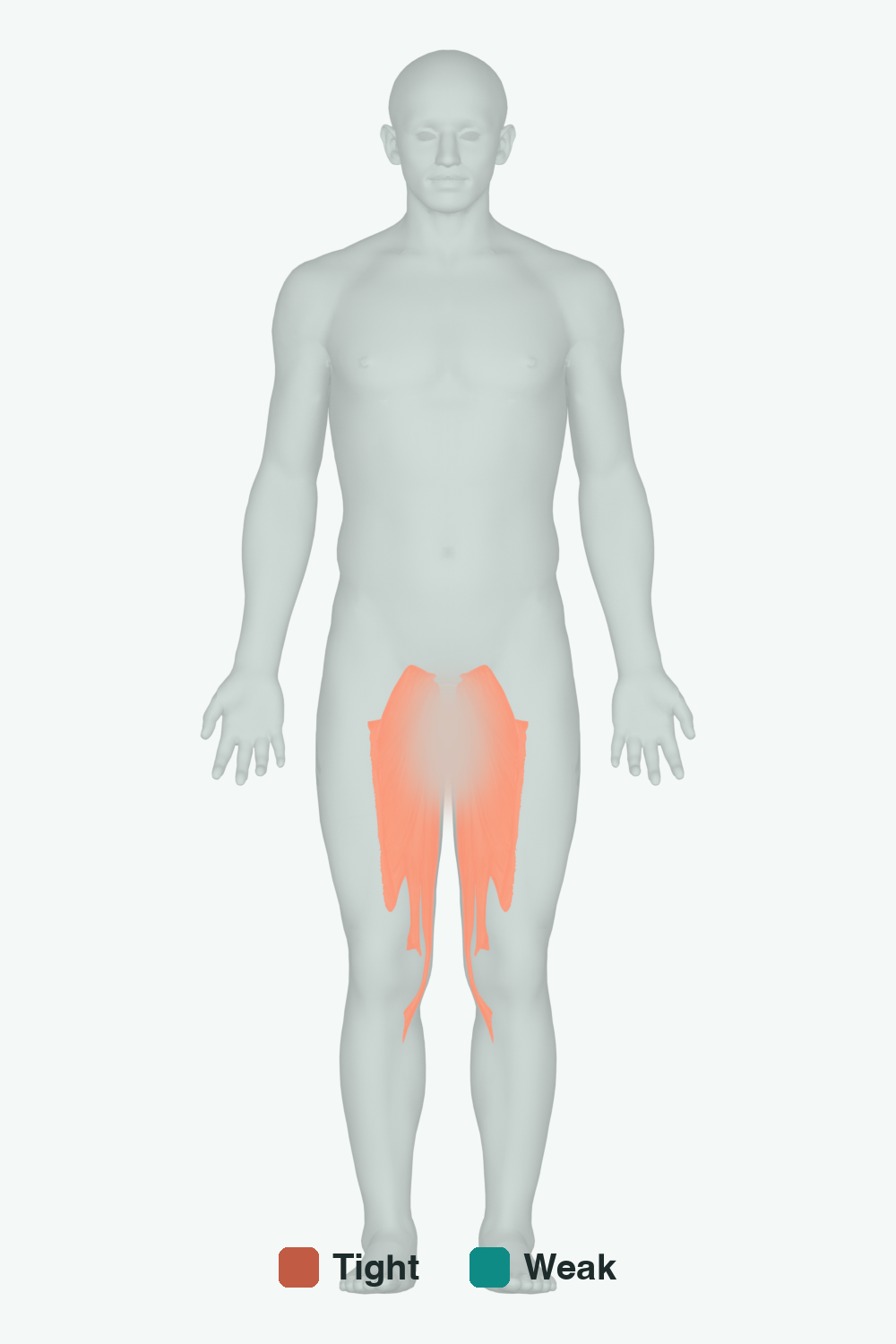
Uneven Hips
One side of the pelvis rests higher than the other during relaxed standing, creating a visible side-to-side tilt.
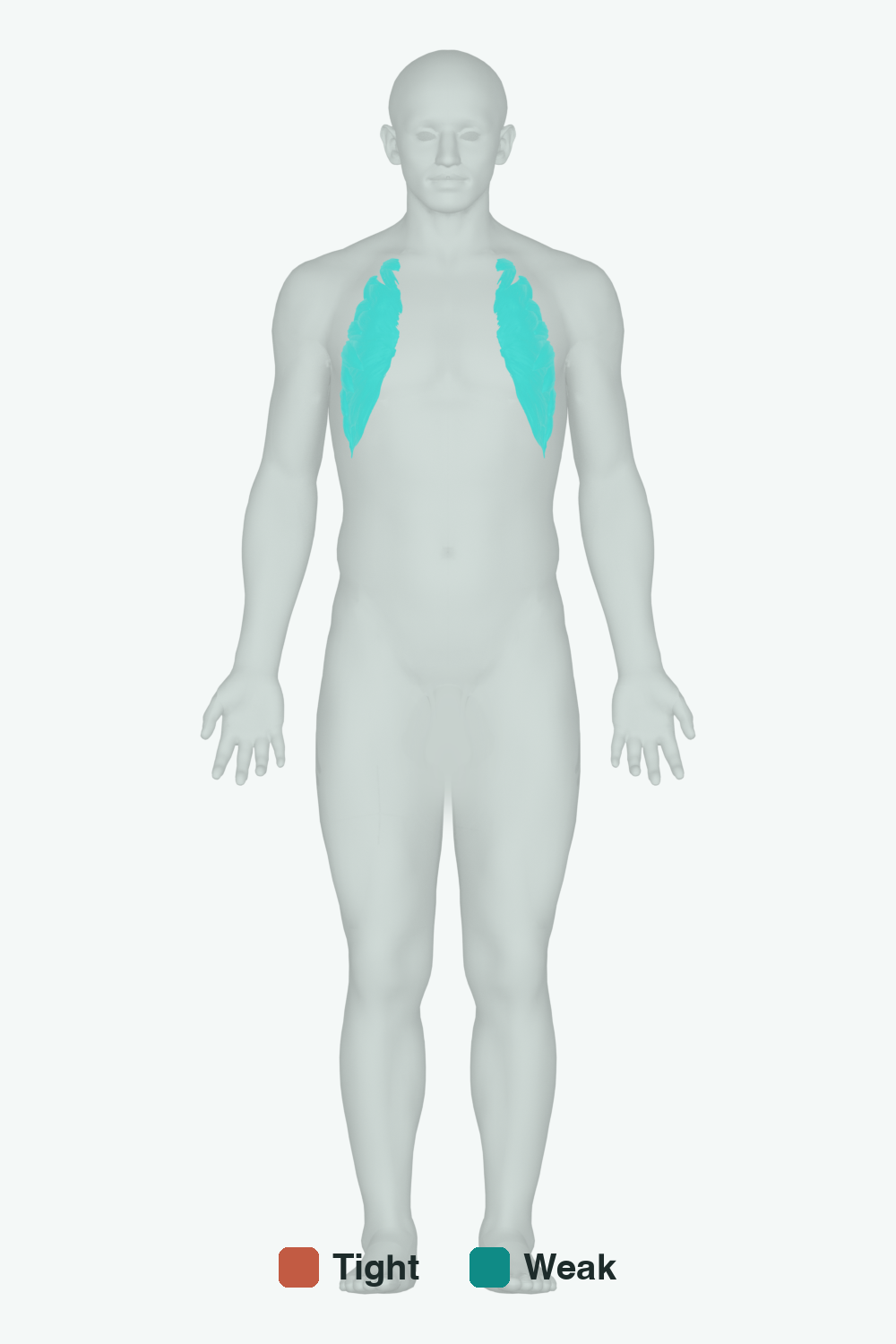
Uneven Shoulders
One shoulder rests higher than the other, creating a repeatable tilt in the shoulder line during relaxed standing.