How to Fix Your Posture: An Evidence-Based Guide That Actually Works
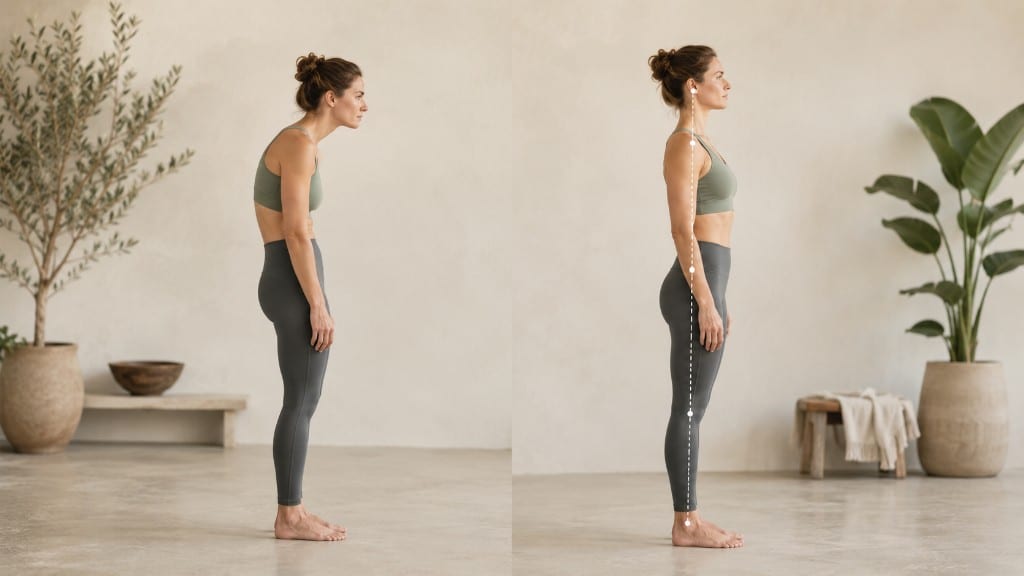
If you want to know how to fix posture, start here: good alignment is not a stiff military pose you hold all day. It is the position where your body stacks with the least effort — a balanced stack of joints and curves that you can maintain without strain. Correct posture is a skill you train through awareness, targeted work, and better daily habits, not a single switch you flip once.
What posture actually is (and is not)
Posture is dynamic balance, not rigidity. The alignment model described by Kendall and colleagues treats the body as a chain: when one link drifts — head forward, shoulders rounded, pelvis tipped — neighboring segments compensate. Fix bad posture by restoring balance across that chain, not by forcing one segment into place while the rest stays crooked.
Your spine keeps its natural curves: a gentle inward curve at the neck and lower back, a gentle outward curve at the upper back. Posture correction means letting those curves exist while bringing your head, rib cage, and pelvis into a neutral relationship — ear over shoulder, shoulder over hip, hip over ankle when you stand.
Why posture drifts
Most slouching is learned, not structural. Three forces pull most people out of alignment:
- Prolonged positions — hours at a desk, looking down at a phone, sleeping curled up.
- Muscle imbalance — some muscles shorten and overwork while their partners weaken and switch off.
- Habit — your nervous system learns whatever you repeat; "screen posture" becomes your default.
The corrective principle used throughout clinical postural work is straightforward: stretch the tight, strengthen the weak. Lengthen the muscles that have shortened, activate the ones that have gone quiet, then practice carrying the new alignment into real life.
How to assess your posture
Before you build a routine, you need a baseline. Two quick self-checks work well:
Wall test. Stand with your heels, hips, and upper back lightly touching a wall. Can the back of your head reach the wall without cranking your chin down? Do your shoulders feel rounded forward? Gaps tell you where to focus.
Objective scan. For numbers instead of guesswork, use our posture scan — it measures forward-head and shoulder ratios from a side-on photo so you can track change over weeks.
If you want a fuller picture of what "good" looks like, read What Is Correct Posture? for the side-view plumb line and common myths.
Common postural patterns (and where to go next)
Most people fit one or two recognizable patterns. Match yours and follow the linked guide:
| What you notice | Likely pattern | What to read / do |
|---|---|---|
| Chin pokes forward, neck aches after desk work | Forward head | Forward head posture, condition guide |
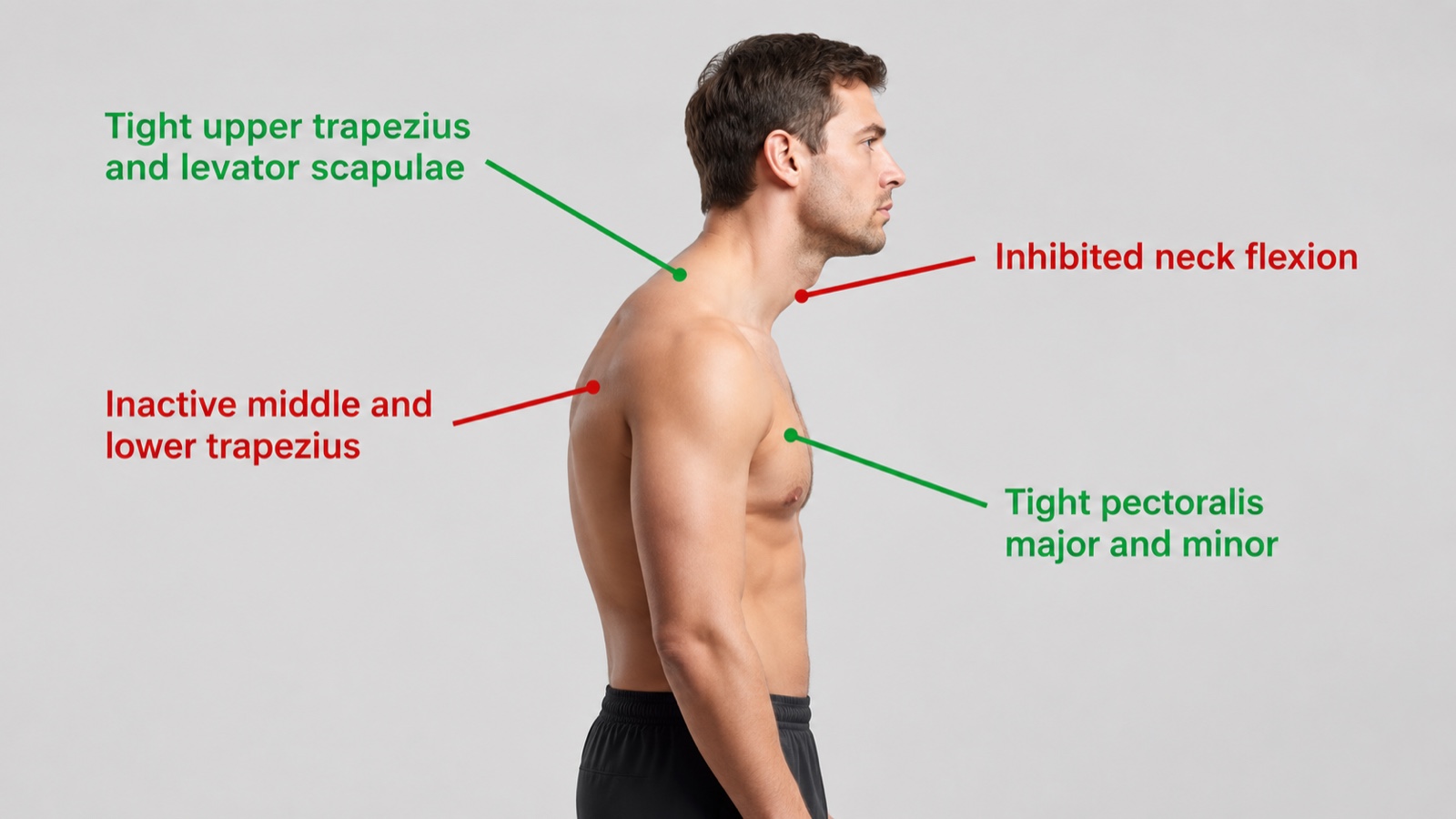
| Shoulders roll in, chest feels tight | Rounded shoulders | Rounded shoulders fix, upper-crossed syndrome |
| Lower back arches, belly sticks out when standing | Anterior pelvic tilt | Anterior pelvic tilt, lower-crossed syndrome |
| Upper back hump, slouched silhouette | Kyphosis / slouch | Hunchback & kyphosis, slouched posture |
| Whole-body checklist | General drift | Posture exercises, exercise library |
Upper-crossed syndrome at the neck and shoulders and lower-crossed syndrome at the hips and lower back are the two master patterns behind many of these complaints. Addressing the pattern beats chasing a single symptom.
A simple starter routine for posture correction
You do not need twenty exercises on day one. A small, repeatable set covers most beginners:
Neck and head. Supine chin tucks retrain head position and deep neck-flexor endurance; use the wall test above to practise the same stacked position while standing. Explore the full neck region hub for more options.
Chest and shoulders. Corner pectoral stretch opens the front of the chest; pair it with mid-back work from the shoulder hub.
Core and hips. Dead bug builds trunk stability with the spine supported — useful when a tipped pelvis or weak core pulls you off stack.
Mobilize tight areas daily (five to ten minutes). Strengthen weak areas two to three times per week. The complete head-to-toe list lives in The Best Posture Exercises.
 Free programUpper Body Posture ResetLoosen a tight neck and chest, free a stiff upper back, and build the shoulder-blade control to sit and stand tall.See the plan →
Daily habits that make posture stick
Exercises change what your muscles can do; habits decide what they actually do:
- Desk setup — screen at eye level, elbows near your sides. See desk sitting posture.
- Phone height — lift the device instead of dropping your head. Related: text neck and neck posture.
- Sleep position — pillow height and side-sleeping alignment matter. Read sleeping posture.
- Movement breaks — stand, walk, or change position every 30–45 minutes. The best posture is your next posture.
How long does it take to fix posture?
Most people notice visible change in four to eight weeks with near-daily mobility, two to three strength sessions per week, and consistent habit tweaks. Early wins often show up in photos and how tired your neck or lower back feels by Friday. Lasting change depends on keeping the habits after the exercises feel easy.
Start with assessment, match your pattern, run a small routine, and adjust from there. Posture is maintainable — and worth the patience.
Sources
This article draws on established clinical references:
- Muscles: Testing and Function, with Posture and Pain (5th ed.) — Kendall, McCreary, Provance, Rodgers & Romani
- Postural Assessment — Jane Johnson
- Postural Correction — Jane Johnson
Wellness, not medical advice. This article is educational. If you have pain, numbness, or a medical concern, see a qualified clinician.