What Is Correct Posture? How to Stand, Sit, and Align Your Body
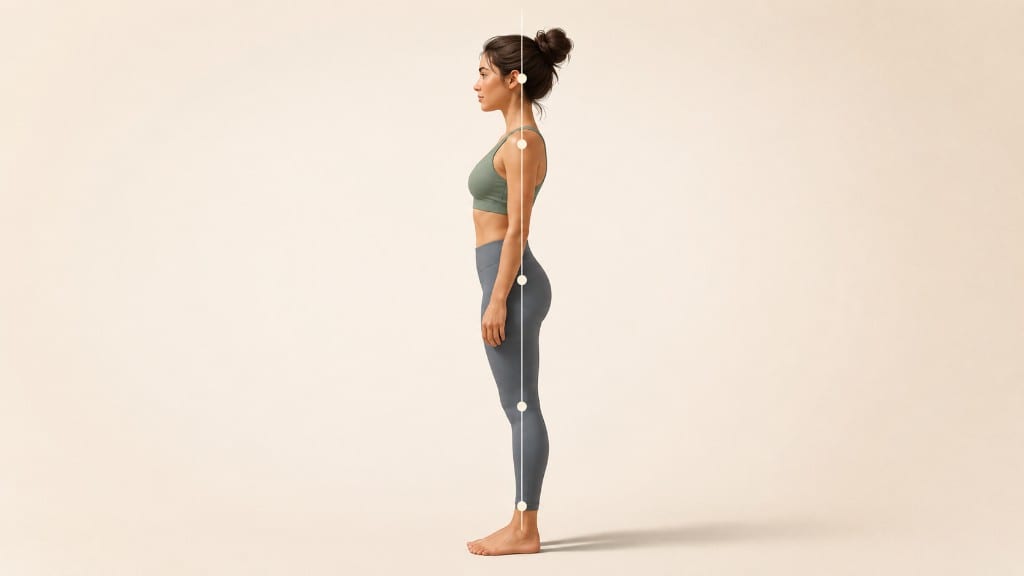
Correct posture is the position where your body is stacked and balanced with the least muscular effort — not the stiffest pose you can hold. Good posture keeps your natural spinal curves while aligning your head, rib cage, and pelvis so gravity travels through bone rather than through strained soft tissue. If you have ever wondered what is good posture or how proper standing posture should feel, this guide walks through the definition, the side-view landmarks, and a simple self-check you can do at home.
What good posture actually means
Posture is not one frozen shape. It is a balanced relationship between segments: neck, thorax, pelvis, and lower limbs working as a unit. The alignment framework in Kendall's postural model describes ideal standing alignment as a gentle S-curve through the spine — inward at the neck, outward at the upper back, inward again at the lower back — with each major joint centered over the one below.
Proper standing posture should feel relaxed. You are not sucking in your stomach, locking your knees, or pulling your shoulders up to your ears. You are lightly engaged: chin level, ribs stacked over pelvis, weight distributed across the feet.
The side-view plumb line
From the side, clinicians often imagine a vertical plumb line falling through key landmarks:
- Ear — roughly in line with the shoulder, not ahead of it.
- Shoulder — middle of the joint over the hip, not rounded forward.
- Hip — over the knee, with a neutral pelvis (not dramatically tipped forward or tucked under).
- Knee — plumb line passes just in front of the knee joint.
- Ankle — plumb line passes just in front of the ankle bone.
When the head sits forward of this line, you have forward head posture. When the shoulders roll in, see rounded shoulders. When the whole trunk leans off vertical, check trunk lean. Small deviations are normal; persistent drift paired with discomfort is worth addressing.
Front and back view: what to look for
From the front, shoulders and hips should look roughly level — unevenness may point to uneven shoulders or uneven hips. From the back, the spine should appear straight vertically, without obvious lateral shift (trunk shift) or rotation.
These front-and-back views complement the side plumb line. Together they give a fuller picture than checking yourself in a mirror from one angle alone.
The wall self-check for correct posture
You can test good standing posture in under a minute:
- Stand with your heels, buttocks, upper back, and back of the head lightly touching a wall — or as close as you can without forcing.
- Notice gaps: if your head cannot reach the wall without tipping your chin down, your head may sit forward. If your lower back arches dramatically away from the wall, your pelvis may be tipped.
- Step away and try to recreate the same alignment without the wall — lighter, not rigid.
For objective numbers, upload a side photo to our posture scan. It measures forward-head and shoulder ratios so you can compare weeks apart.
Good posture when sitting
Standing alignment sets the template; sitting is where most people drift. The same stacking idea applies: ears over shoulders, shoulders over hips, feet flat. Screen height and chair setup matter as much as how you stand — our desk sitting posture guide covers the practical setup.
Myths about correct posture
Myth: good posture means standing military-straight. Flattening every curve overuses muscles and tires you out. Natural curves are part of healthy alignment.
Myth: there is one perfect pose to hold all day. Holding any single position — even a "good" one — creates fatigue. Movement and position changes matter. Clinicians often say the best posture is your next posture: shift, stand, walk, stretch.
Myth: posture never changes. For most adults, alignment responds to stretching, strengthening, and habit change over weeks. See How to Fix Your Posture for the step-by-step approach and a realistic timeline.
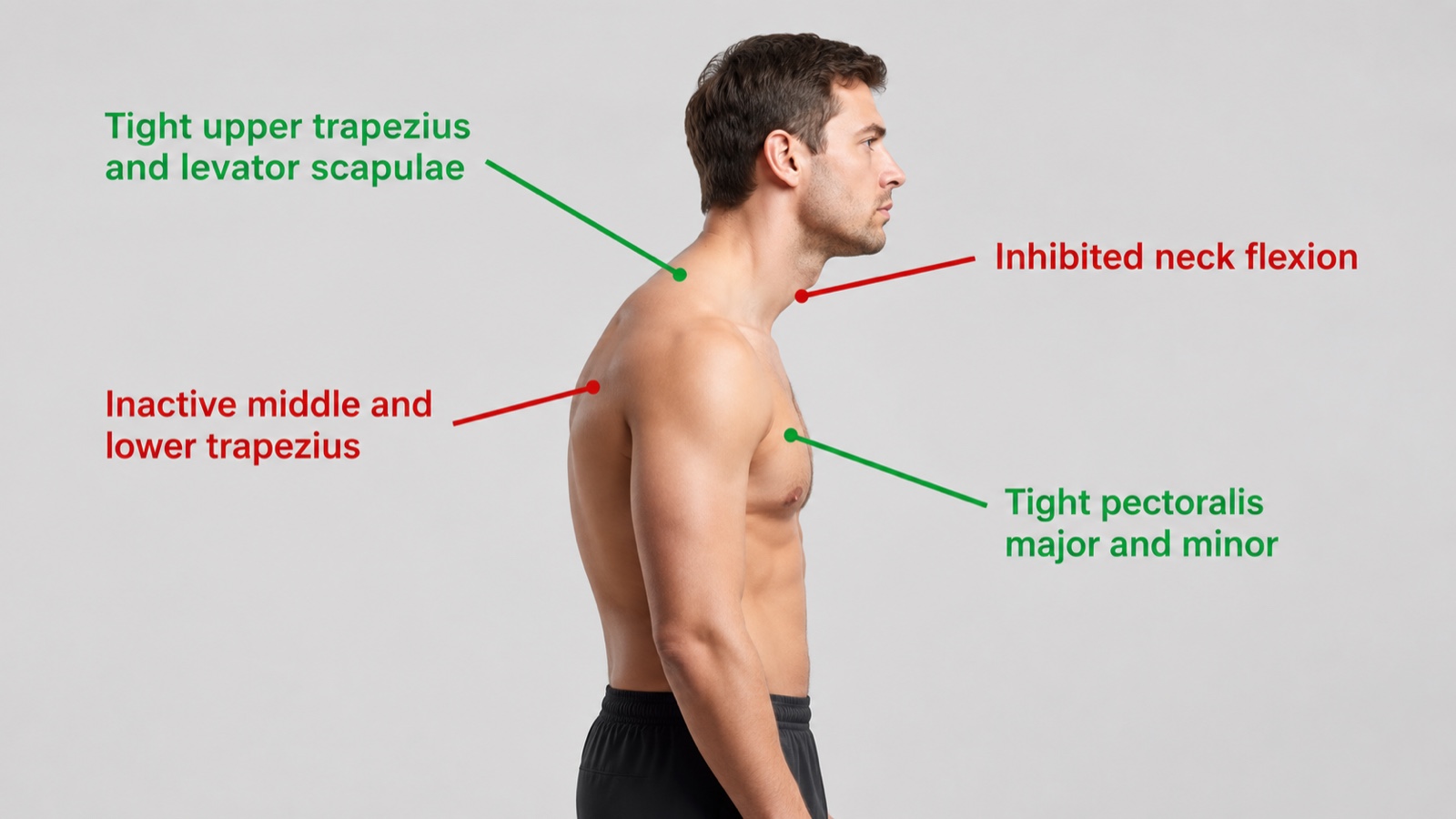 Free programUpper Body Posture ResetLoosen a tight neck and chest, free a stiff upper back, and build the shoulder-blade control to sit and stand tall.See the plan →
When alignment needs more than cues
Mild drift from desk and phone habits responds well to exercise and ergonomics. If you notice persistent pain, numbness, marked asymmetry, or a curve that does not change with effort, a qualified clinician can rule out structural issues and guide treatment.
Start with the plumb line and wall test, match any drift to a condition guide, and build from there. Good posture is balanced, breathable, and trainable — not a performance you stage for a photograph.
Sources
This article draws on established clinical references:
- Muscles: Testing and Function, with Posture and Pain (5th ed.) — Kendall, McCreary, Provance, Rodgers & Romani
- Postural Assessment — Jane Johnson
Wellness, not medical advice. This article is educational. If you have pain, numbness, or a medical concern, see a qualified clinician.