The Best Posture Exercises: A Head-to-Toe Corrective Routine
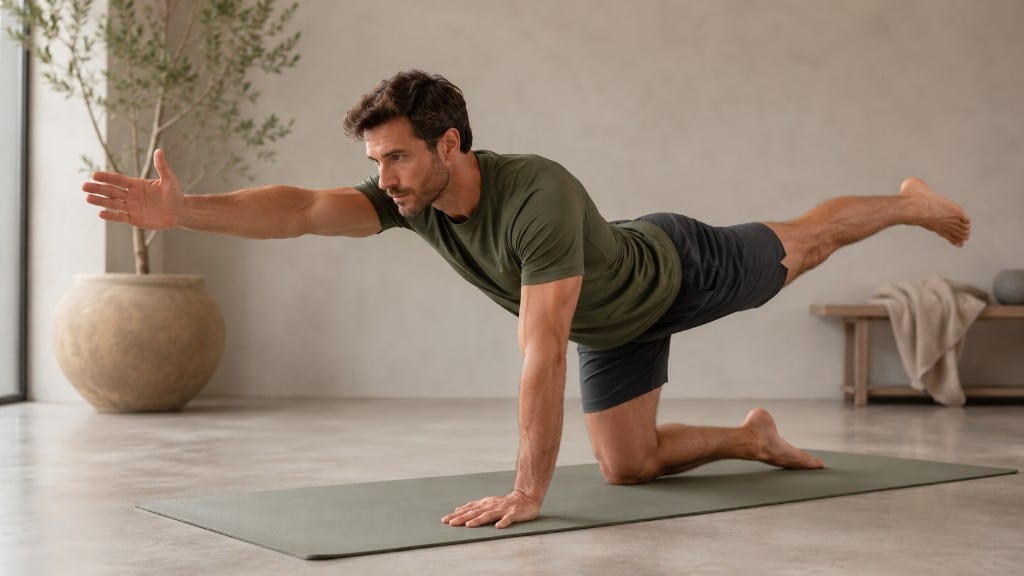
The best exercises for posture are not the ones that burn the most calories — they are the ones that reverse the tight-and-weak patterns keeping you slouched. A useful posture workout lengthens overactive muscles, strengthens underactive ones, and teaches your trunk to hold alignment with less effort. Below is a head-to-toe posture exercises routine built from our library: twelve high-value moves grouped by region, with links to full instructions for each.
How to use this posture exercise routine
Think in two layers:
- Mobility and release — daily, five to ten minutes. Opens tissues that have shortened from desk and phone habits.
- Strength and activation — two to three times per week, two to three sets each. Builds the muscles that hold your new alignment.
For the bigger picture — assessment, patterns, and timeline — read How to Fix Your Posture. Browse the full exercise library or filter by region hubs like neck, shoulder, thoracic, core, and hip.
Neck: reset head position
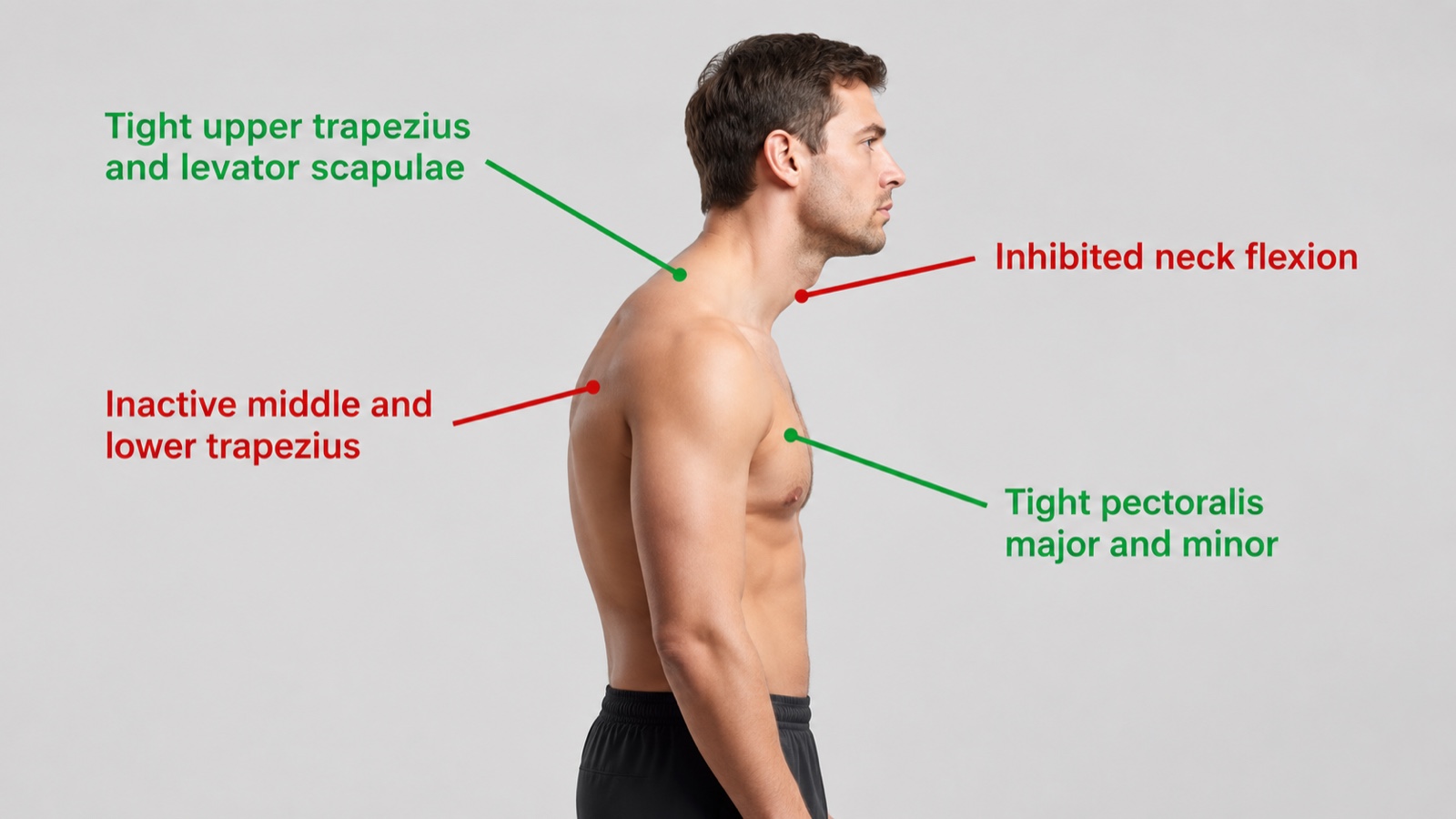
Forward head posture loads the cervical spine. Start with one supported strength drill and one gentle release:
- Supine chin tuck — retrains head position and builds deep front-neck endurance; the foundation of neck posture work.
- Gentle suboccipital release — light pressure at the skull base can ease tension where tight suboccipitals contribute to head-forward posture; stop if it provokes headache or dizziness.
Chest and shoulders: open the front, stabilize the back
Rounded shoulders pull the rib cage down and the head forward. Pair chest opening with scapular control:
- Corner pectoral stretch — lengthens the large chest muscle that internally rotates the arm.
- Lacrosse-ball pec release — combines light pressure with arm movement across the front of the shoulder.
- Floor Y raise — trains lower-trap and serratus patterns while keeping the shoulders away from the ears.
Mid-back: restore thoracic extension
A stiff upper back forces the neck and lower back to compensate. Mobilize the thoracic spine:
- Floor angel — combines shoulder mobility with controlled shoulder-blade movement.
- Box T-spine stretch — extends the upper back at a supported end range.
- Quadruped upward rotation — restores controlled rotation through the mid-back.
Core: hold the stack without bracing
Your core connects rib cage and pelvis. These exercises build endurance without cranking the lower back:
- Dead bug — anterior core work with the spine supported and neutral.
- Forearm front plank — trunk endurance without repeated spinal movement.
- Donkey kicks — train hip extension while the trunk resists rotation and arching.
Hips: unlock the front, strengthen the side
Anterior pelvic tilt and sitting shorten hip flexors and underuse the glutes:
- Kneeling runner's lunge — addresses iliopsoas and rectus femoris tightness from prolonged sitting.
- Clamshells — build lateral hip stability for knee alignment.
 Free programUpper Body Posture ResetLoosen a tight neck and chest, free a stiff upper back, and build the shoulder-blade control to sit and stand tall.See the plan →
Posture exercises at a glance
| Exercise | Region | What it targets | Link |
|---|---|---|---|
| Supine chin tuck | Neck | Head retraction, deep flexor pattern | supine-chin-tuck |
| Suboccipital release | Neck | Base-of-skull tension | Gentle self-release (instructions above) |
| Corner pec stretch | Chest / shoulder | Internal rotation, rounded shoulders | milo-corner-pec-stretch |
| Lacrosse-ball pec | Chest / shoulder | Anterior shoulder and chest tension | milo-lacrosse-ball-to-pec |
| Floor Y raise | Shoulder | Elevated shoulder, weak lower trap | floor-y-raise |
| Floor angel | Mid-back | Shoulder mobility, scapular control | milo-floor-angel |
| Box T-spine stretch | Thoracic | Upper-back stiffness | milo-box-t-spine-stretch |
| Quadruped rotation | Thoracic | Controlled thoracic rotation | milo-quadruped-upward-rotation |
| Dead bug | Core | Anterior core endurance | dead-bug |
| Forearm front plank | Core | Trunk endurance | forearm-front-plank |
| Donkey kicks | Core / hip | Trunk control with hip extension | afr-donkey-kicks |
| Kneeling runner lunge | Hip | Anterior tilt, sitting tightness | blahnik-kneeling-runners-lunge |
| Clamshells | Hip | Lateral hip weakness | afr-clamshells |
Sample weekly posture workout schedule
Daily (5–10 min): supine chin tuck, gentle suboccipital release, pec stretches, box T-spine stretch, kneeling runner's lunge.
Mon / Wed / Fri (15–20 min): supine chin tuck, floor Y raise, dead bug, forearm front plank, donkey kicks, and clamshells — two sets each, quality over speed.
Re-test with the posture scan or wall check after four weeks. Adjust volume if an area still feels stuck — often the mid-back or hips need extra mobility before strength work pays off.
Sources
This article draws on established clinical references:
- Muscles: Testing and Function, with Posture and Pain (5th ed.) — Kendall, McCreary, Provance, Rodgers & Romani
- Postural Correction — Jane Johnson
- Rebuilding Milo — Aaron Horschig
Wellness, not medical advice. This article is educational. If you have pain, numbness, or a medical concern, see a qualified clinician.