Slouched Posture: Why You Slouch and How to Stop
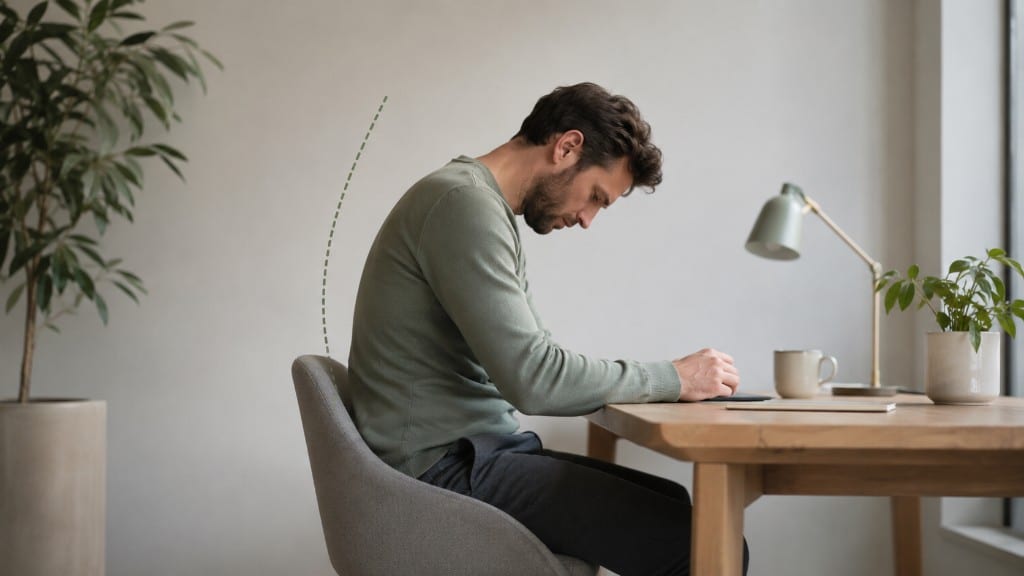
Slouched posture is the shape most of us slip into by afternoon — shoulders forward, upper back rounded, lower back flattened or over-arched, head drifting toward the screen. Slouching feels comfortable in the moment because it is the path of least effort. The problem is that your nervous system learns whatever you repeat. If you want to stop slouching, you need to understand why slumped posture happens, what it does to your whole spine, and how to make upright sitting the easier default.
Why you slouch
Slouching is rarely a character flaw. It is physics plus habit:
- Muscle fatigue — anti-gravity muscles tire; collapsing forward takes less active work
- Poor ergonomics — a low screen, deep chair, or keyboard too far away pulls you into flexion
- Learned pattern — years of desk and phone use train "screen posture" as your baseline
- Missing strength — when your mid-back and core cannot hold you up comfortably, slumping wins
The result is whole-spine flexion: forward head at the top, rounded shoulders in the middle, and a pelvis that either tucks under or dumps forward at the bottom. One collapsed link pulls the rest of the chain with it.
What slouching looks like from top to bottom
| Segment | Common slouch pattern | What it feels like |
|---|---|---|
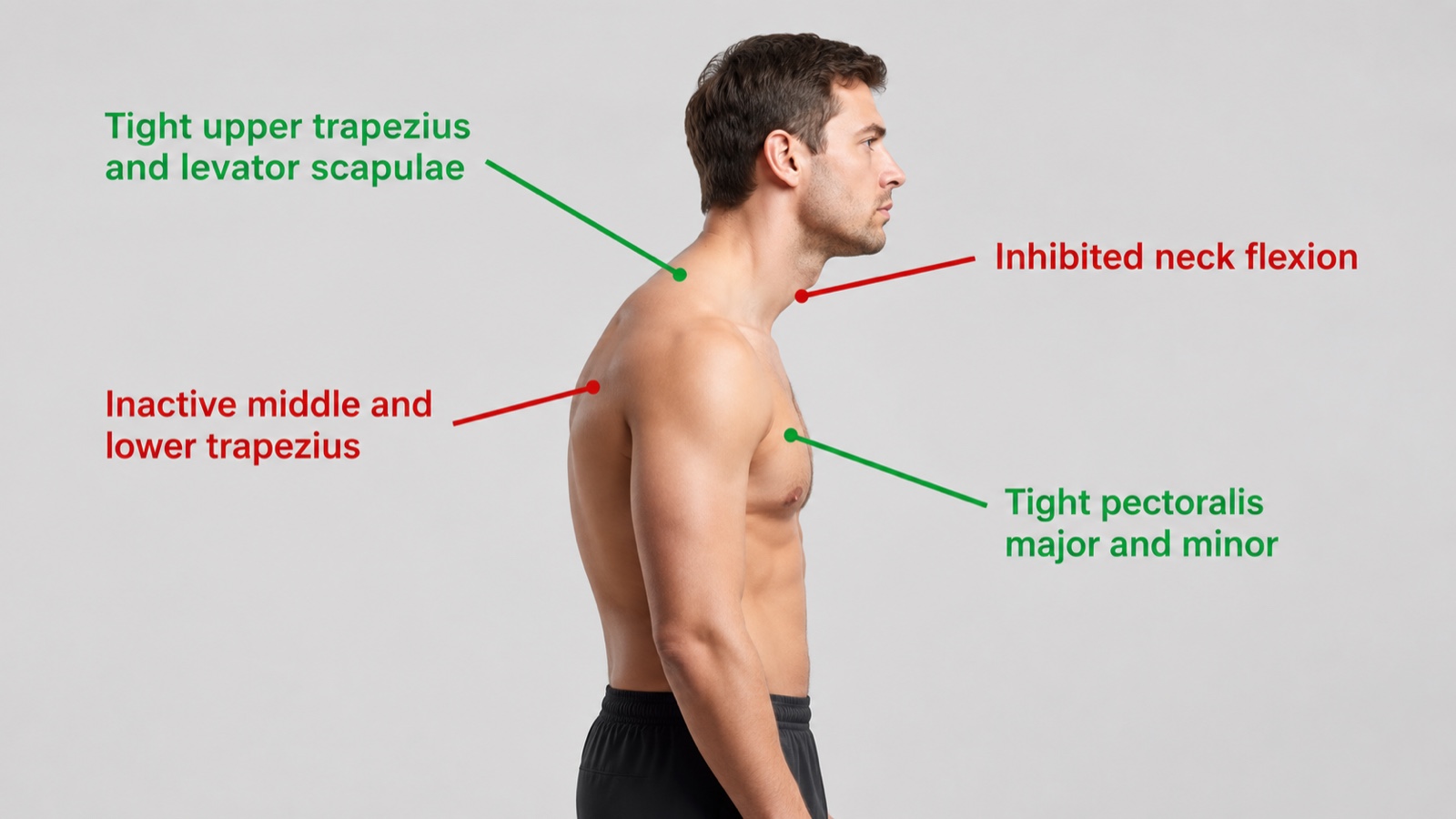
| Head & neck | Forward, chin poked | Neck stiffness by end of day |
| Thoracic spine | Rounded upper back | Chest feels tight, breathing shallow |
| Lumbar spine | Flattened or exaggerated curve | Lower back ache or hip tightness |
| Pelvis | Tucked or anteriorly tilted | Glutes feel "off," hamstrings tight |
If your slouch is extreme — knees pulled toward the chest, spine deeply flexed — you may recognize the pattern described in shrimp posture. Desk workers should also read desk sitting posture for setup fixes that attack the cause, not just the symptom.
How to stop slouching: three layers
Lasting change needs all three — skipping one layer usually means the slouch returns.
1. Fix the environment
- Screen top third at eye level; keyboard close enough that elbows stay near your sides
- Feet flat, hips slightly above knees if your chair allows
- Stand or walk every 30–45 minutes — the best posture is your next posture
For a full framework, start with how to fix posture and use our posture scan to measure forward-head and shoulder drift from a side-on photo.
2. Mobilize what has shortened
Hours of flexion stiffen the thoracic spine. Gentle extension helps:
- Box T-spine stretch — opens the upper back at a supported end range without loading the neck
Pair thoracic work with neck and chest routines from the forward-head and rounded-shoulder guides if those segments are part of your slouch.
3. Strengthen what should hold you up
Slouching is partly an endurance problem — your postural muscles need capacity:
- Dead bug — builds trunk stability and anterior-core endurance with the head and spine supported
- Forearm front plank — adds full-trunk endurance without repeated spinal movement
Explore more options in the core region hub and thoracic region hub.
 Free programUpper Body Posture ResetLoosen a tight neck and chest, free a stiff upper back, and build the shoulder-blade control to sit and stand tall.See the plan →
Reminders and re-patterning
Exercises change what your muscles can do; cues and breaks decide what they actually do:
- Set a timer for posture resets — uncurl the upper back, stack your head over your shoulders, then relax into neutral (not rigid)
- Try a shorter sitting block with a standing break rather than muscling through three hours folded
- Notice your slouch triggers — tiredness, deep focus, or a particular chair — and adjust the setup, not just your willpower
What to expect
Most people feel less end-of-day fatigue within two to three weeks of better ergonomics plus daily mobility. Visible posture change often shows up in photos over four to eight weeks. Slouching will still happen — the goal is making it occasional rather than your default.
You are not trying to sit like a statue. You are teaching your body that upright is the easier path — one break, one stretch, and one strengthening session at a time.
Sources
This article draws on established clinical references:
- Muscles: Testing and Function, with Posture and Pain (5th ed.) — Kendall, McCreary, Provance, Rodgers & Romani
- Postural Assessment — Jane Johnson
- Postural Correction — Jane Johnson
Wellness, not medical advice. This article is educational. If you have pain, numbness, or a medical concern, see a qualified clinician.