Hunched Posture and Kyphosis: How to Straighten a Rounded Upper Back

A hunch posture — sometimes called hunchback posture or kyphotic posture — is that rounded curve through the upper back that makes you look folded forward even when you are trying to stand tall. Kyphosis is the clinical term for an excessive outward curve of the thoracic spine. For most desk workers, the hunch is a flexible habit you can improve with mobility and strength. For some people, structural kyphosis in the vertebrae themselves needs a clinician's assessment before you train aggressively.
Hunch posture vs. structural kyphosis
Not every rounded upper back is the same. Telling the difference matters:
| Type | What it is | Can exercise help? |
|---|---|---|
| Postural / flexible | A slouch you can straighten when reminded | Often yes — mobility + mid-back strength + habits |
| Structural kyphosis | Fixed curve from vertebral shape (e.g. Scheuermann's) or age-related change | Partially — exercise can still support function; see a clinician for assessment |
| Combined | Long-standing slouch that stiffens into reduced mobility | Yes, with patience — mobility work comes first |
Quick check: stand sideways to a mirror and try to stand as tall as you can without straining. If the upper-back curve visibly reduces, you are likely working with a flexible pattern. If the curve stays the same no matter how hard you try, get evaluated before loading extension exercises heavily.
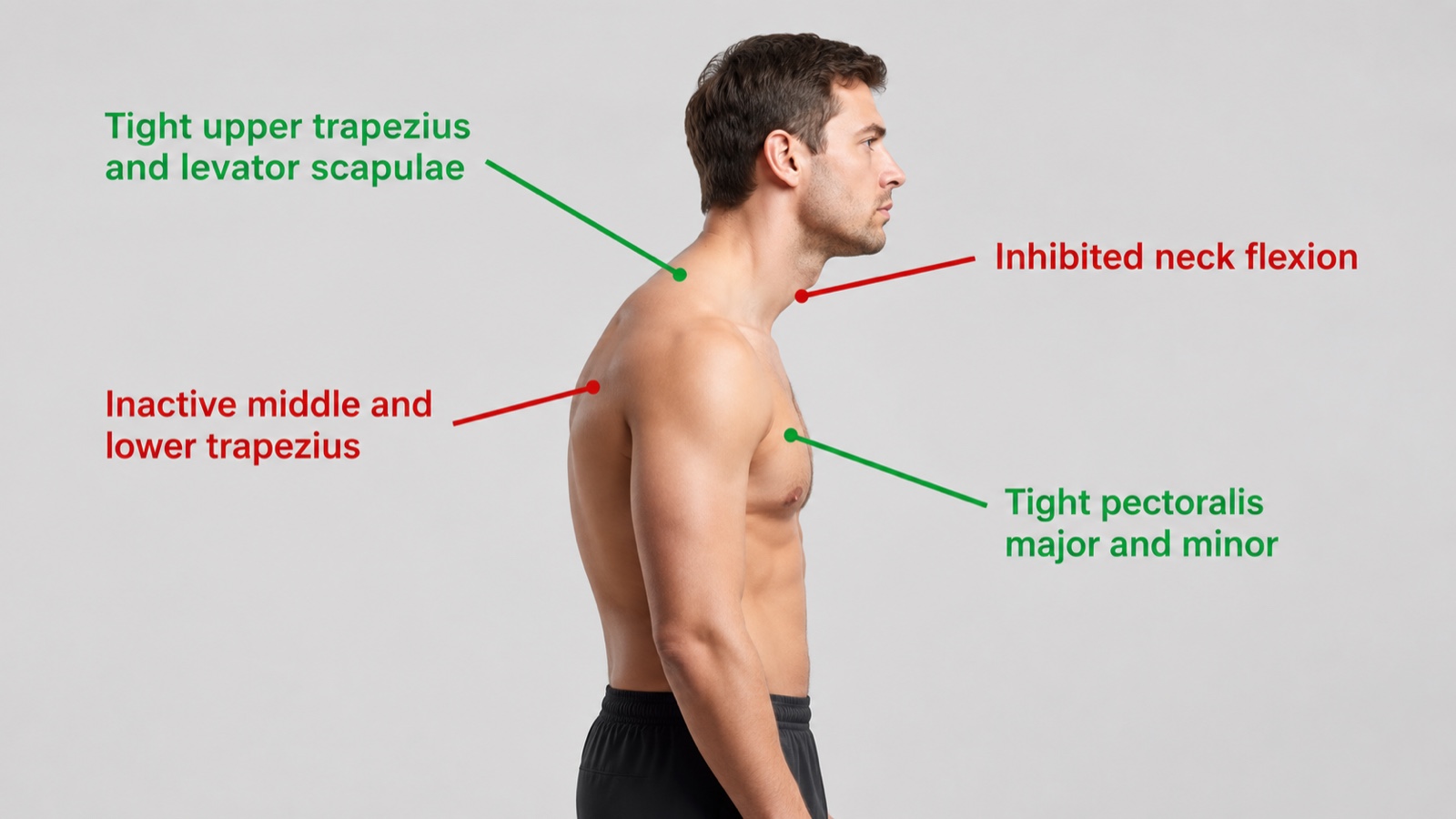
As Kendall describes in postural assessment, the thoracic spine normally has a gentle outward curve. Kyphotic posture means that curve has increased — often from prolonged flexion, tight chest muscles, and weak thoracic spine extensors that should help you extend and rotate through the mid-back.
What a hunched upper back does to the rest of you
A kyphotic thoracic spine rarely travels alone:
- Forward head — your neck compensates to keep your eyes level
- Rounded shoulders — the shoulder girdle follows the curve of the rib cage
- Reduced breathing room — a collapsed chest limits rib expansion during deep breaths
Address the thoracic spine and the segments above and below often improve together. Read rounded shoulders fix and forward head posture for the paired upper-body work. If your whole silhouette slumps — not just the upper back — see slouched posture for the full-chain picture.
Thoracic mobility: unlock the curve
Before you strengthen, restore movement through the thoracic region. Stiff segments force the neck and lower back to compensate.
Extension and rotation drills
- Box T-spine stretch — a supported way to train extension through the upper back
- Quadruped upward rotation — opens rotation through the mid-back without loading the lower spine
- Floor angel — combines upper-back opening with controlled shoulder-blade movement
Start with small ranges. Extension should feel like opening, not pinching. Stop if you feel sharp pain or nerve symptoms.
Mid-back strengthening: hold the new shape
Mobility without strength means the hunch returns the moment you sit down. Add:
- Floor Y raise — trains the lower trapezius while keeping the shoulders away from the ears
- Dead bug — builds trunk endurance with the spine supported and neutral
These pair well with chest opening from the rounded-shoulders routine. Think of it as making an upright thoracic spine the easier default, not a position you force all day.
 Free programUpper Body Posture ResetLoosen a tight neck and chest, free a stiff upper back, and build the shoulder-blade control to sit and stand tall.See the plan →
Daily habits that support a straighter upper back
- Screen height at eye level — less reason to fold forward
- Movement breaks — stand, reach overhead, or walk every 30–45 minutes
- Sleep position — side sleeping with enough pillow support keeps the thoracic spine from spending all night flexed
What to expect
Flexible, posture-related hunching often improves noticeably within four to eight weeks of daily thoracic mobility plus two to three weekly strength sessions. Structural kyphosis changes more slowly and may have a ceiling — but targeted exercise can still improve how you move and how much effort upright posture requires.
Work the thoracic spine first, strengthen what holds it, and fix the desk habits that taught your back to fold. Your upper back was built to move — give it the range and support to stand taller.
Sources
This article draws on established clinical references:
- Muscles: Testing and Function, with Posture and Pain (5th ed.) — Kendall, McCreary, Provance, Rodgers & Romani
- Postural Correction — Jane Johnson
- Rebuilding Milo — Aaron Horschig
Wellness, not medical advice. This article is educational. If you have pain, numbness, or a medical concern, see a qualified clinician.