Desk & Sitting Posture: How to Set Up and Sit Without Wrecking Your Body
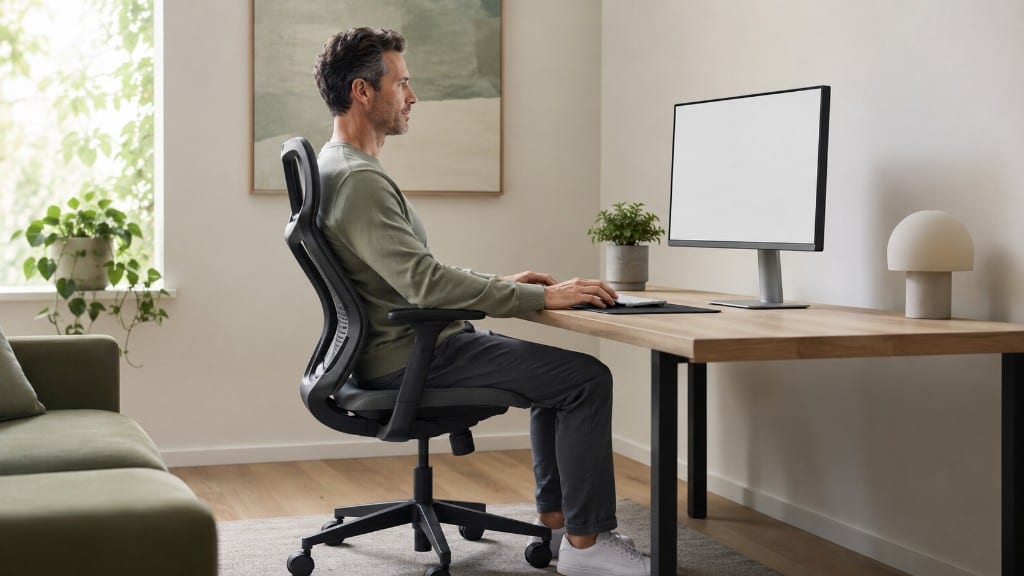
Desk posture and sitting posture are not about finding one perfect angle and freezing there for eight hours. Good office posture — the ergonomics of how you sit, type, and look at a screen — is a setup that lets you move, stack your joints with reasonable ease, and recover quickly when you drift. If your neck, shoulders, or lower back feel worse on workdays, the chair and monitor matter — but prolonged holding of any position is usually the real problem.
The correct desk sitting setup
Use this checklist to audit your workstation. Small adjustments compound over a full workweek.
| Element | Target setup | Why it matters |
|---|---|---|
| Feet | Flat on floor or on a stable footrest | Grounds the pelvis; reduces slouching |
| Hips | Slightly above knee height | Opens the hip angle; eases hip-flexor load |
| Lower back | Light lumbar support or rolled towel | Maintains gentle lumbar curve without forcing an arch |
| Shoulders | Relaxed, elbows near your sides | Reduces rounded shoulders drift |
| Screen | Top of monitor roughly at eye level | Cuts downward gaze that drives forward head posture |
| Keyboard / mouse | Elbows near 90°, wrists neutral | Prevents reach-and-round patterns |
| Phone / second screen | Raised to chest height when possible | Avoids repetitive neck flexion |
As Kendall's alignment model reminds us, the goal is a balanced stack — ear over shoulder over hip — even when seated. You will not hold it perfectly all day; the setup makes returning to stack easier.
"The best posture is your next posture"
No seated office posture is designed for hours without movement. Research and clinical practice both point the same way: variation beats rigidity.
- Change position every 20–30 minutes — stand, walk, or perch on the edge of your chair
- Use a sit-stand desk if you have one, but standing all day is not the answer either
- Micro-shifts count: uncross legs, roll shoulders, look away from the screen
The phrase "the best posture is your next posture" is not a excuse to slouch — it is permission to stop chasing a static ideal. Your body adapts to what you repeat. Give it variety.
How sitting drives common postural patterns
Hours at a desk rarely produce one isolated problem. Typical chains include:
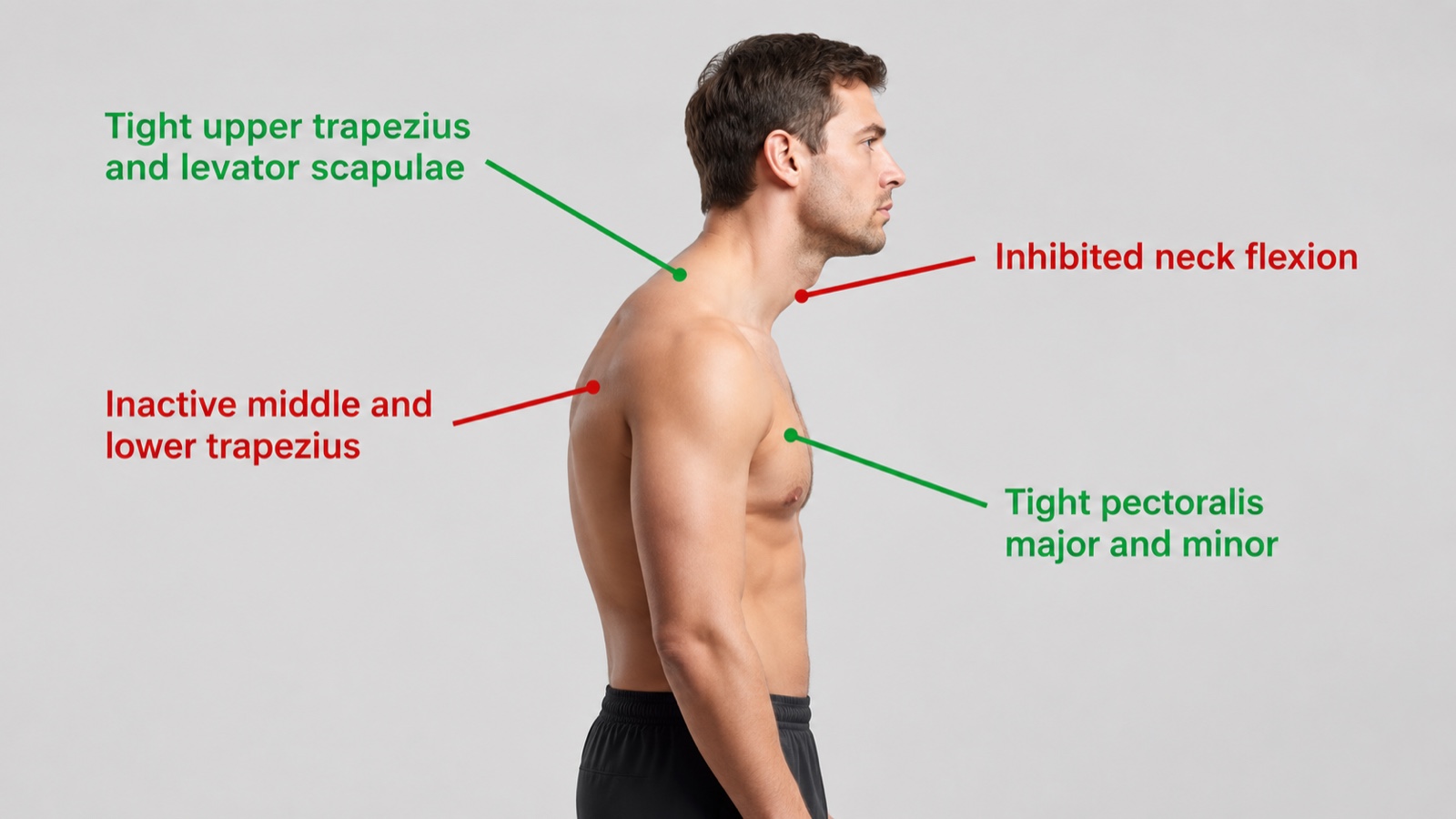
Forward head and neck. When the screen sits too low, your head translates forward to keep your eyes level. That feeds forward head posture and overlaps with text neck and neck posture. Explore the neck region hub for targeted work.
Rounded shoulders and slouch. Reachy keyboard placement and a collapsed chest encourage slouched posture and the upper-crossed pattern. See rounded shoulders fix for the chest-and-mid-back balance.
Tipped pelvis and tight hip flexors. A hips-low, knees-high chair position shortens hip flexors and can contribute to anterior pelvic tilt. The hip region hub covers the lower-body side.
Use our posture scan for a baseline photo if you want measured forward-head or shoulder ratios before changing your setup.
Desk-friendly movement resets
You do not need a gym between meetings. These take two to five minutes and fit at your desk or beside it:
Neck and upper back
- Supine chin tuck — use a small nod and backward glide; ten slow reps
- Box T-spine stretch — open the upper back at a supported end range
Hips and lower back
- Kneeling runner's lunge — open the front of the hip after long sitting
- Stand, walk to the kitchen, or climb a flight of stairs — hip extension through walking often beats another stretch
For a fuller library, browse posture exercises or the exercise directory.
 Free programUpper Body Posture ResetLoosen a tight neck and chest, free a stiff upper back, and build the shoulder-blade control to sit and stand tall.See the plan →
Building better sitting habits over time
Morning setup. Before you open email, run through the checklist table once. Feet, hips, screen, shoulders — thirty seconds.
Timer-based breaks. Set a phone reminder every 30–45 minutes. Stand, chin tuck, hip stretch, sit back down with intention.
End-of-day audit. Notice whether one shoulder feels higher (uneven shoulders) or your lower back feels arched after commuting. That feedback tells you what to prioritise tomorrow.
Weekly progress. Side photos or a repeat scan every few weeks show whether desk changes and movement breaks are shifting your default.
When desk ergonomics alone is not enough
Setup removes unnecessary strain, but muscle imbalance still needs training. If sitting always pulls you into forward head posture and rounded shoulders despite a good chair, pair ergonomics with the routines in how to fix posture. Exercises change what your body can do; your desk setup and movement habits decide what it does during the workday.
Good sitting posture at a desk is a living practice — reasonable setup, frequent movement, and targeted resets when you feel yourself drift. That combination protects your neck, shoulders, and hips far better than any single "perfect" position held until lunch.
Sources
This article draws on established clinical references:
- Muscles: Testing and Function, with Posture and Pain (5th ed.) — Kendall, McCreary, Provance, Rodgers & Romani
- Postural Correction — Jane Johnson
Wellness, not medical advice. This article is educational. If you have pain, numbness, or a medical concern, see a qualified clinician.