"Shrimp Posture": The Curled-Over Slump and How to Uncurl It
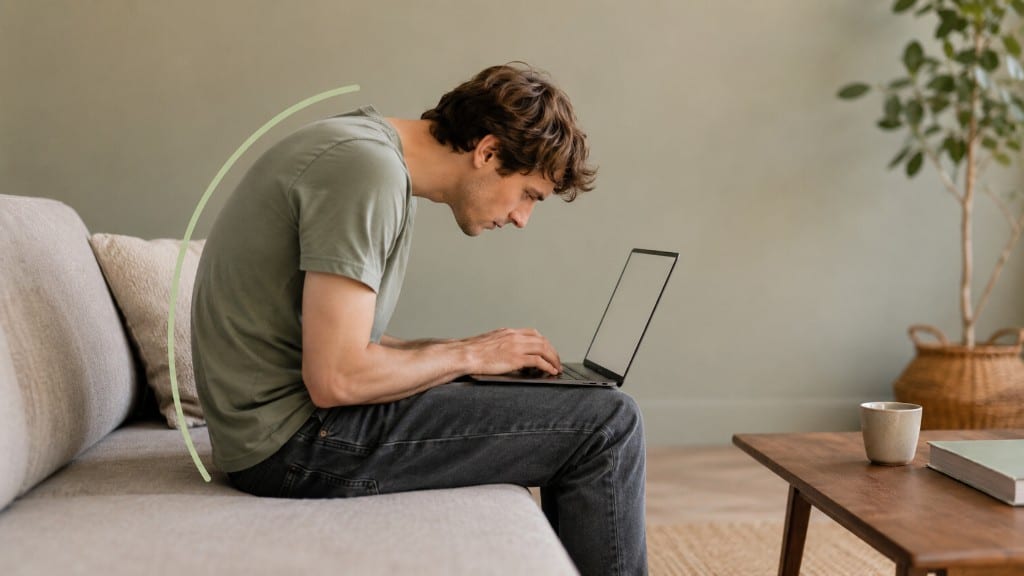
Shrimp posture is the informal name for a whole-body curled posture — a C-shaped slump where your head juts forward, your shoulders round, and your lower back drops into a soft flexion curve, like a shrimp curled on a plate. If you recognize that silhouette in the mirror or in photos, you are not alone. Screens, soft sofas, and fatigue train this C-curve slump hour by hour until it feels like your default. The good news: you can uncurl it segment by segment with mobility, strength, and better daily positions.
What shrimp posture looks like
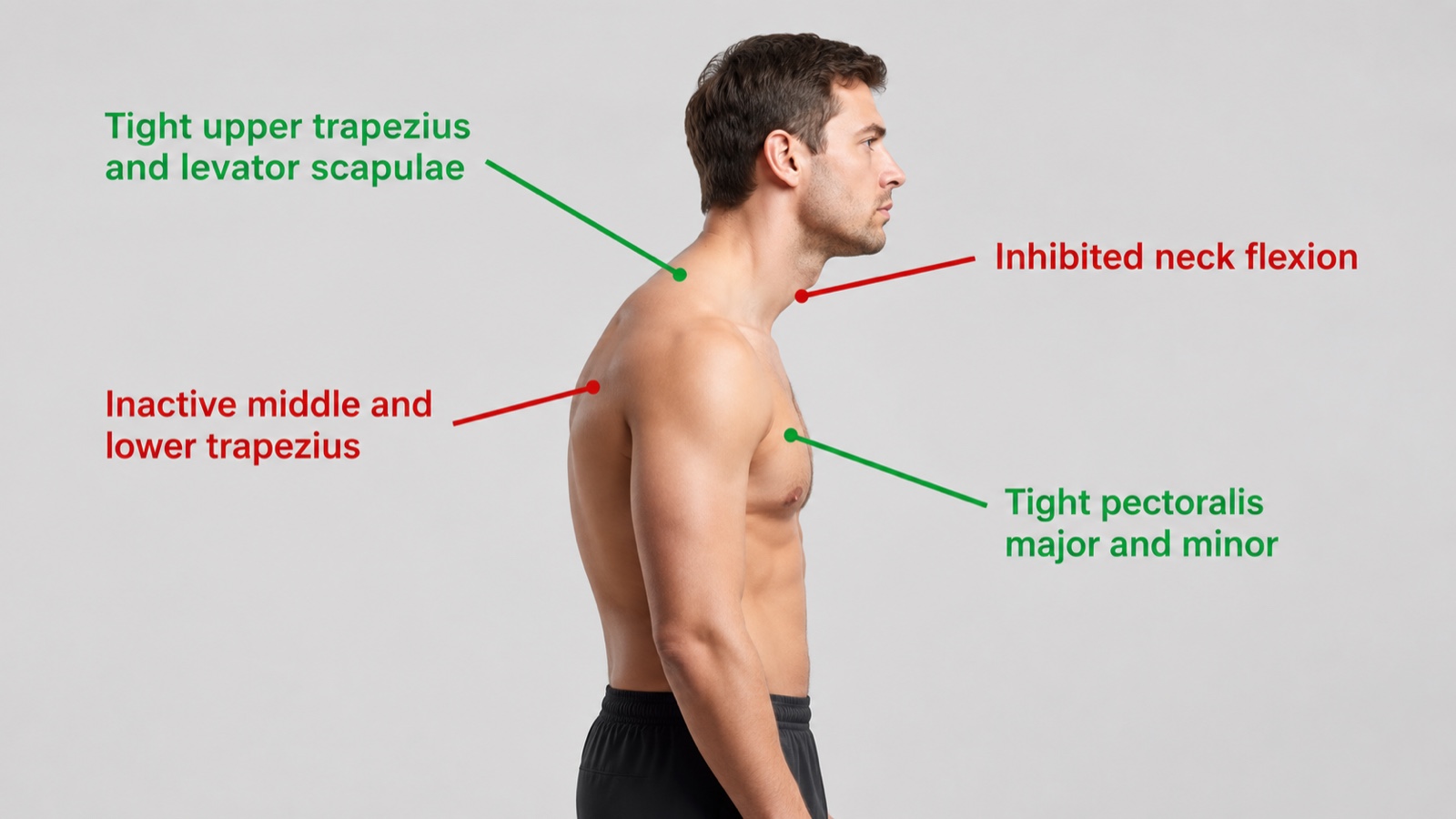
Shrimp posture is not one isolated fault — it is three familiar patterns stacked together:
| Segment | What you see | Related pattern |
|---|---|---|
| Neck / head | Chin forward, back of neck shortened | Forward head posture |
| Upper back / shoulders | Rounded thoracic spine, shoulders rolled in | Rounded shoulders |
| Lower back / pelvis | Lumbar flexion, pelvis tucked or slumped | Slouched posture |
From the side, the whole spine traces one continuous C rather than its natural S-shaped curves. People use the shrimp metaphor because the body folds forward at both ends — head and tail of the curve — with the belly of the C in the mid-back.
Read the component guides for depth: forward head posture, rounded shoulders fix, and hunchback & kyphosis.
Why the C-curve develops
Shrimp posture is almost always learned, not mysterious:
- Screen time — laptop on a desk, phone in the lap; the head tracks the eyes downward and the upper back follows.
- Soft seating — deep sofas and bucket seats lack support; you sink into flexion instead of stacking over your hips.
- Fatigue — as core and postural muscles tire, you collapse into the path of least effort.
- Missing movement — long stillness lets the nervous system encode the slump as normal.
The thoracic region stiffens in flexion while the front of the chest shortens. The neck compensates by creeping forward. The lower back often flexes because the pelvis slides under you on the chair. One habit, many segments.
How to uncurl: work from top to bottom
You do not fix curled posture by "sitting up straight" once and hoping it sticks. Uncurl the chain in order — release and retrain each segment, then practice holding the new shape during real life.
Neck: undo the forward curl
Start where the C begins — the head in front of the shoulders.
- Supine chin tuck — combine a small nod with a gentle backward glide; ten slow reps build endurance in the deep neck flexors without overworking the surface neck muscles.
Phone and desk habits from text neck and neck posture matter here — exercises without habit change invite relapse.
Mid-back: open the thoracic C
The middle of the shrimp curve lives in the upper back.
- Box T-spine stretch — gentle, supported extension at the mid-thoracic level; keep the ribs controlled and move slowly.
- Quadruped upward rotation — controlled rotation for stiff segments; explore more in the thoracic region hub.
Pair opening the back with chest length — corner pectoral stretch — so rounded shoulders do not pull you back into the curl.
Core and lower back: support the stack
The bottom of the C needs stability, not just stretching.
- Donkey kicks — train hip extension while the trunk stays long instead of cranking into an arch.
- Dead bug — builds anterior core endurance with the spine supported instead of repeatedly flexed.
These exercises build the capacity to sit and stand with your pelvis neutral instead of slid under you. For a full habit framework, see how to fix posture and posture exercises.
 Free programUpper Body Posture ResetLoosen a tight neck and chest, free a stiff upper back, and build the shoulder-blade control to sit and stand tall.See the plan →
Daily habits that keep you uncurlled
Exercise changes what you can do; environment decides what you do:
- Raise screens to eye level; stop chasing the phone with your head.
- Sit forward on firm chairs or use a small lumbar roll — not to force an arch, but to prevent pelvis tuck and full lumbar flexion.
- Stand and move every 30–45 minutes — the best posture is your next posture.
- Check your baseline — a side photo or posture scan shows whether the C-curve is easing over weeks.
Sleep position matters too; a pillow that pushes your head forward overnight can undo daytime work. See sleeping posture for alignment tips.
What to expect over time
Most people notice less end-of-day neck and upper-back fatigue within a few weeks of daily mobility and regular strength work. Visible shrimp posture change in photos often takes four to eight weeks of consistent practice — longer if the pattern is years old.
If pain, numbness, or significant stiffness limits your range of motion, see a qualified clinician before loading aggressive extension or strength work.
Shrimp posture is a nickname, not a diagnosis — but it describes a real whole-body slump you can reverse piece by piece. Uncurl the neck, open the thoracic spine, stabilize the core, and let your daily setup reinforce the stack.
Sources
This article draws on established clinical references:
- Muscles: Testing and Function, with Posture and Pain (5th ed.) — Kendall, McCreary, Provance, Rodgers & Romani
- Postural Correction — Jane Johnson
Wellness, not medical advice. This article is educational. If you have pain, numbness, or a medical concern, see a qualified clinician.