Uneven Shoulders
Also known as: shoulder obliquity, shoulder asymmetry.
What it is
Uneven shoulders describe a left-to-right height difference across the shoulders. It can change with arm position, carrying habits, handedness, muscle activity, trunk position, or uneven hips. The upper trapezius, levator scapulae, lower trapezius, and serratus anterior all influence shoulder-blade position, but the scan cannot determine from a photograph which muscle is tight, weak, or overactive. The asymmetry may be flexible and habitual or may reflect a factor elsewhere in the body. It is therefore an observed alignment pattern, not a diagnosis. A new or pronounced difference with pain, restricted arm movement, numbness, tingling, or weakness should be evaluated by a qualified clinician.
How to spot it
From a centered front or back photo, the line across the shoulder landmarks slopes rather than appearing level. The scan reports that angle after accounting for camera tilt. Let both arms hang naturally, remove a shoulder bag, and confirm that the torso faces the camera. Repeat the photo after gently shrugging and relaxing both shoulders; a consistent difference across attempts is more useful than a single posed frame.
Muscles involved
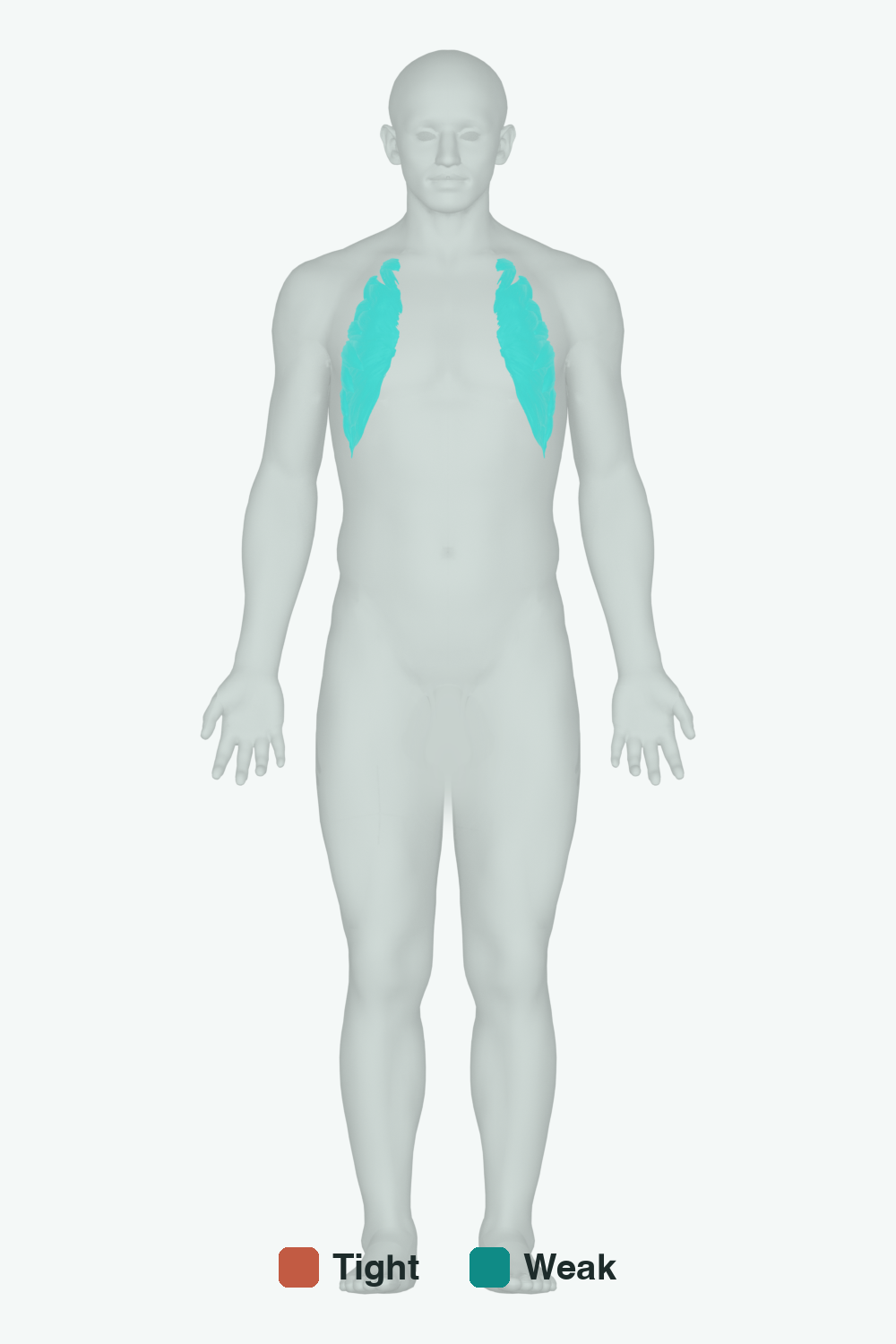
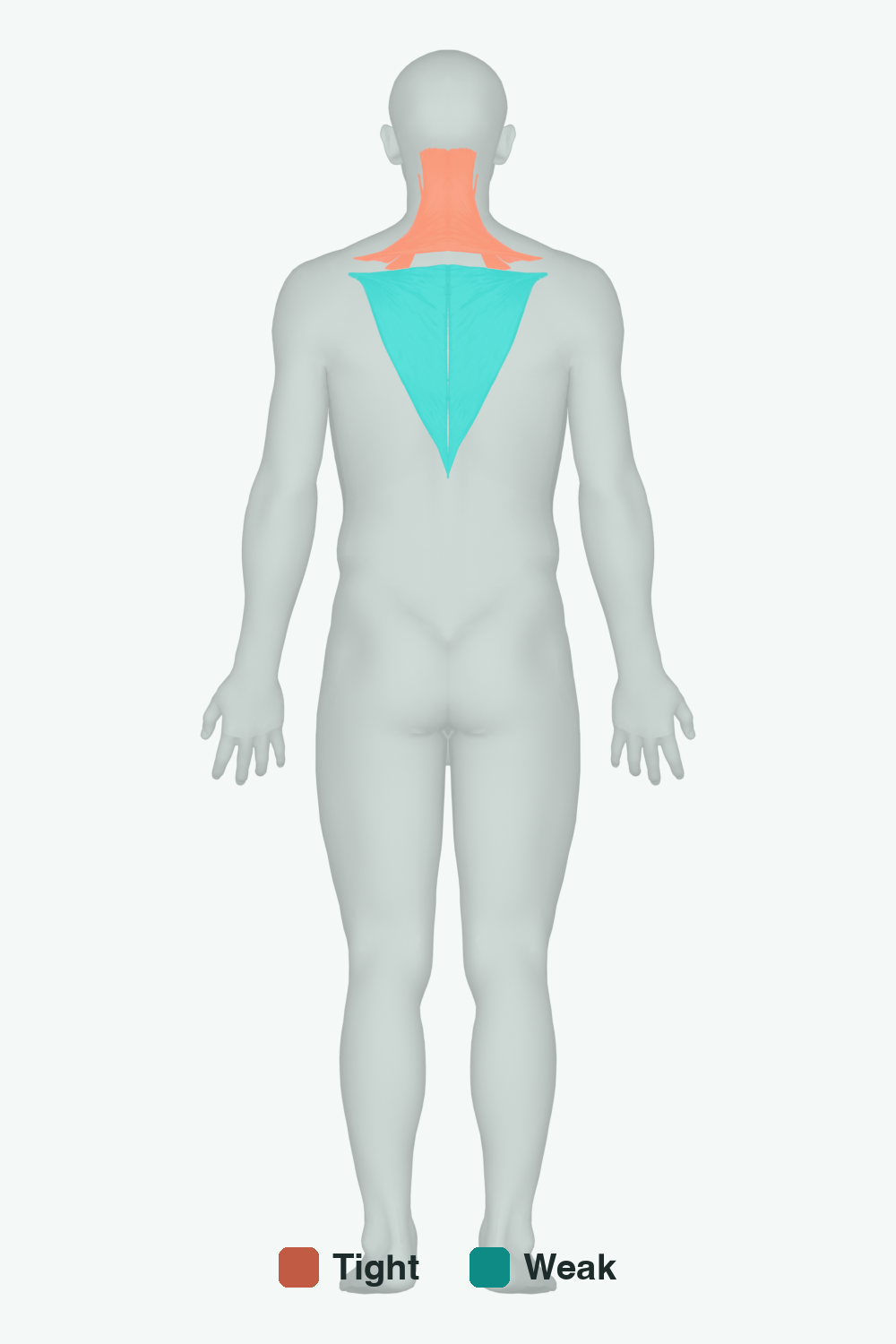
Coral = typically tight, teal = typically weak. Anatomical illustration from Z-Anatomy (derived from BodyParts3D), licensed under CC BY-SA 4.0.
Typically tight: upper trapezius, levator scapulae
Typically weak: lower trapezius, serratus anterior
How to correct it
- Practice relaxed, level shoulder positioning without forcefully pulling either shoulder down.
- Build shoulder-blade control with appropriately scaled lower-trapezius, serratus, and rowing exercises.
- Review one-sided habits such as carrying a bag or holding a phone at one shoulder.
- Check whether trunk shift or uneven hip position changes with the shoulder asymmetry rather than treating the shoulder in isolation.
Recommended exercises
Related muscles
Educational wellness content — not a diagnosis. See a clinician for pain or concerns. Run a posture scan to check your own alignment.