Standing Knee Bend
Also known as: flexed-knee stance, genu flexum.
What it is
Standing knee flexion describes a knee that stays bent in a relaxed stance. A small soft-knee position can be intentional or temporary, while a repeatable bend may be associated with habit, comfort, ankle or hip position, muscle capacity, or limited knee extension. The quadriceps must remain active when the knee is held farther from straight, but a photograph cannot determine whether strength, flexibility, joint motion, pain avoidance, or another factor explains the posture. One-sided and two-sided patterns may also have different contributors. The scan is a visual screening measurement, not a diagnosis. Seek clinical advice for pain, swelling, locking, giving way, a hard block to straightening, or a change that followed injury.
How to spot it
Use a relaxed side photo with the feet flat and weight distributed naturally. The knee remains visibly flexed rather than resting close to straight; the scan estimates this from the hip-knee-ankle angle. Repeat the stance without deliberately locking or bending the knees. As a separate movement check, slowly straighten each knee only as far as comfortable. If full extension is unavailable, painful, or markedly different between sides, assessment is more appropriate than forcing posture correction.
Muscles involved
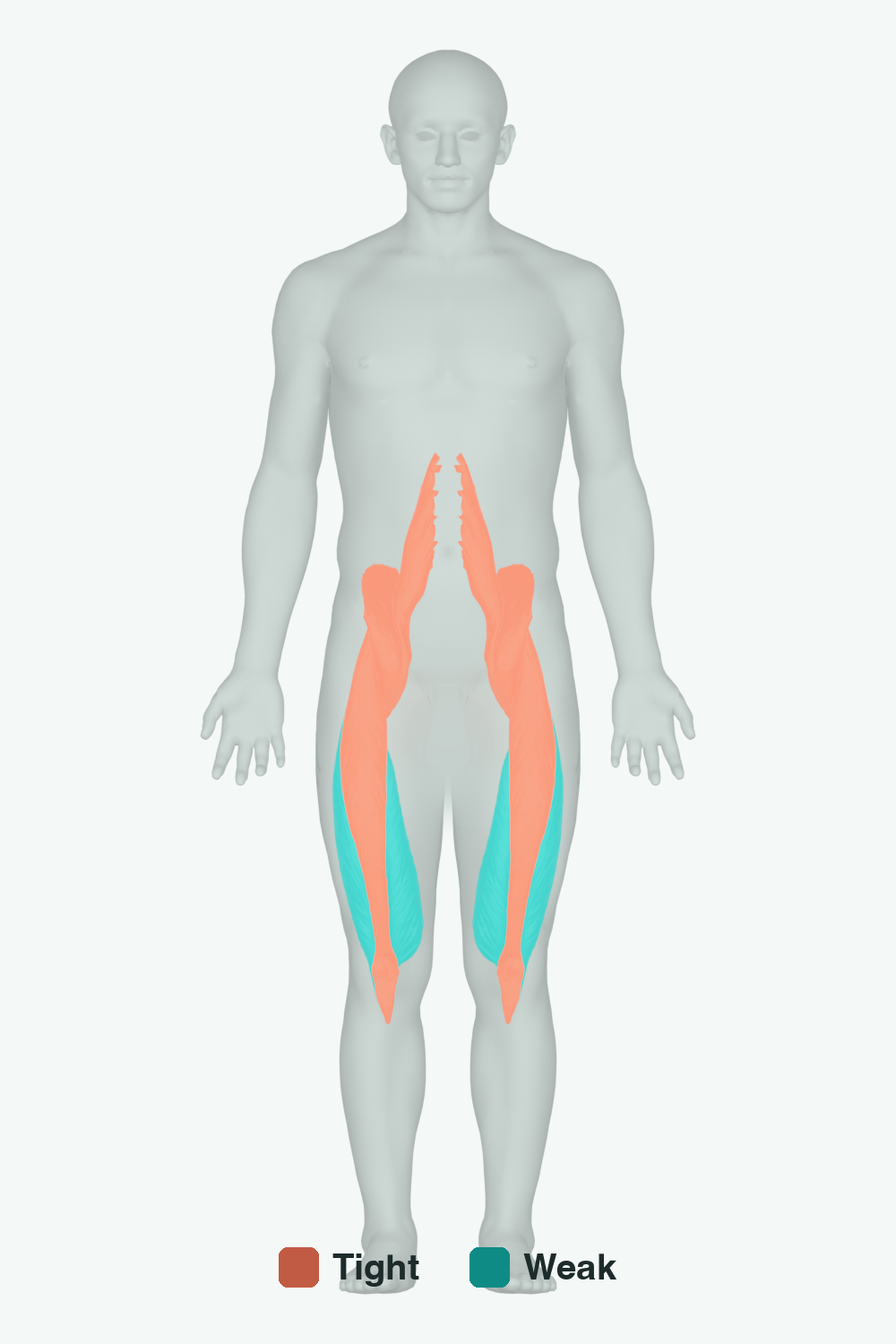
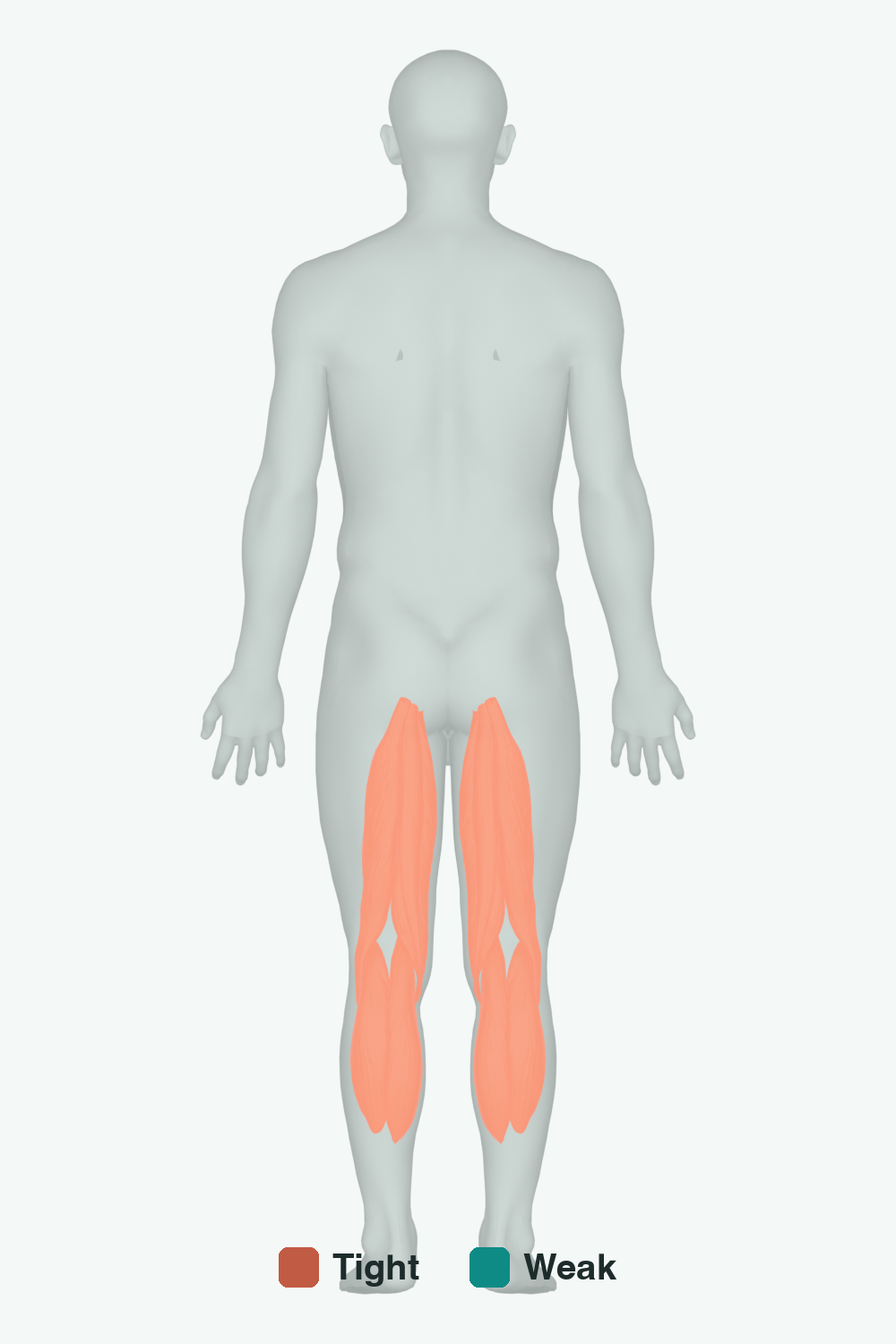
Coral = typically tight, teal = typically weak. Anatomical illustration from Z-Anatomy (derived from BodyParts3D), licensed under CC BY-SA 4.0.
Typically tight: hamstrings, hip flexors, gastrocnemius
Typically weak: quadriceps
How to correct it
- Practice a comfortable tall stance with the knees relaxed near extension, without pushing them backward into hyperextension.
- Use controlled quadriceps exercises such as terminal or short-arc knee extension when they are pain-free.
- Address hamstring, calf, hip, or ankle mobility only when a comfortable movement check suggests it is relevant; do not force the knee straight.
Recommended exercises
Related muscles
Educational wellness content — not a diagnosis. See a clinician for pain or concerns. Run a posture scan to check your own alignment.