Bent Elbow (Resting Flexion)
Also known as: elbow flexion contracture, flexed-elbow carriage.
What it is
Resting elbow flexion describes the position of the elbow when the arm is relaxed by the side; it is an observation, not a diagnosis. A small bend can be a normal variation, and the resting angle can change with hand position, shoulder posture, comfort, habit, previous injury, or joint mobility. A flexible elbow that can straighten comfortably is different from a fixed loss of extension. New or pronounced one-sided flexion, or an elbow that will not straighten, may need assessment rather than posture exercises alone. Seek clinical advice if the change followed an injury or is accompanied by pain, swelling, numbness, weakness, or a hard block to movement.
How to spot it
Stand naturally with the shoulders relaxed, palms facing the body, and arms hanging without deliberately straightening them. From the front or back, compare whether each forearm hangs close to vertical and whether one elbow stays more flexed than the other. A side view can make the bend easier to see. Repeat the check after walking around or gently shaking out the arms because a posed stance can change the result. The posture scan estimates the visible resting angle from a photograph; it cannot determine why the elbow is bent. As a separate movement check, slowly straighten the elbow only as far as is comfortable. If it straightens fully but returns to a bent resting position, habit or arm carriage may contribute. Pain, marked asymmetry, or limited movement warrants assessment by a qualified clinician.
Muscles involved
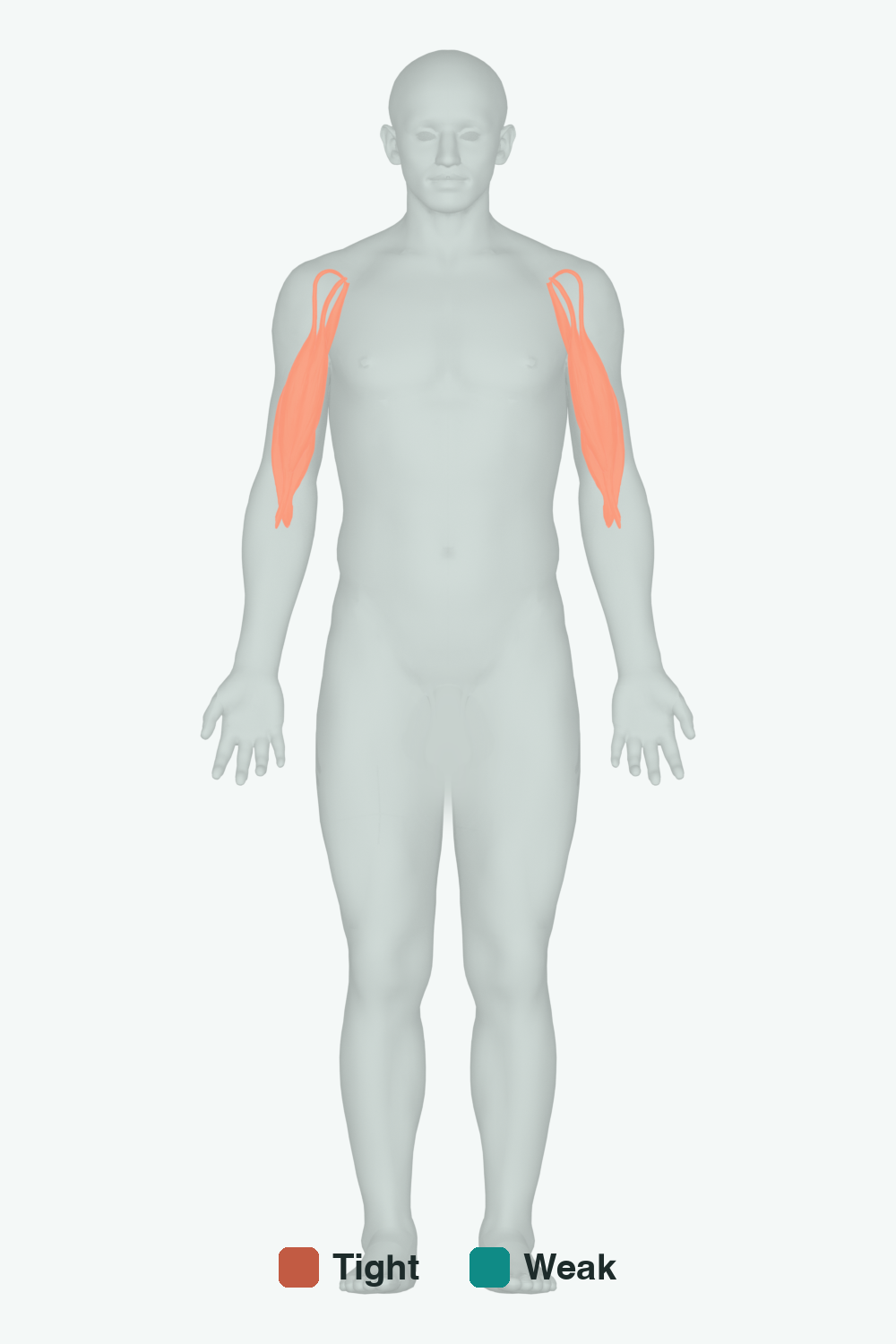
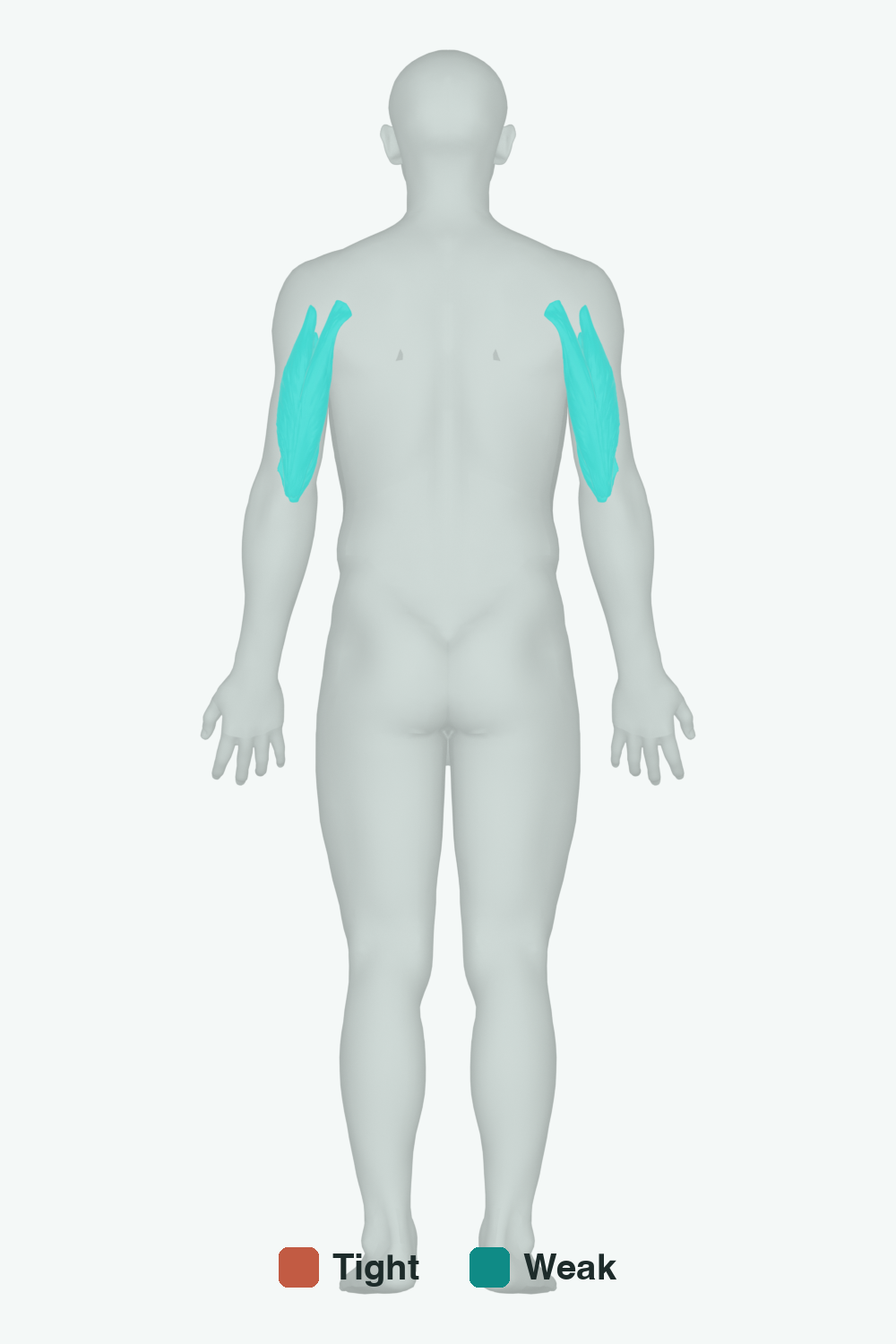
Coral = typically tight, teal = typically weak. Anatomical illustration from Z-Anatomy (derived from BodyParts3D), licensed under CC BY-SA 4.0.
Typically tight: biceps brachii, brachialis
Typically weak: triceps brachii
How to correct it
- First confirm that straightening is comfortable and not mechanically blocked; do not force through pain or a hard end point.
- Practice slow, pain-free active elbow extension, then relax the arm again. Use controlled repetitions rather than long, aggressive stretches.
- Add light triceps activation, such as a gentle wall press or banded elbow extension, while keeping the shoulder relaxed.
- Work on shoulder-blade control and upper-body posture if rounded shoulders or guarded arm carriage make the elbow habitually sit forward and bent.
- Compare both sides over time. Stop and seek clinical advice for worsening asymmetry, pain, swelling, tingling, weakness, or loss of motion.
Related muscles
Educational wellness content — not a diagnosis. See a clinician for pain or concerns. Run a posture scan to check your own alignment.