Knee Valgus (Knock-Knee)
Also known as: knock-knee, genu valgum.
What it is
Knee valgus is an inward collapse of the knee toward the body’s midline, so the knees drift closer together than the hips and ankles. Dynamic valgus (the knee caving in during a squat, step-down, or landing) is strongly linked to weak hip abductors and external rotators together with tight adductors, and it matters for squatting and running mechanics. Note that the opposite fault — knee varus, or bow-leg — is a different problem with the reverse muscle imbalance, and is more often a structural/bony issue (such as medial-compartment osteoarthritis) than a muscular one, so it is not covered here.
How to spot it
From the front, the knee sits inside the straight line from hip to ankle, and the knees may nearly touch while the ankles stay apart. Watch too for the knee diving inward as you squat or step down. The scan reports this per leg.
Muscles involved
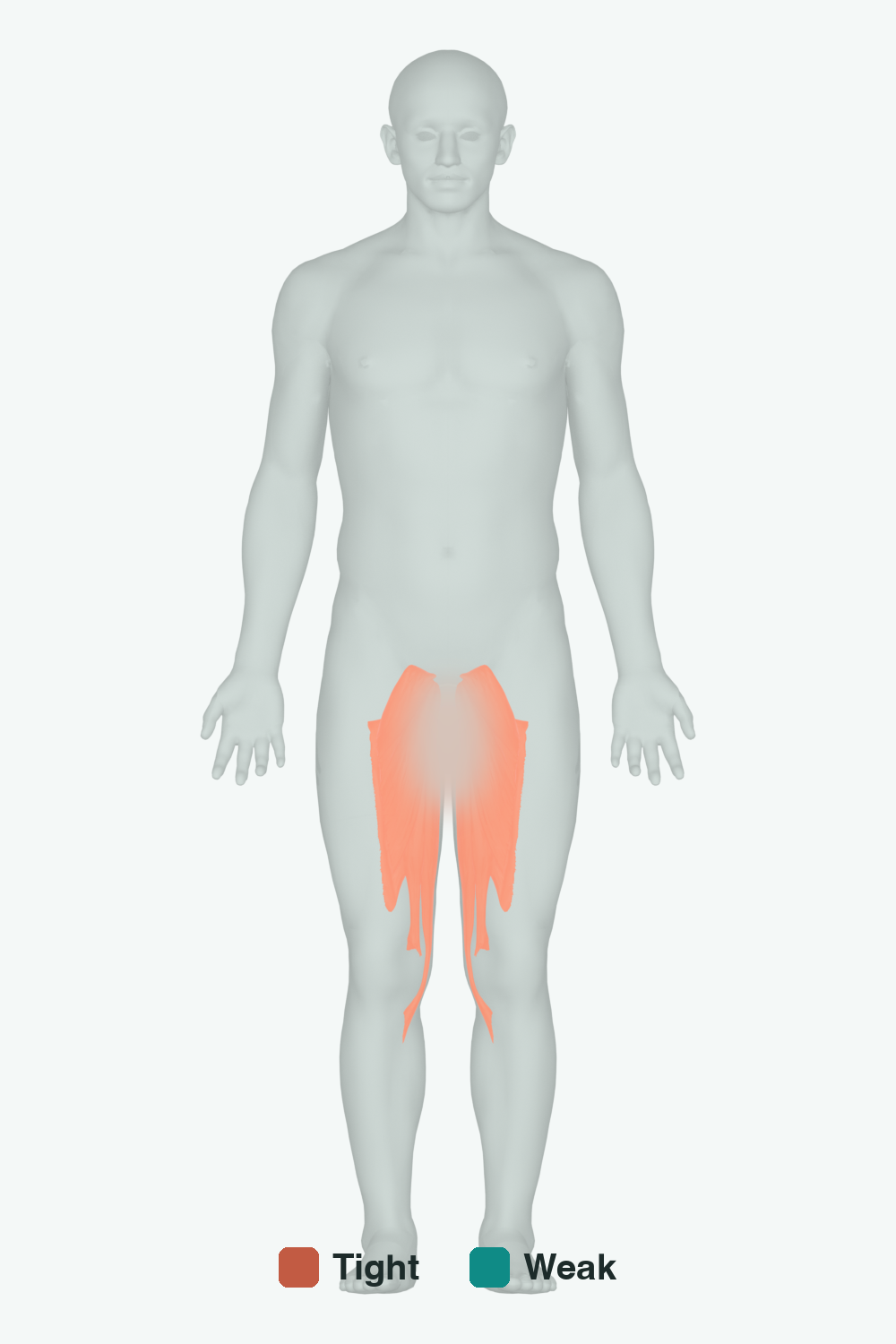
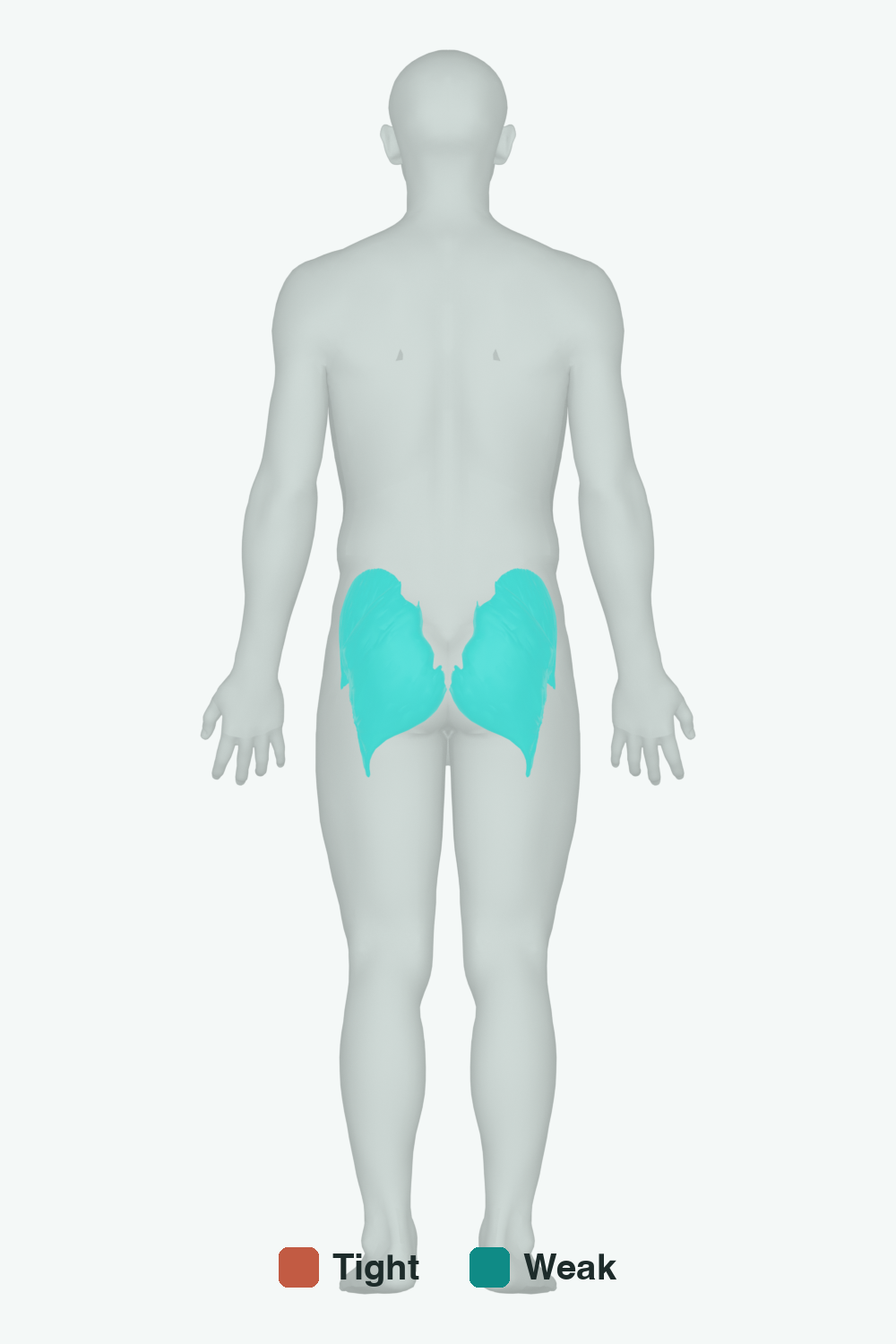
Coral = typically tight, teal = typically weak. Anatomical illustration from Z-Anatomy (derived from BodyParts3D), licensed under CC BY-SA 4.0.
Typically tight: hip adductors, iliotibial band / TFL
Typically weak: gluteus medius, gluteus maximus
How to correct it
- Strengthen the gluteus medius/maximus (banded squats, clamshells, side planks, monster walks).
- Release the adductors and IT band/TFL.
- Coach “knees track over toes” in squats and landings.
Recommended exercises
Related muscles
Educational wellness content — not a diagnosis. See a clinician for pain or concerns. Run a posture scan to check your own alignment.