Trunk Shift (Lateral List)
Also known as: lateral shift, trunk list.
What it is
A trunk shift is a sideways translation of the upper torso relative to the pelvis. Unlike trunk lean, which describes a forward-or-back angle in side view, this pattern is measured from the front or back. It may appear with uneven hips, asymmetric weight bearing, comfort strategies, or differences in lateral trunk and hip control. A photograph cannot determine whether the shift is habitual, pain-related, or structural, and it cannot diagnose scoliosis or a leg-length difference. The scan reports only the visible offset between body landmarks. A persistent or sudden shift with back pain, pain into a leg, numbness, weakness, or difficulty standing upright should be evaluated by a qualified clinician.
How to spot it
From a straight front or back photo, the midpoint between the shoulders sits to one side of the midpoint between the hips. The scan estimates that horizontal offset. Before interpreting it, confirm that both feet are visible, weight is not deliberately placed on one leg, and the camera is centered. Repeat the stance after walking around and settling naturally; a consistent shift across attempts is more meaningful than one frame.
Muscles involved

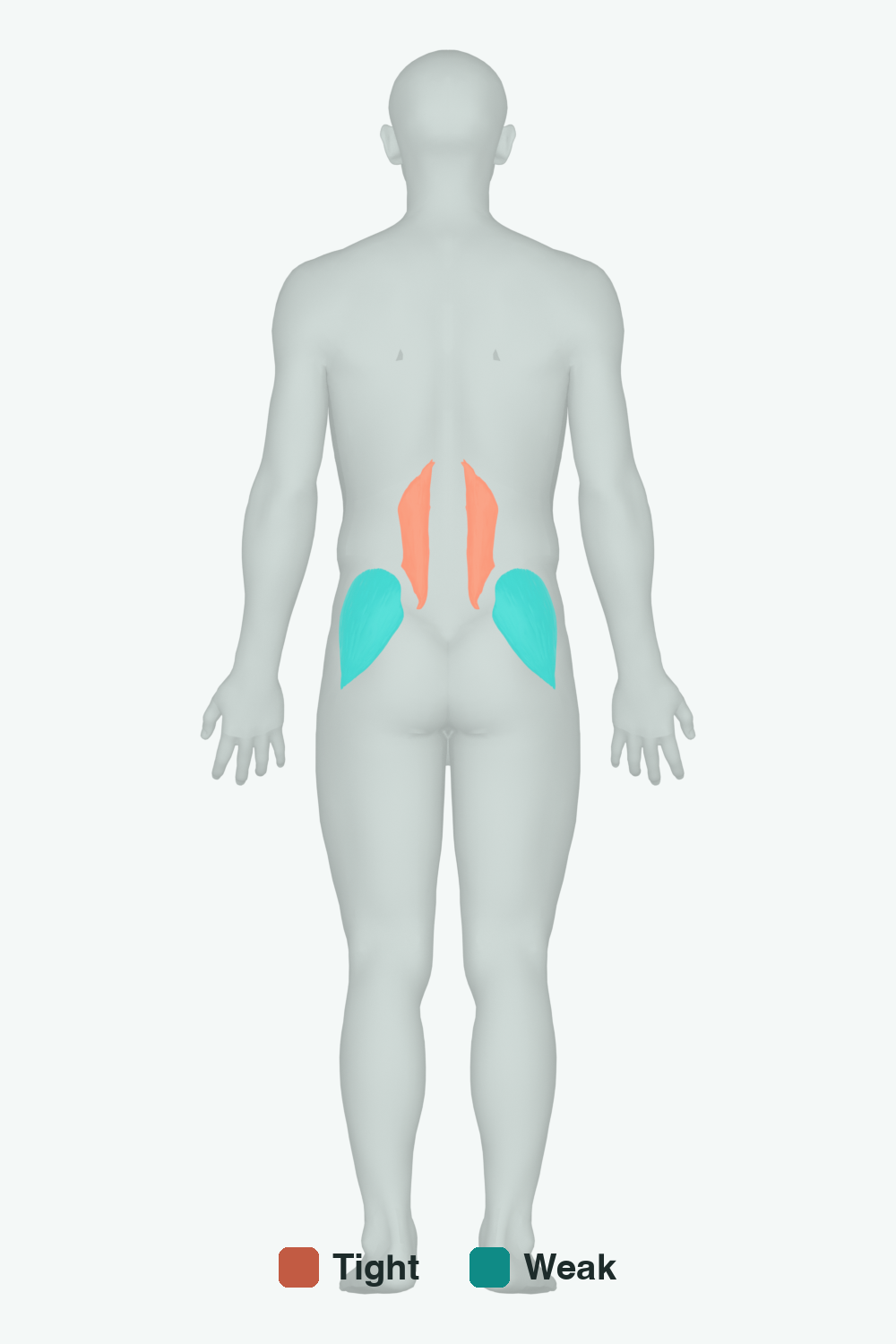
Coral = typically tight, teal = typically weak. Anatomical illustration from Z-Anatomy (derived from BodyParts3D), licensed under CC BY-SA 4.0.
Typically tight: quadratus lumborum, lateral obliques
Typically weak: contralateral lateral trunk stabilizers, gluteus medius
How to correct it
- Practice gentle weight shifts and a centered ribcage-over-pelvis position without forcing through pain.
- Build lateral trunk and hip endurance on both sides with appropriately scaled exercises such as supported side planks.
- Address uneven hip position or one-sided standing habits when they consistently accompany the shift.
- Seek assessment before targeted correction if a structural difference or pain-driven shift is suspected.
Recommended exercises
Related muscles
Educational wellness content — not a diagnosis. See a clinician for pain or concerns. Run a posture scan to check your own alignment.