Uneven Hips
Also known as: pelvic obliquity, lateral pelvic tilt, hip hike.
What it is
Uneven hips describe a left-to-right height difference across the pelvis in a standing image. The pattern may change with weight distribution, foot position, one-sided standing habits, hip-muscle control, comfort, or structural differences. The gluteus medius, quadratus lumborum, and other hip and trunk muscles help control pelvic level, but a photograph cannot show which tissue is responsible or whether any muscle is truly weak or tight. The visible tilt may also accompany a trunk shift or knee-alignment difference. The scan is an alignment screen rather than a diagnosis. Hip, groin, or back pain, a major or worsening asymmetry, or concern about a leg-length difference should be assessed by a qualified clinician.
How to spot it
In a centered front or back photo, the line through the hip landmarks slopes rather than appearing level. The scan estimates this from the detected hip centers. Confirm that both feet are planted, the camera is level, and weight is not intentionally shifted onto one leg. Repeat the photo after walking around and settling naturally. A rough mirror check with hands placed on the top edges of the pelvis can add context, but it is less reliable than a clinical assessment.
Muscles involved
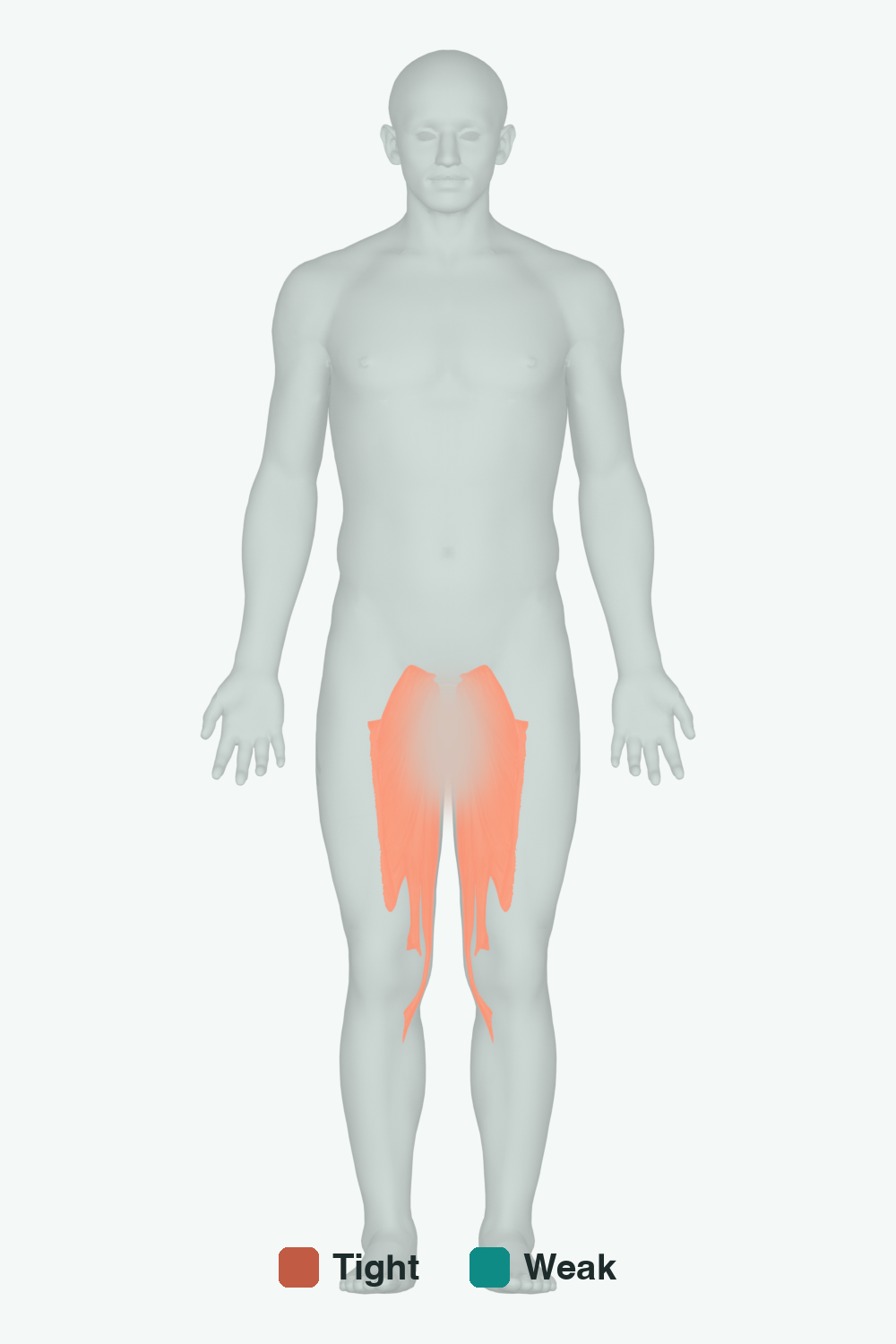
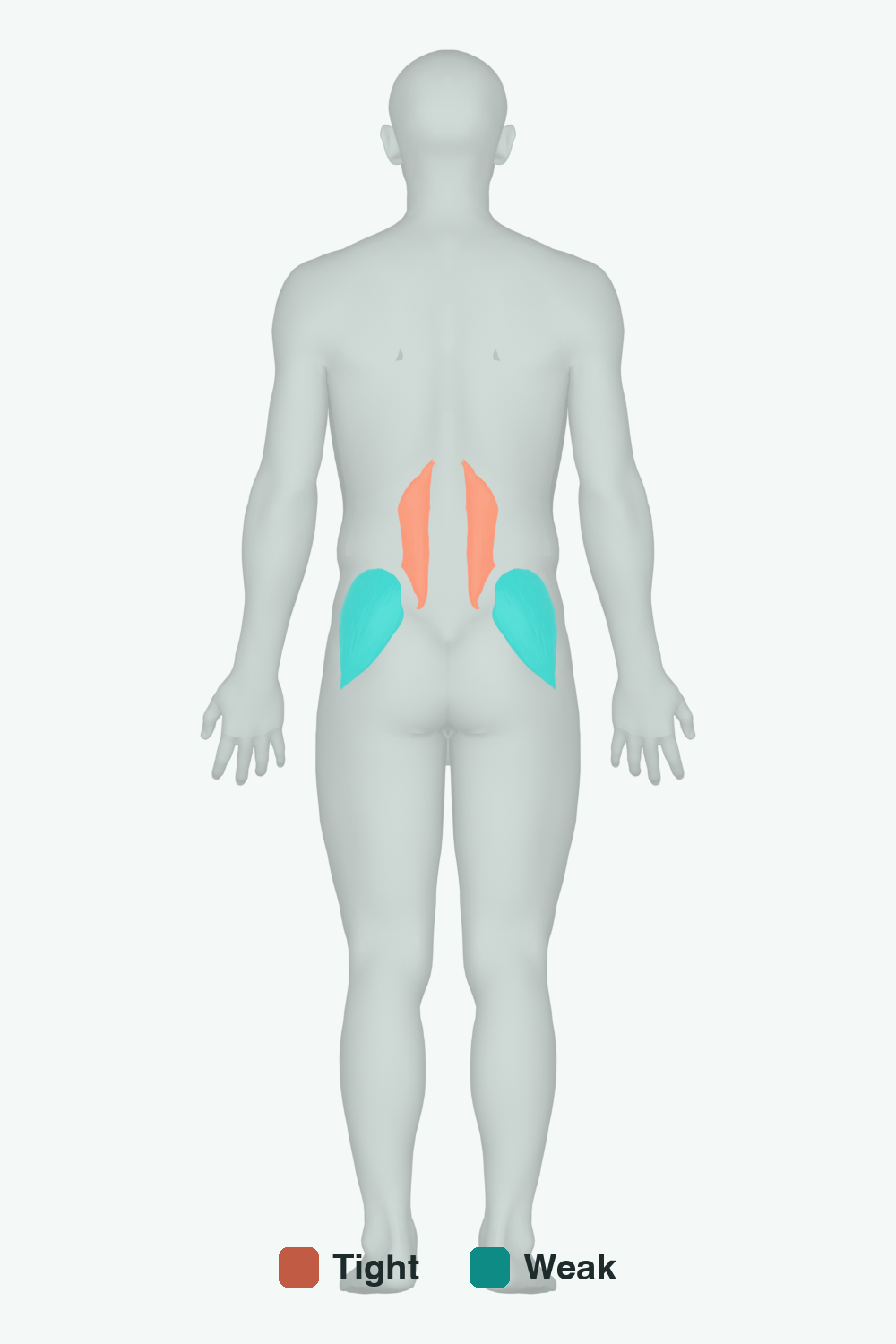
Coral = typically tight, teal = typically weak. Anatomical illustration from Z-Anatomy (derived from BodyParts3D), licensed under CC BY-SA 4.0.
Typically tight: quadratus lumborum, hip adductors
Typically weak: gluteus medius
How to correct it
- Practice even weight distribution and level-pelvis control during supported standing before progressing to single-leg tasks.
- Build lateral hip and trunk endurance with suitable regressions such as supported hip abduction, band walks, or side-plank variations.
- Use gentle side-body mobility when it feels restricted, without assuming the higher side always needs stretching.
- Seek individualized assessment before one-sided correction if pain or a structural leg-length difference is suspected.
Recommended exercises
Related muscles
Educational wellness content — not a diagnosis. See a clinician for pain or concerns. Run a posture scan to check your own alignment.