Trunk Lean
Also known as: forward lean, trunk inclination.
What it is
Trunk lean describes the angle of the torso relative to vertical in a side view. A forward lean moves more body mass in front of the hips and can increase the muscular effort needed to remain standing; a backward lean changes that load in the opposite direction. Either may be temporary or related to balance, comfort, fatigue, task demands, hip and ankle position, or a habitual stance. A single photograph cannot identify the cause or determine whether the spine itself has a structural problem. The scan reports a visible alignment pattern, not a diagnosis. Back pain, pain traveling into a leg, numbness, weakness, balance difficulty, or a sudden change should be assessed by a qualified clinician.
How to spot it
In a level side photo, the line from the hip area toward the shoulder angles noticeably forward or backward instead of remaining near vertical. The scan estimates the trunk angle from those landmarks. Check that the whole body is visible, the camera is not tilted, and the person is not reaching toward or away from it. Repeat the photo in a natural stance because deliberately standing tall can temporarily hide the resting pattern.
Muscles involved
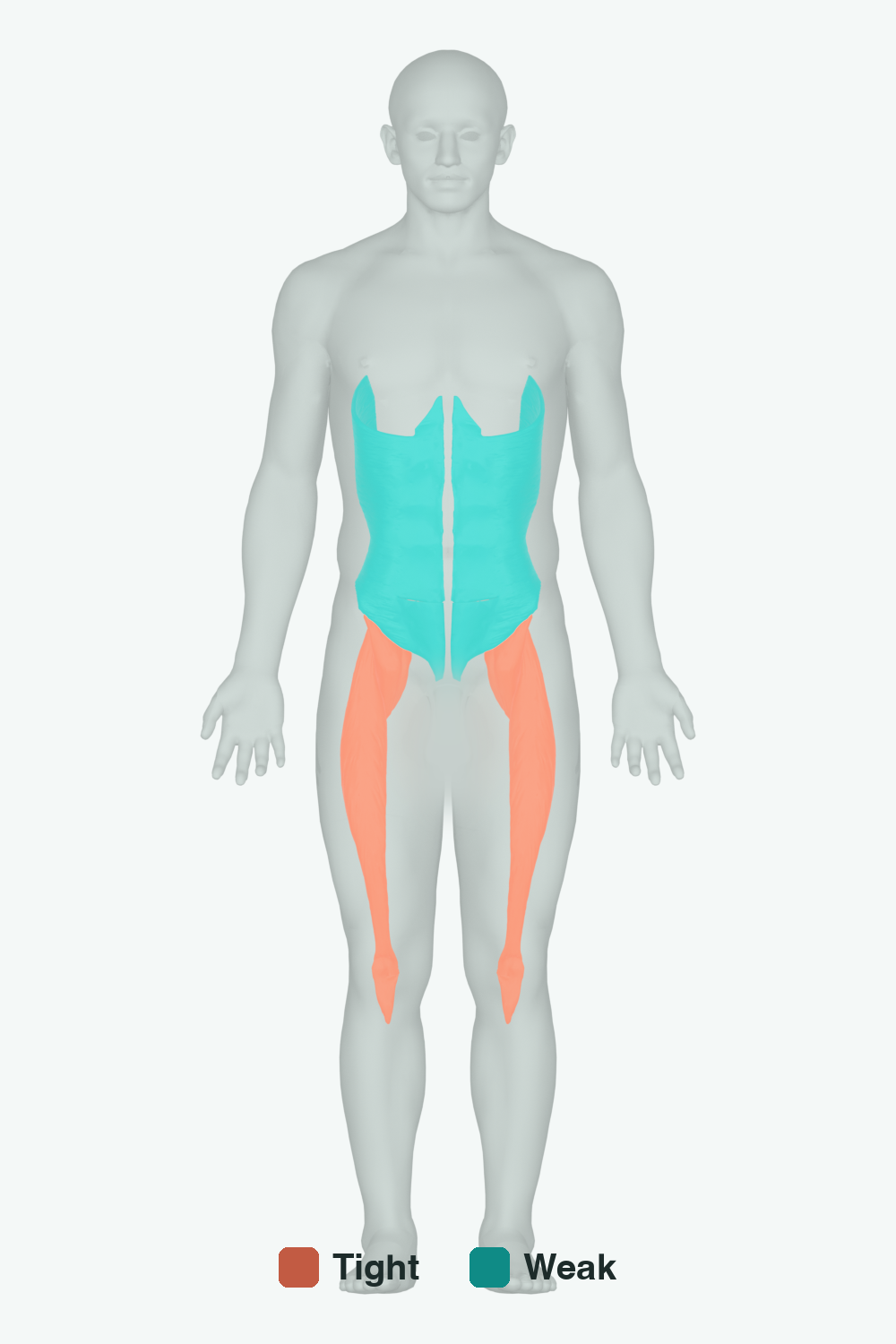
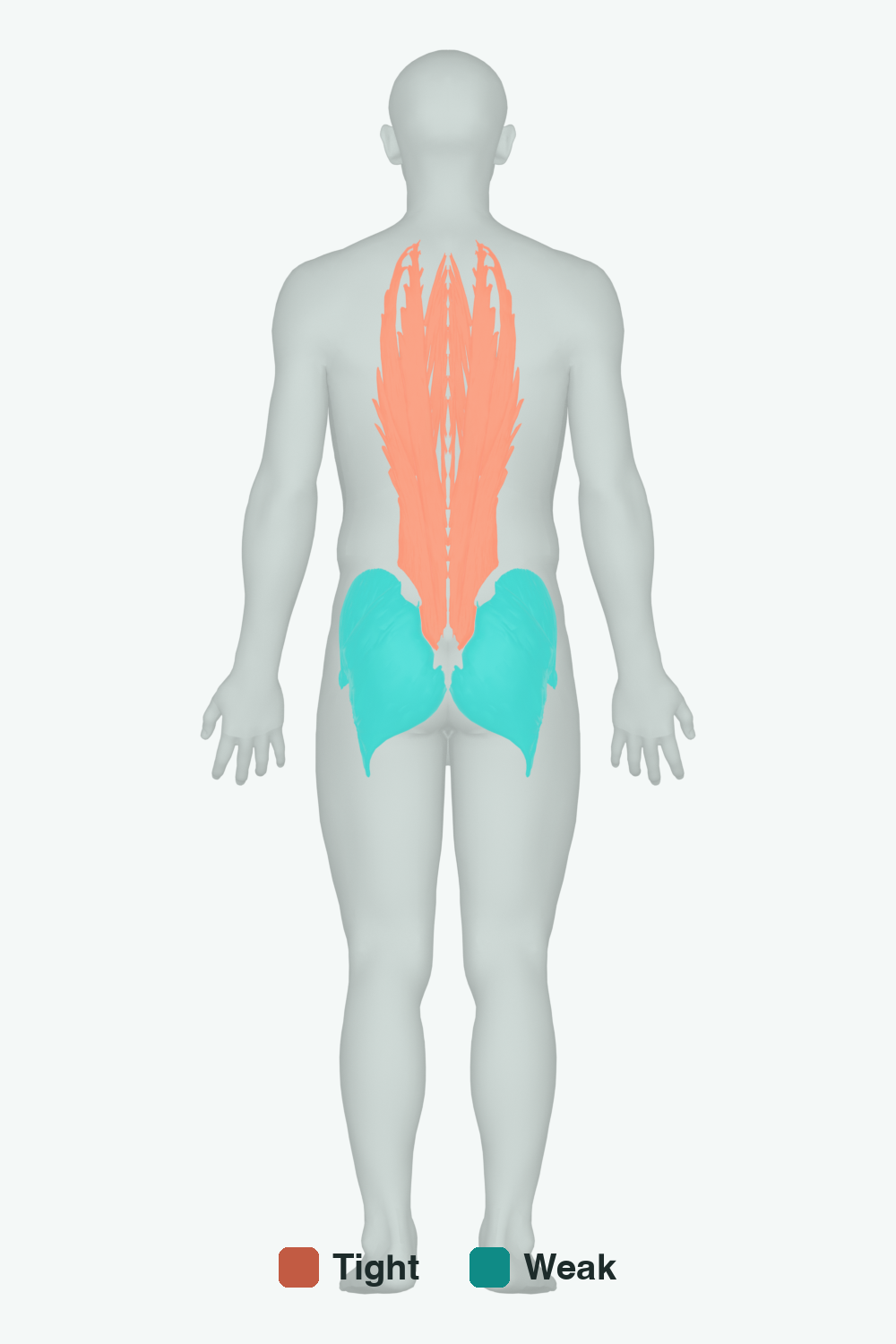
Coral = typically tight, teal = typically weak. Anatomical illustration from Z-Anatomy (derived from BodyParts3D), licensed under CC BY-SA 4.0.
Typically tight: hip flexors, erector spinae
Typically weak: deep abdominals, gluteals
How to correct it
- Practice a comfortable stacked stance with the ribcage balanced over the pelvis rather than forcing the shoulders backward.
- Build trunk and hip endurance with controlled exercises such as bird-dog, curl-up, bridge, or other suitable regressions.
- Explore hip and ankle mobility when those areas limit comfortable upright standing.
- Break up long periods in one posture; movement variety is generally more useful than holding a rigid correction.
Recommended exercises
Related muscles
Educational wellness content — not a diagnosis. See a clinician for pain or concerns. Run a posture scan to check your own alignment.