Gait Analysis: A Plain-English Guide to How You Walk
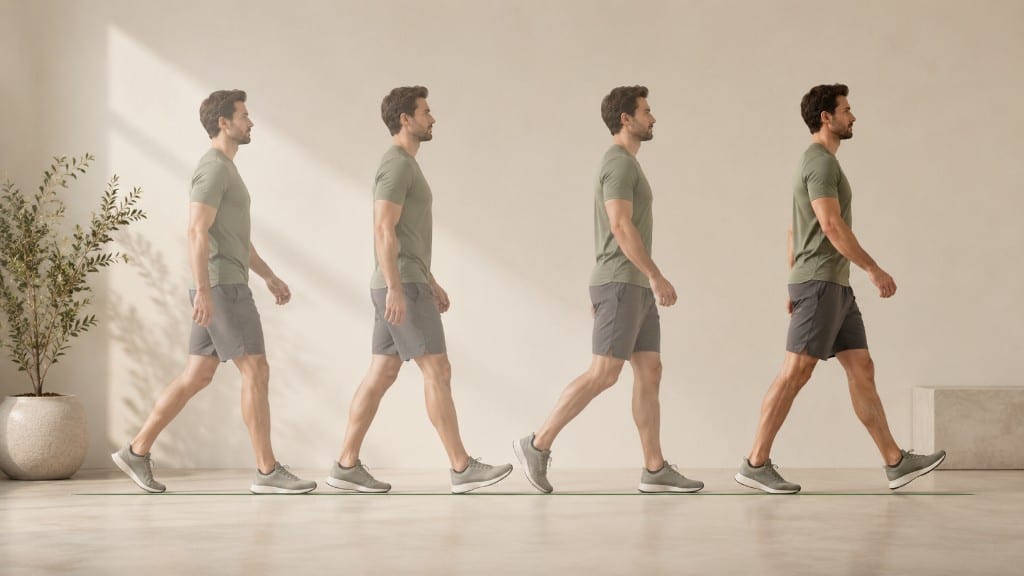
Walking feels automatic, but it's one of the most coordinated things the body does. Gait analysis is the study of how you walk — and it can reveal asymmetries and inefficiencies that static posture checks miss.
The gait cycle
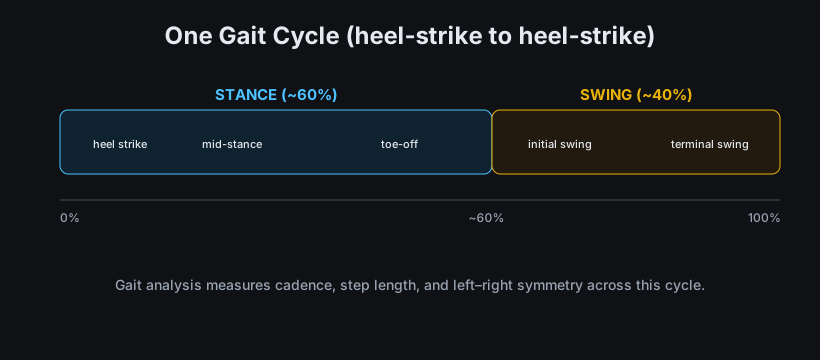
A single gait cycle is measured from one heel-strike to the next heel-strike of the same foot. It splits into two phases:
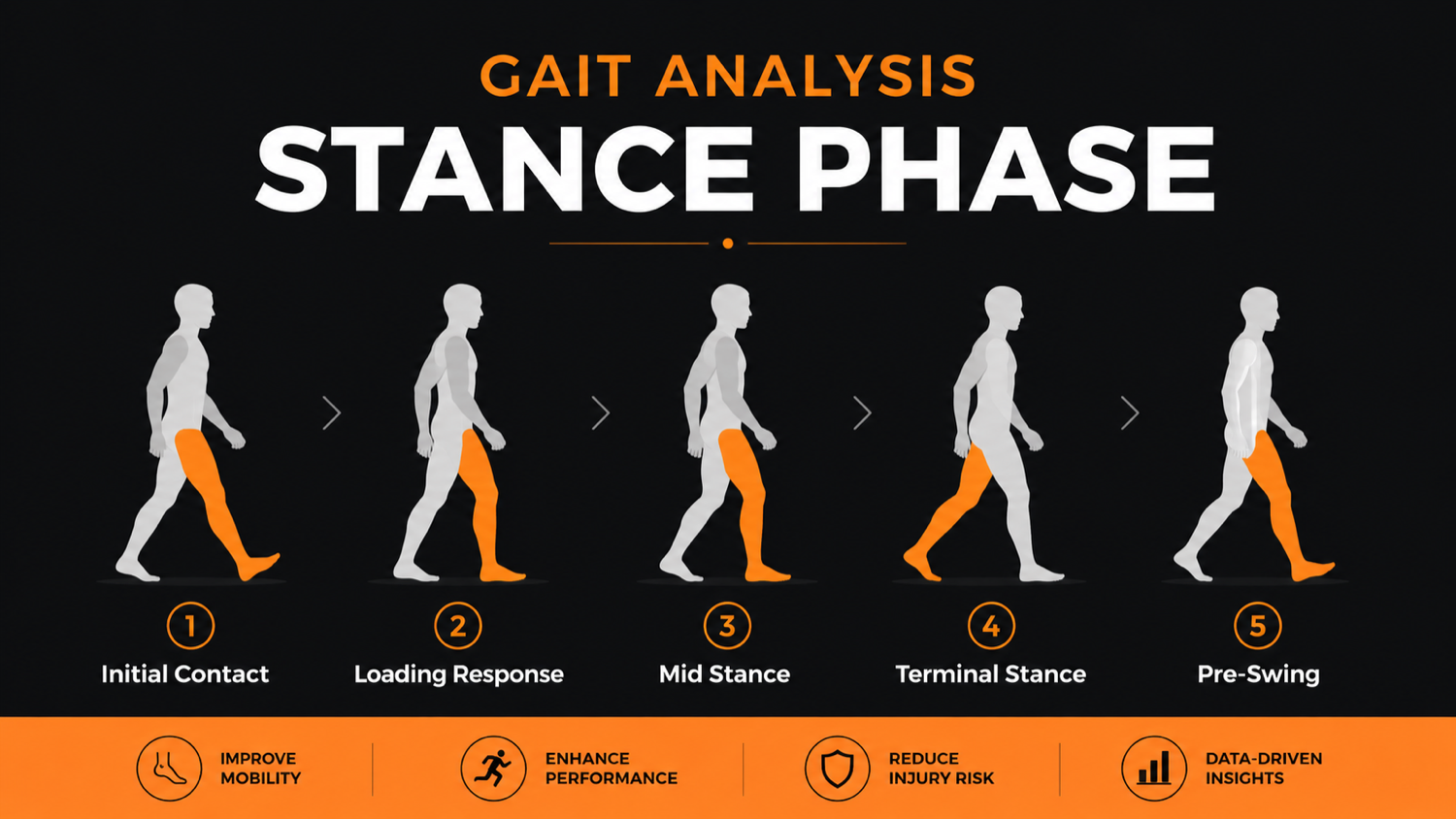
- Stance phase (~60%) — the foot is on the ground: heel strike → mid-stance → toe-off. This is where the body accepts load and propels forward.
- Swing phase (~40%) — the foot is in the air, swinging through to the next heel strike.
Both legs cycle out of phase with each other, so there are brief moments of double support when both feet touch the ground — a feature that distinguishes walking from running.
What gait analysis measures
- Cadence — steps per minute (typically ~100–120 for adult walking).
- Step and stride length — distance per step and per full cycle.
- Symmetry — whether the left and right sides spend equal time in stance and swing.
- Joint motion — how the ankle, knee, and hip move through the cycle.
These variables are the backbone of clinical gait assessment. Michael Whittle's Gait Analysis: An Introduction remains a readable reference for how each joint should contribute through the cycle — especially at mid-stance, when the pelvis must stay level on one leg.
Common gait deviations
A few patterns show up often:
- Asymmetry — favouring one side, often after an old injury.
- Reduced push-off — weak calves or glutes limiting propulsion.
- Excessive hip drop — a sign of weak hip abductors (gluteus medius), the same muscles behind uneven hips and dynamic knee valgus.
- Over-striding — landing with a long, braking step ahead of the body.
How gait connects to posture
Gait and standing posture share the same machinery — they are two views of one system. A weak gluteus medius shows up both as a hip drop when you walk and as uneven hips when you stand. Forward-head or slouched trunk patterns change where your center of mass sits over your feet, which in turn affects stride length and how hard your calves work at push-off.
During mid-stance, the pelvis should stay relatively level while one leg carries your full weight. If it drops, the knee may drift inward — the dynamic cousin of static knee valgus. Over time, that pattern can feed back into how you stack your pelvis when you simply wait in line or stand at a desk. That is why building hip and core strength pays off in walking too:
- Clamshells and hip hikes for lateral hip control.
- Forearm front plank and dead bug for trunk stability.
Static alignment work matters as well. Many people who work on how to fix posture notice walking feels lighter afterward — not because walking is "fixed" in one session, but because the same muscles that hold you upright also steer each step. A standing posture scan often flags the same hip and trunk asymmetries you would see on video while walking.
Where to start
A full instrumented gait lab uses force plates and motion capture, but you can learn a lot from a simple side-on and front-on video of yourself walking. Start by checking symmetry and hip drop, then strengthen the hip and core muscles that stabilise each step. A standing posture scan is a useful companion — many gait issues have a static posture signature.
Frequently asked questions
Do I need expensive equipment? No. A phone camera, a flat walkway, and slow playback are enough to spot asymmetry, hip drop, and over-striding for most people.
Can gait issues cause posture problems — or the other way around? Both. Weak hips in standing often show up as hip drop when walking; conversely, limping from an old ankle sprain can shift how you hold your trunk at rest.
How often should I re-check? After six to eight weeks of targeted hip and core work, film yourself again from the same angle. Small improvements in pelvis level and step symmetry are worth celebrating before chasing speed or longer strides.
Does cadence matter for posture? Slightly. A brisk but comfortable cadence (~110 steps/min) often reduces over-striding and softens impact — useful if long steps leave you leaning from the lumbar region at the end of a walk.
Should I fix posture before gait? Work both in parallel. Static drills give you a clearer baseline; walking reveals what still slips under load. Many people alternate a posture scan with a short walking video every few weeks to track both.
Sources
This article draws on established clinical references:
- Whittle's Gait Analysis — Richards, Levine & Whittle
A dedicated walking-analysis feature is on our roadmap. For now, this guide and the static scan cover the fundamentals.