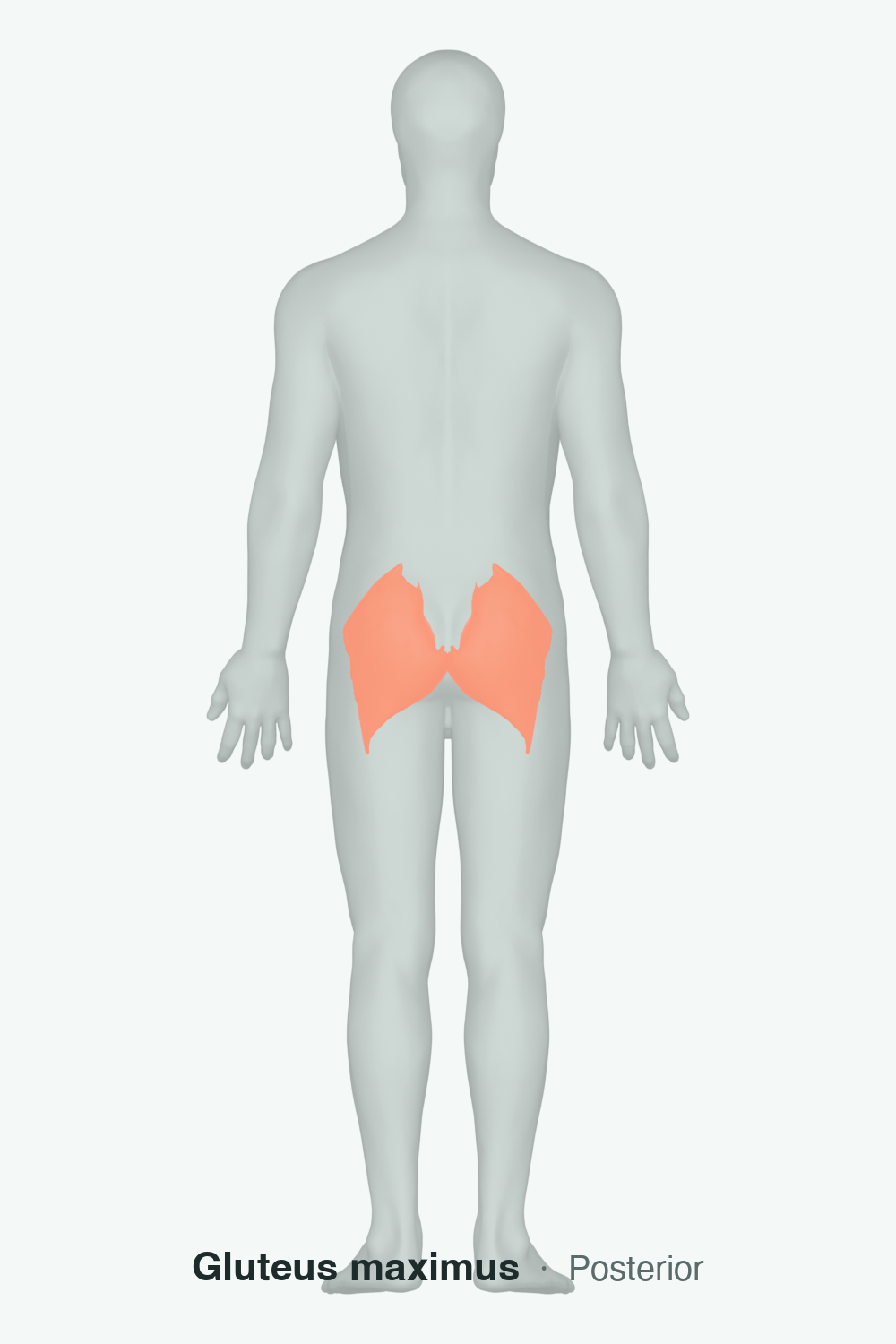
Gluteus Maximus
Exercises that target the gluteus maximus, grouped by whether they stretch or strengthen it.
The gluteus maximus is the large superficial muscle of the buttock. Its main actions include extending the hip and assisting external rotation, and its fibers also contribute to control of the pelvis and thigh. It works strongly when rising from a chair, climbing, accelerating, jumping, and lifting from a hinged position.
Long periods of sitting reduce how often the hips perform demanding extension work, but sitting alone does not prove that the gluteus maximus is weak. Strength, coordination, comfort, training history, and movement strategy all affect how much the glutes contribute relative to the hamstrings and back muscles.
Bridges and hip thrusts provide accessible hip-extension loading; step-ups, split squats, and hinge patterns add more whole-body demand. Use a range that can be controlled without forcing the low back to arch, and progress resistance or leverage gradually. Different exercises can all be useful—there is no single required glute movement.
Hip-flexor mobility may complement strengthening when the front of the hip feels restricted, but posture should not be treated as a simple tight-versus-weak formula. Persistent hip, groin, or radiating leg pain should be assessed individually.