Standing Figure 4
3 × 20s per side
Standing posterior-hip stretch crossing one ankle over the thigh and sitting the hips back; also trains single-leg balance on the supporting side.
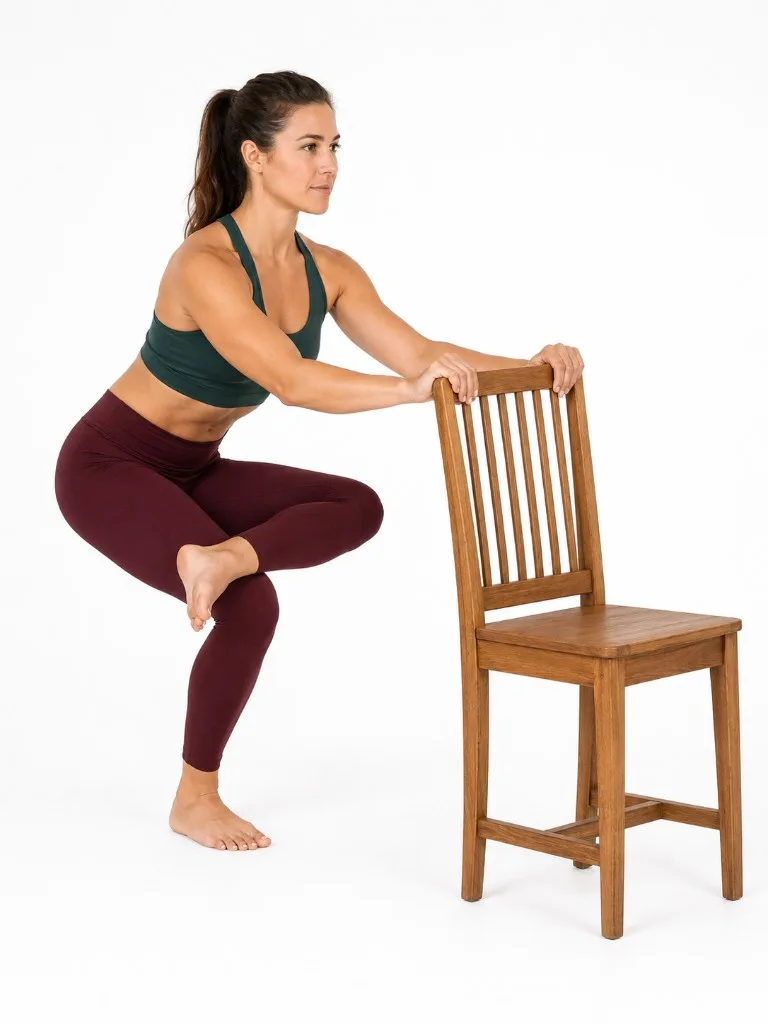
How to do it
- Stand beside a stable support and keep the standing foot fully planted.
- Place the opposite ankle across the thigh in a figure-4 position and flex the crossed foot comfortably.
- Hold the support and sit the hips back until you feel a mild-to-moderate posterior-hip stretch.
- Hold for 10 to 30 seconds without pressing on the crossed knee.
- Repeat the stretch with the other leg.
Form cues
- Use stable support from the start.
- Keep the standing foot planted and the spine comfortably long.
- Stop for crossed-knee pain or front-of-hip pinching.
Why this exercise helps
The standing figure-4 targets the same posterior-hip muscles as the lying and seated variations—the gluteus maximus and hip external rotators—while also challenging single-leg balance and hip stability. Holding a stable support and sitting the hips back progressively deepens the stretch. Because the load of the body contributes to the stretch depth, small changes in how far the hips sit back produce noticeable changes in intensity, allowing you to find a comfortable working range. The standing position additionally trains stability on the supporting leg, making it a more functional option for those with sufficient balance and hip strength.
Stop or modify if
- Letting the standing foot pronate or roll inward, which reduces stability and alters the stretch quality at the hip.
- Leaning the torso forward over the legs instead of sitting the hips back, shifting load away from the posterior hip.
- Releasing the support hand before stable balance is established, which often leads to compensatory trunk movement.
Modifications and progressions
- Use a sturdy chair or countertop and reduce the depth of the hip sit-back until balance and stretch sensation both feel secure.
- Try the lying or seated figure-4 variation first if single-leg balance is challenging or the hip is very sensitive.
Muscles worked
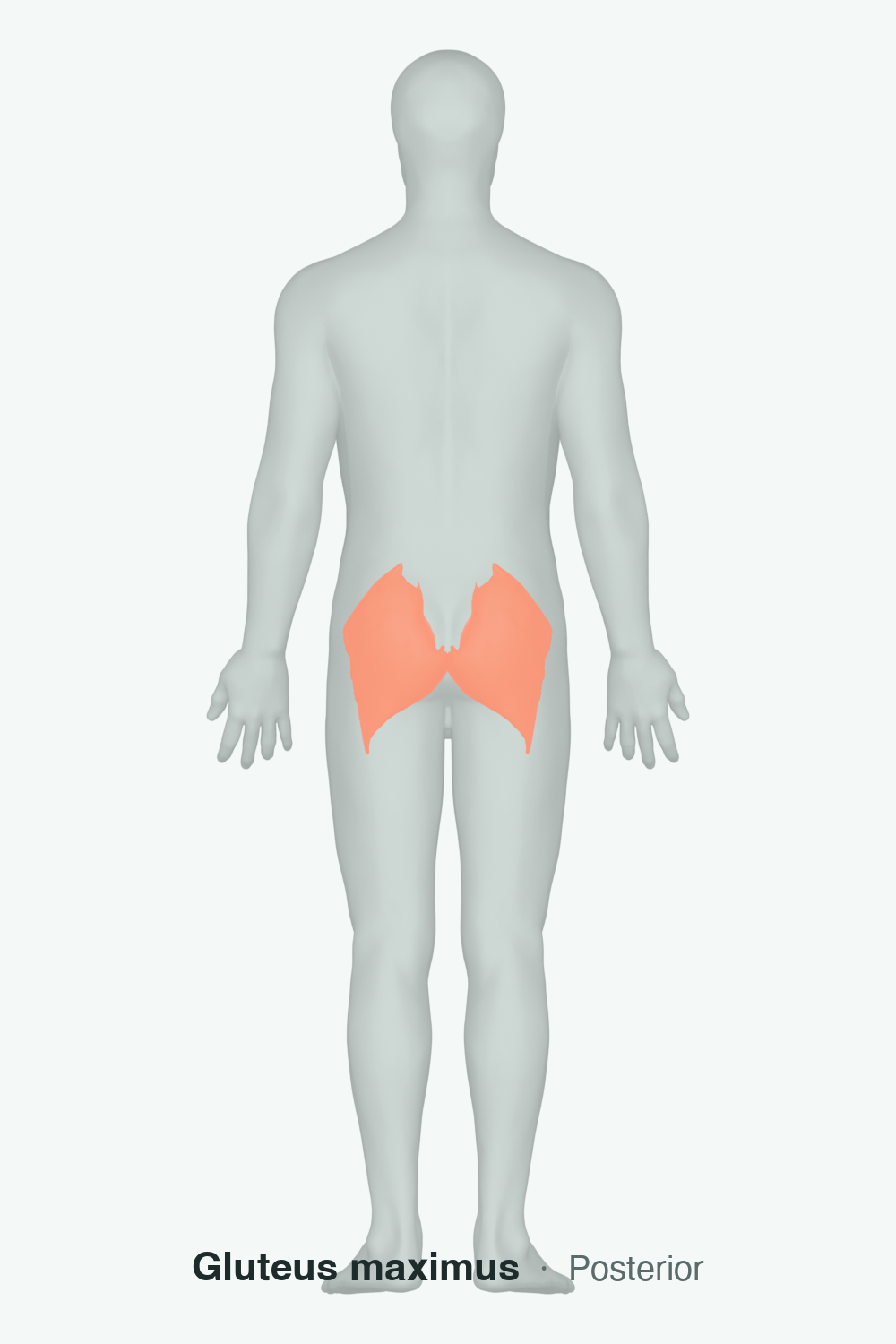
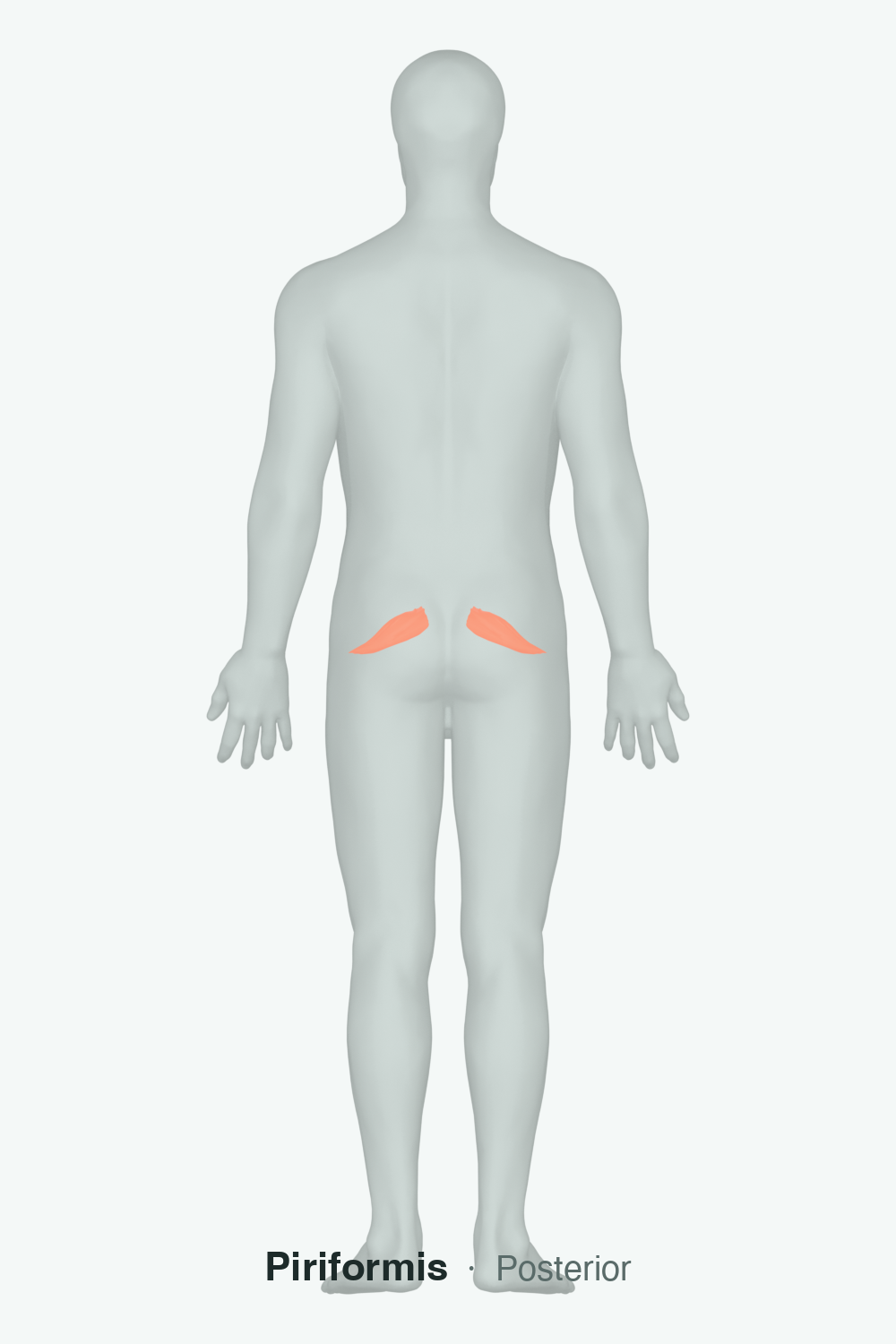
Stretches: gluteus maximus, hip external rotators