Single-Leg Hip Thrust
3 × 10 reps per side
A bench-supported single-leg hip-extension exercise for glute strength and pelvic control.
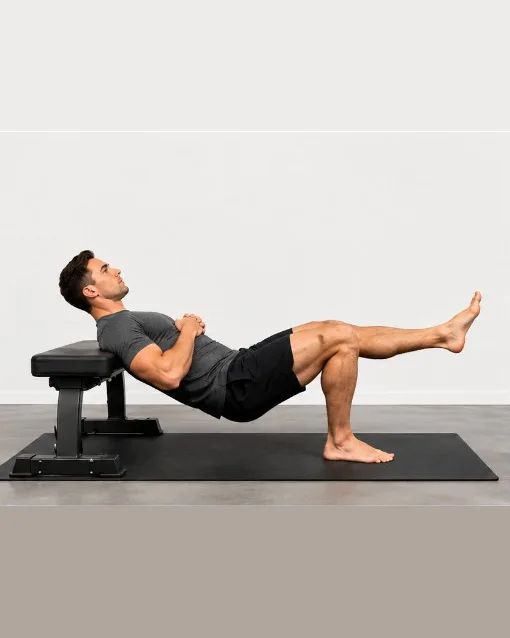
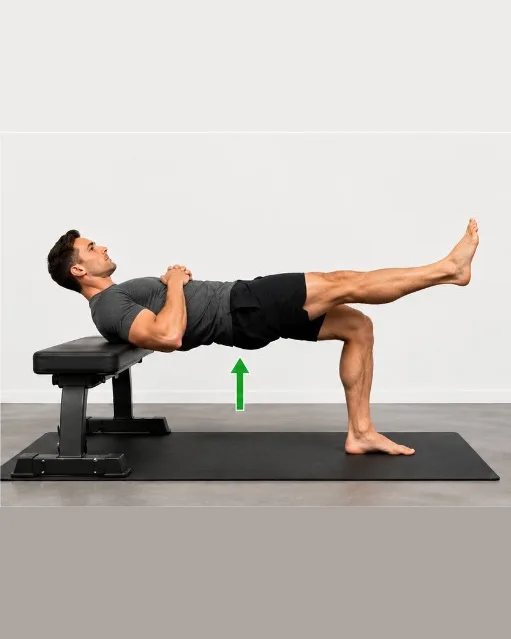
How to do it
- Sit on the floor with the upper back—not the neck—against a stable, non-slip bench.
- Extend one leg out straight and keep the other foot planted.
- Press through the whole planted foot to lift until the torso and thigh form a straight line.
- Keep the pelvis level and stop at full hip extension without arching the lower back.
- Lower under control and repeat, then switch legs.
Form cues
- Keep the chin gently tucked and ribs controlled.
- Use a floor single-leg bridge as a regression.
- Stop for back, hip or hamstring pain.
- Brace the core before lifting.
- Pause and squeeze the glute at full extension.
Why this exercise helps
The single-leg hip thrust trains hip extension with one foot planted, so the gluteus maximus, hamstrings, and surrounding hip muscles work while the trunk and pelvis resist unwanted rotation. Bench support permits a larger movement range than many floor bridges, but only the range that remains comfortable and controlled is useful. Training one side at a time can make side-to-side differences easier to notice, although one exercise cannot diagnose why those differences exist.
Stop or modify if
- Hyperextending the lower back at the top of the rep to appear to reach farther. Stop when the torso and thigh align; further motion would come from the lumbar spine.
- Allowing the pelvis to rotate or drop toward the free side. The core and hip-stabilizing muscles should keep the pelvis level throughout the rep; a visible drop is a signal the load or rep count is too high.
- Positioning the bench contact too high, toward the neck rather than the upper back. The bench edge should catch the shoulder-blade area so the neck remains free and the ribcage stays controlled.
Modifications and progressions
- Regress to a floor single-leg bridge (no bench) if bench setup or back-of-knee pressure from the extended free leg is uncomfortable; it builds the same hip-extension pattern with a shorter range.
- Place a folded mat or towel on the bench edge if the upper-back contact is sharp, allowing attention to stay on hip mechanics rather than contact discomfort.
- Stop a few degrees short of full extension if the lower back takes over at the top; build to full range as pelvic control improves rather than forcing the range early.
Muscles worked
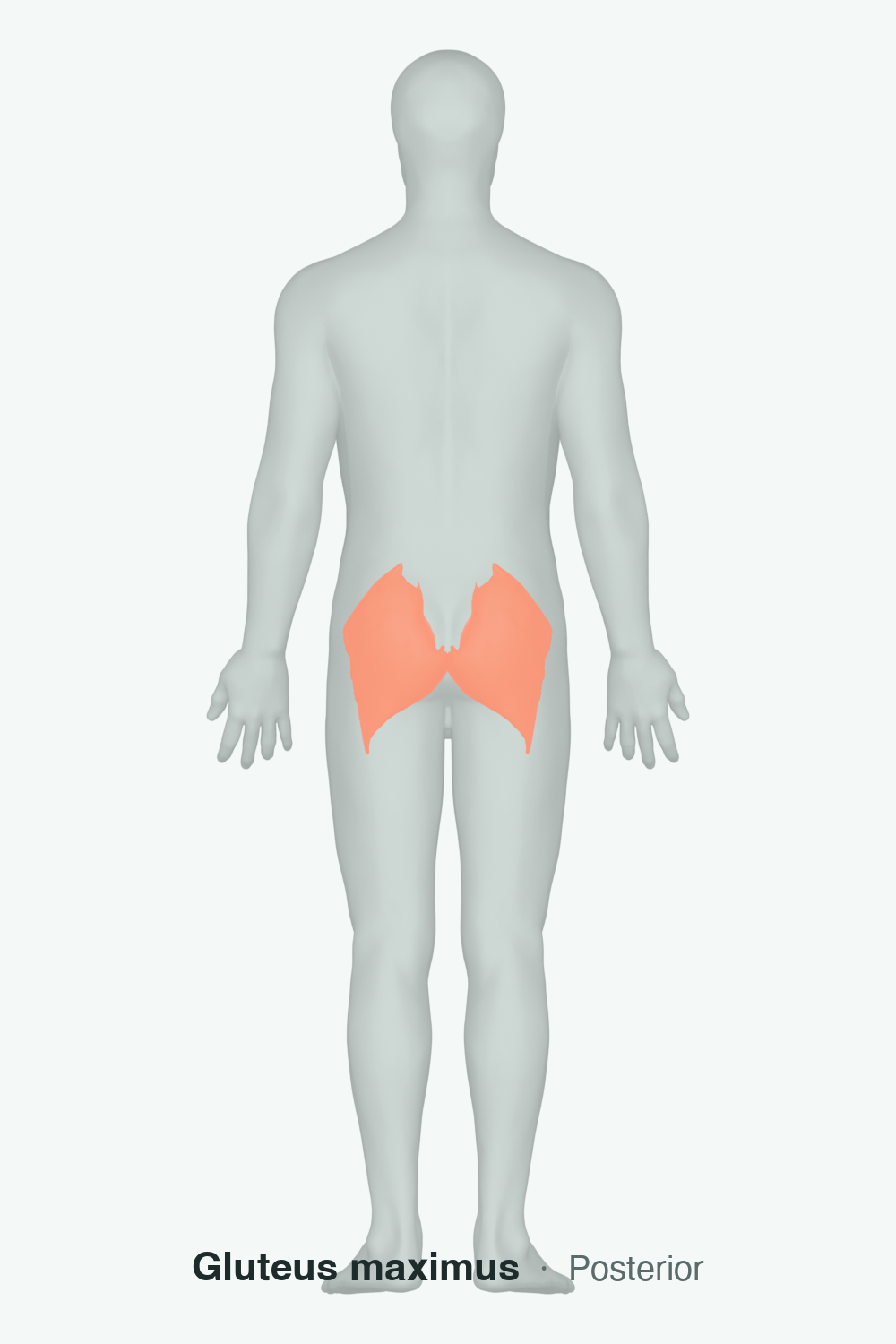
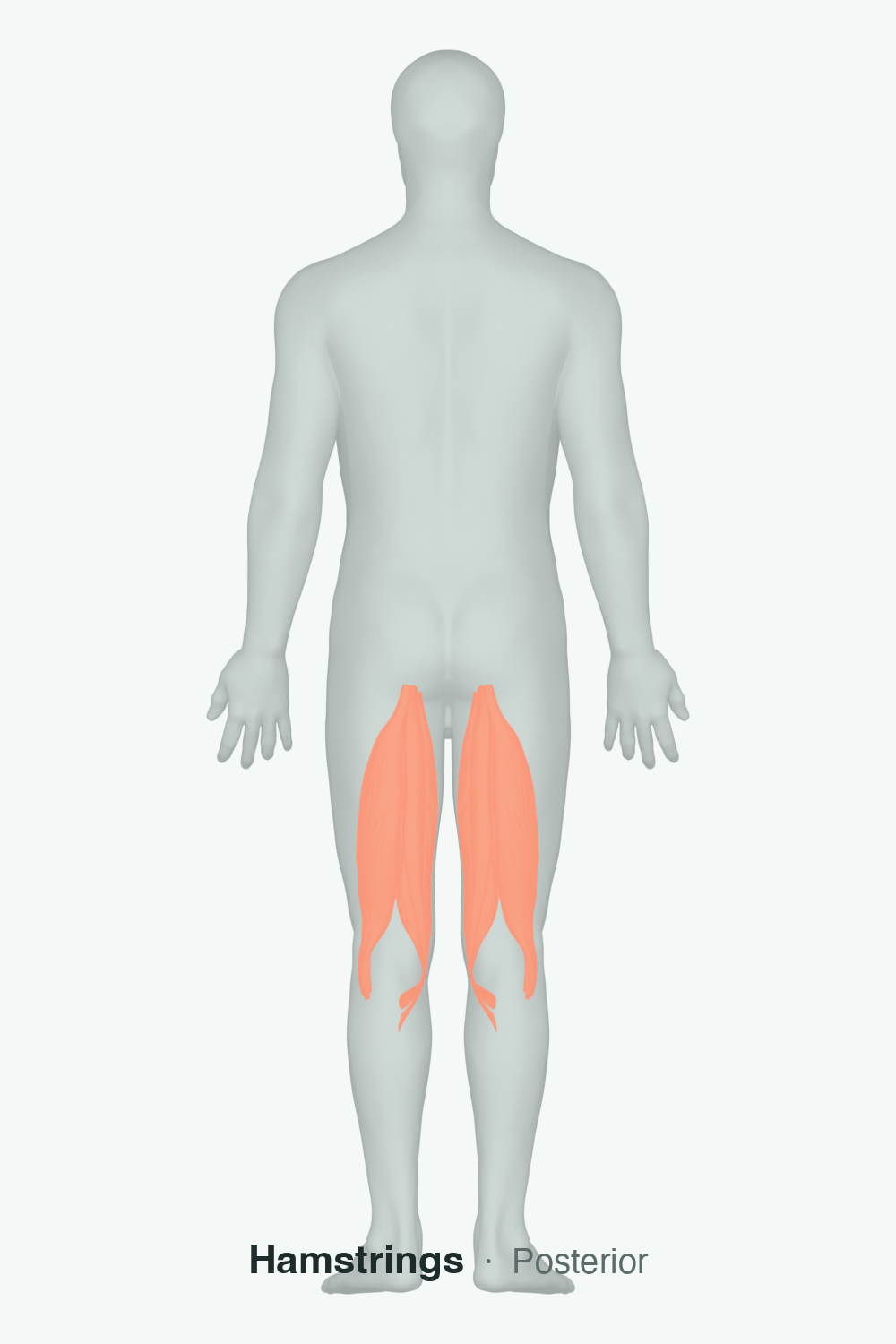
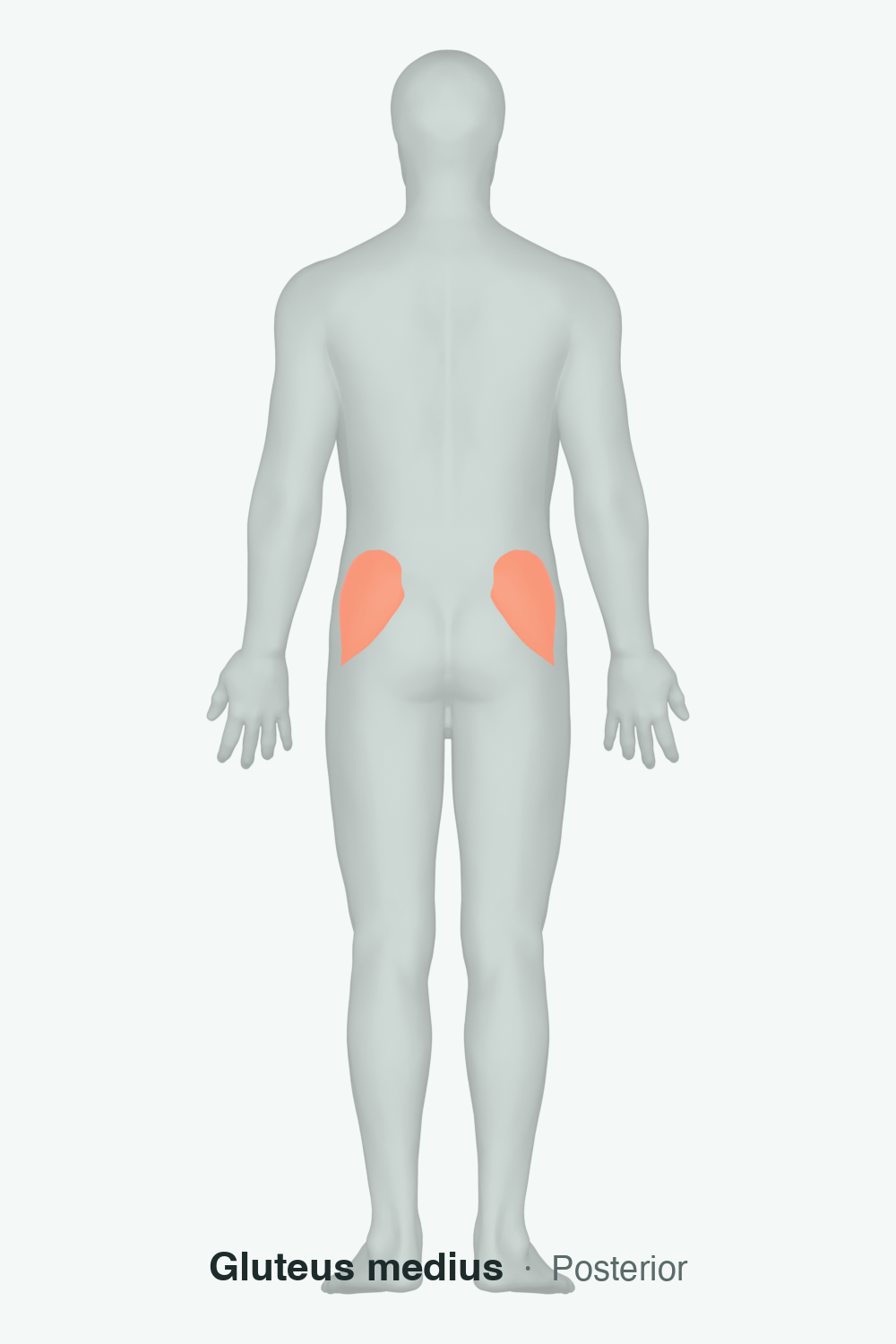
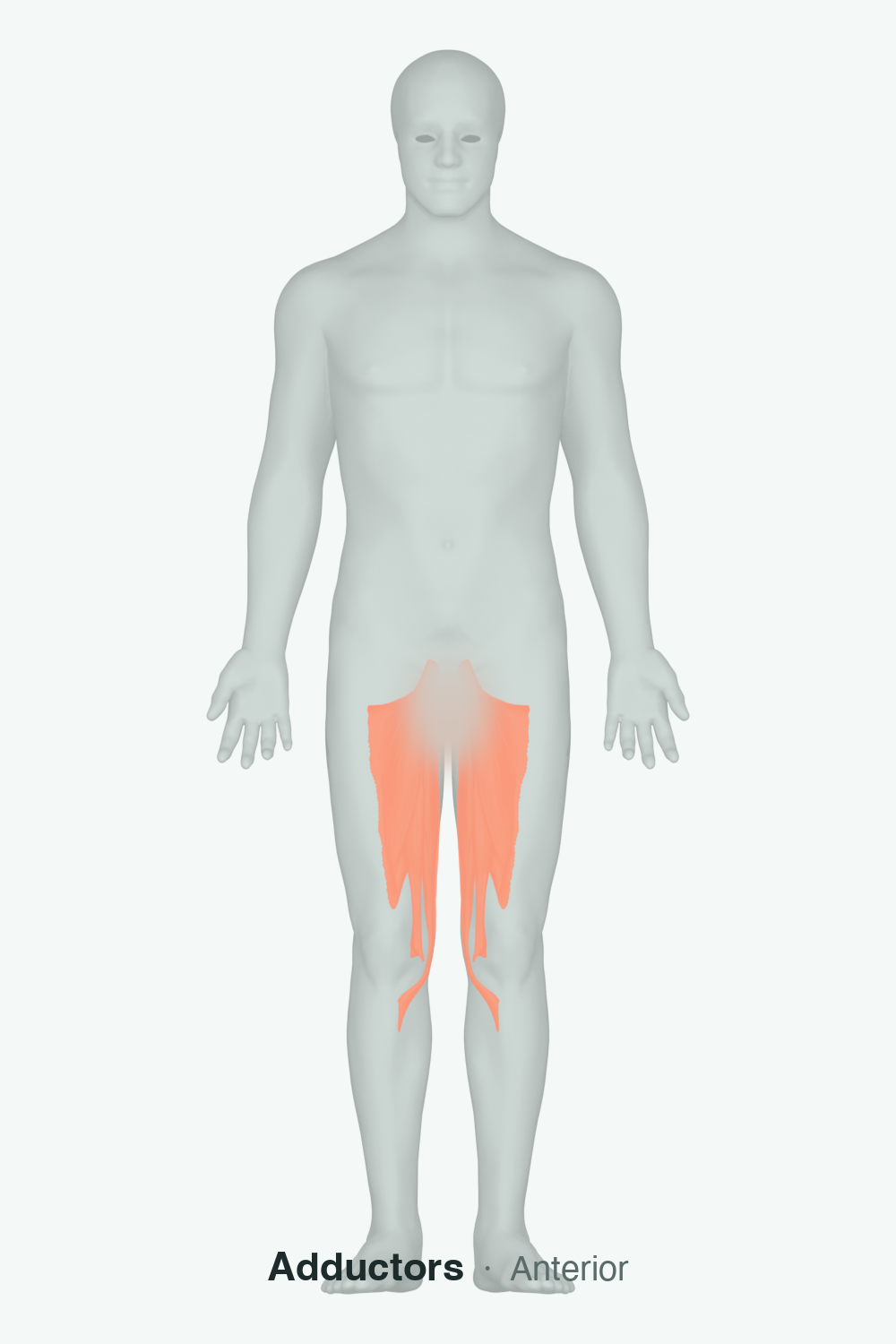
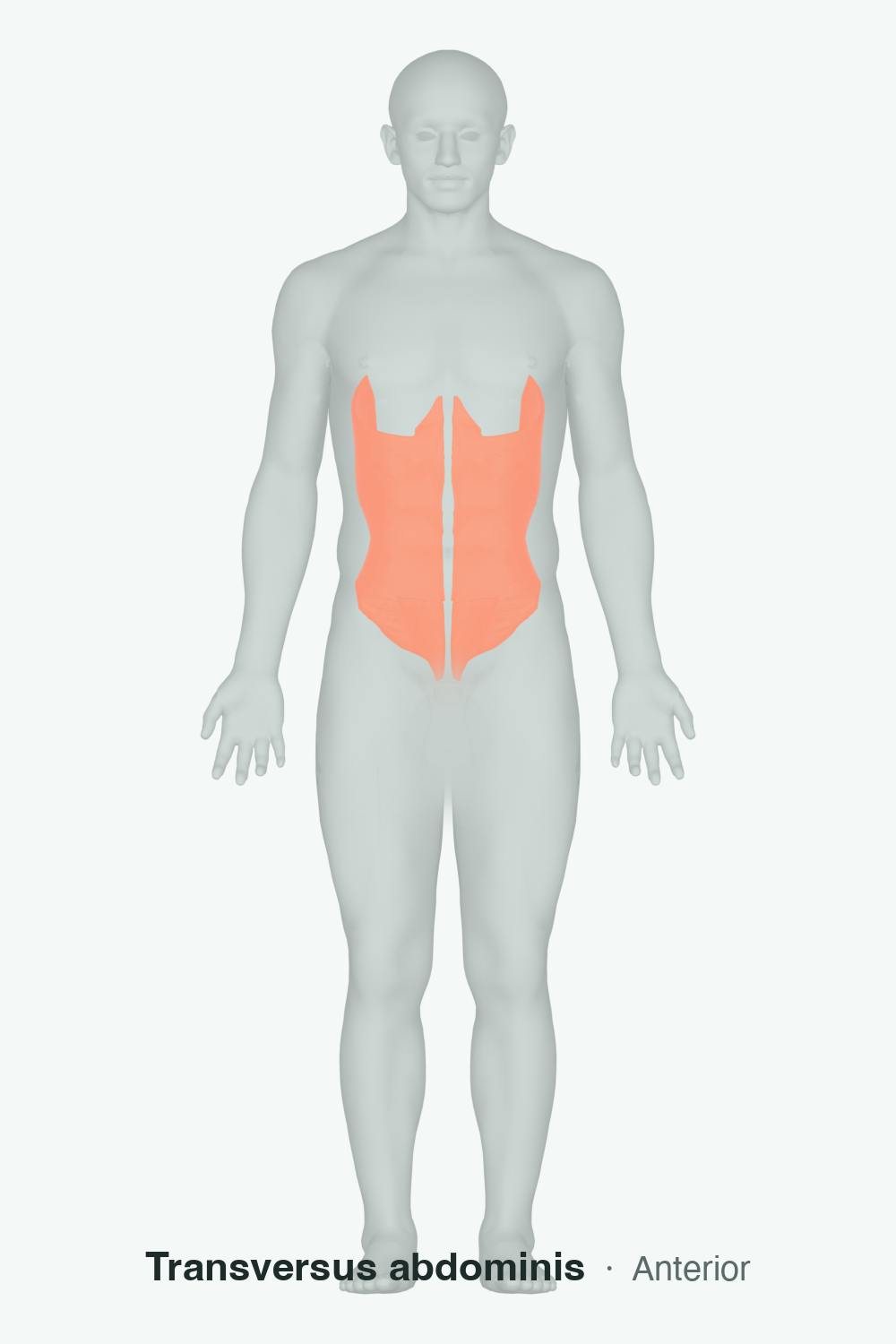
Strengthens: gluteus maximus, hamstrings, gluteus medius, hip adductors, core stabilizers
Part of a program
Part of Lower-Body Posture Reset
This exercise is one move. Lower-Body Posture Reset puts it in a plan — so you know what to do, in what order, and how much, week by week.
- Sequenced & dosed — the right exercises, in the right order, at the right volume.
- Progresses with you — difficulty ramps as you get stronger, not on a fixed calendar.
- Personalized — built around the specific limiter actually holding you back.
- Tracks your progress — see what's working and adjust over time.
Free · a quick assessment finds your starting point
Related exercises
Frequently asked questions
Why do a single-leg version instead of the bilateral hip thrust?
The single-leg variation loads one side at a time, which can make side-to-side differences easier to notice while increasing the balance and pelvic-control demand. It does not isolate one muscle or explain why the sides differ. Bilateral and single-leg versions can complement each other rather than one automatically replacing the other.
Where should my foot and upper back be positioned?
Plant the working foot flat, roughly under or slightly in front of the knee so the shin is close to vertical at the top of the rep. Rest the upper back—around shoulder-blade height—on the bench edge, not the neck or mid-back. If the bench slides, place it against a wall or use a non-slip mat underneath.
Where should I feel this exercise?
Many people feel effort in the working-side glute and hamstrings. The exact distribution varies with foot position, anatomy, range, and load. If the lower back or front of the hip becomes uncomfortable, check that you are not arching at the top and adjust the planted-foot position or range.
When should I stop?
Stop if you notice lower-back pain that increases during the rep, sharp pain at the back of the knee from the extended free-leg position, or hip-joint pinching at the top. These usually indicate a setup or range-of-motion issue. Persistent pain should be assessed by a qualified clinician before you continue.