ATG Split Squat
3 × 10 reps per side
A deep supported split-squat progression combining front-leg strength with ankle and hip mobility demands.
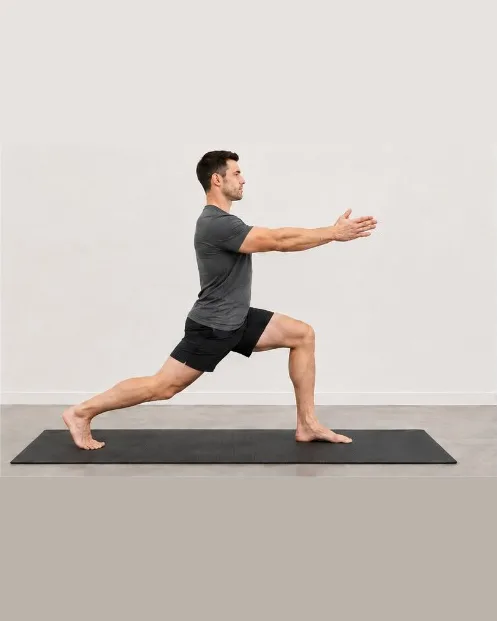
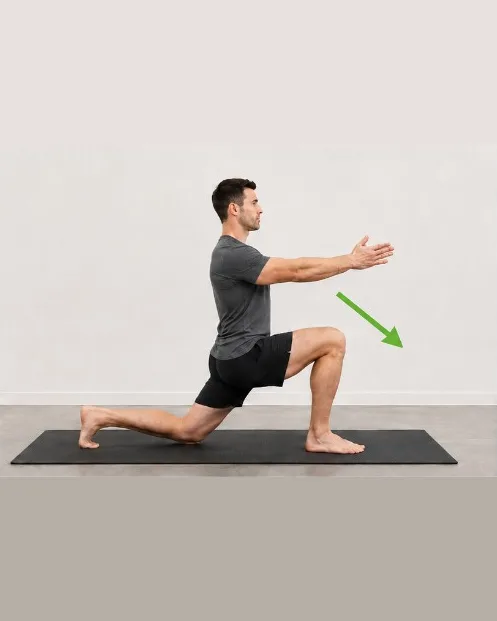
How to do it
- Set up in a long lunge stance with the torso tall and arms forward for balance.
- Keep the front heel, base of the big toe and base of the little toe grounded.
- Lower under control, allowing the front knee to travel forward in line with the second or third toe until you feel a stretch along the front of the rear thigh and hip.
- Keep the pelvis facing forward, the rear heel lifted and the lower back neutral.
- Drive back up through the front leg without rounding or arching.
Form cues
- Use a wall or stable support for balance while learning.
- Lower the rear knee smoothly and keep the front arch from collapsing.
- Reduce the depth if the front knee, ankle or hip pinches.
Why this exercise helps
This deep split-squat variation combines several demands: the front quadriceps and glute control the descent and return, the front ankle moves into dorsiflexion, and the rear hip moves into extension. Holding a support makes it possible to practice those positions without balance becoming the main challenge. Depth is optional, not the goal at any cost. Use the deepest range that keeps the front foot grounded, the knee moving comfortably with the foot, and the trunk controlled. It is a strength-and-mobility progression rather than a required test of lower-body function.
Stop or modify if
- Letting the front heel rise as the knee travels forward — the heel must stay grounded throughout; move the front foot farther forward or reduce depth rather than compensating with heel lift.
- Allowing the front knee to cave inward (valgus) during the descent — guide the knee toward the second or third toe and keep the arch of the front foot active.
- Rushing through the lowest portion using momentum — the deepest part of the range provides the greatest quad and hip-flexor challenge; control the descent deliberately.
Modifications and progressions
- Hold a wall, pole, or chair with both hands while learning so balance does not restrict depth or compromise pattern quality.
- Begin with the rear knee stopping well above the floor and add range only when every rep maintains a grounded front heel and clean knee tracking.
- Pad the rear knee with a mat fold or cushion if the rear knee approaching the floor causes discomfort.
Muscles worked
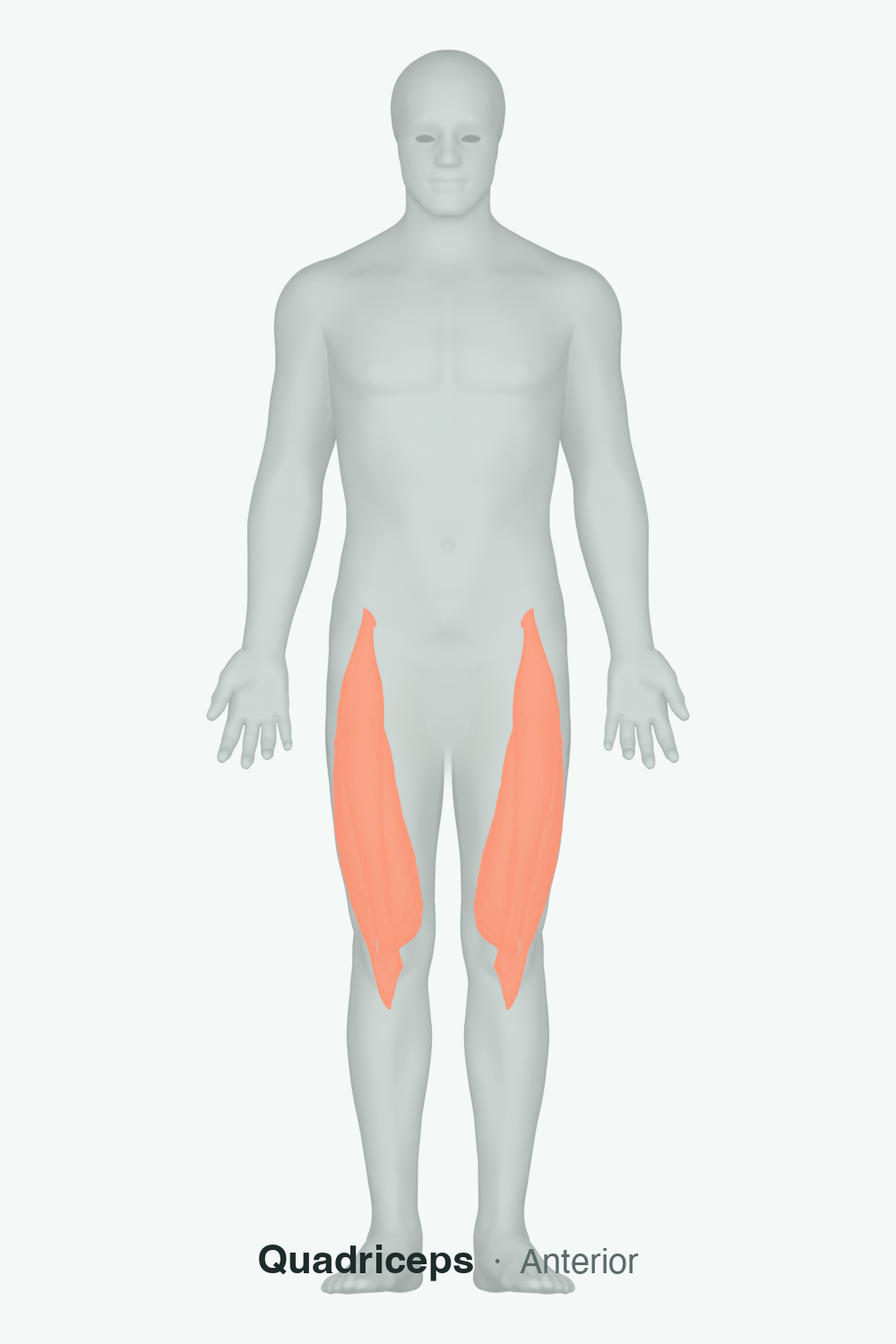
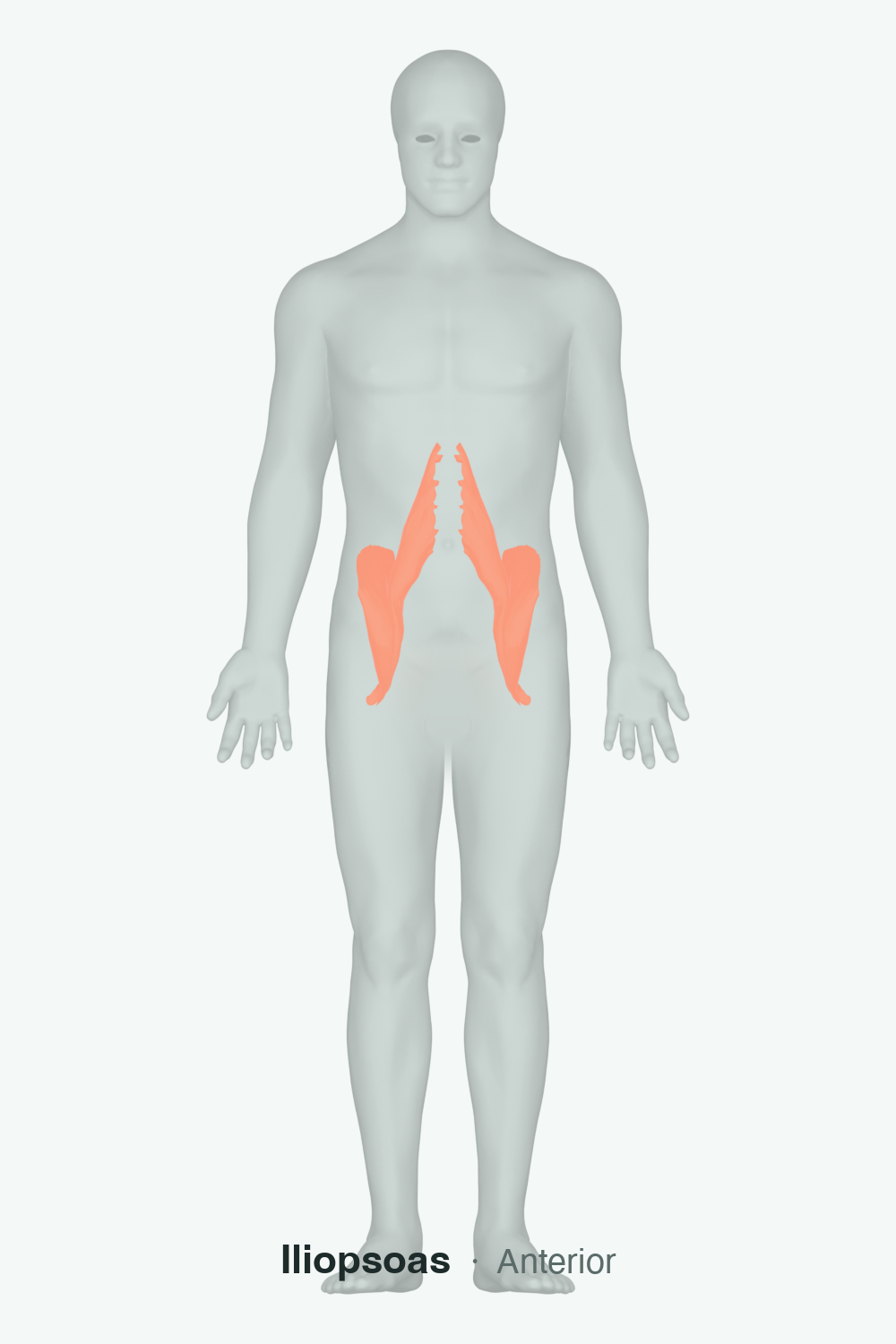
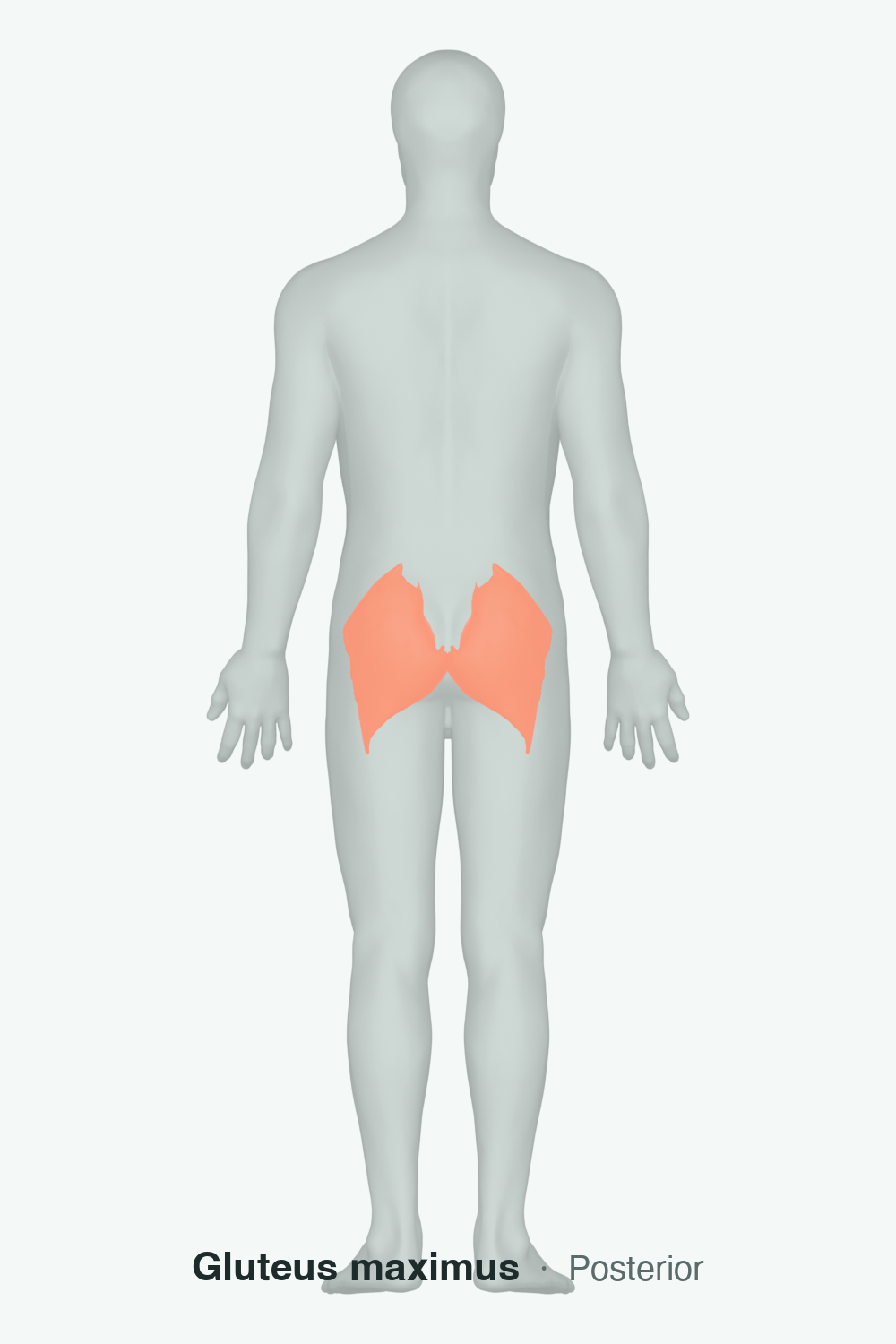
Stretches: rectus femoris, iliopsoas
Strengthens: quadriceps, gluteus maximus
Part of a program
Part of Front Splits
This exercise is one move. Front Splits puts it in a plan — so you know what to do, in what order, and how much, week by week.
- Sequenced & dosed — the right exercises, in the right order, at the right volume.
- Progresses with you — difficulty ramps as you get stronger, not on a fixed calendar.
- Personalized — built around the specific limiter actually holding you back.
- Tracks your progress — see what's working and adjust over time.
Free · a quick assessment finds your starting point
Related exercises
Frequently asked questions
What makes the ATG split squat different from a regular split squat or lunge?
The ATG variation uses a deliberately deep range, with the front knee moving farther forward and the rear hip extending more than in many standard split squats. That increases the ankle, knee, and hip range demands. The useful depth is the deepest range you can control comfortably; touching the rear knee to the floor is not mandatory.
Where should I feel the ATG split squat?
You may feel the front-leg quadriceps and glute working and a stretch around the front of the rear hip or thigh. Reduce the range if you feel a sharp pinch, catching, or increasing knee, ankle, or hip pain. Persistent symptoms warrant assessment rather than pushing deeper.
My front knee drifts inward during the squat — what should I do?
Reduce depth, use a stable support, and keep pressure through the heel and both sides of the forefoot while guiding the knee in the same general direction as the toes. Inward movement does not identify one weak muscle; hip control, foot position, balance, load, and anatomy can all contribute.
Is it safe for the knee to travel so far past the toes?
Knees commonly travel past the toes during stairs, squats, and lunges. In this exercise, increase the forward range gradually while keeping the foot grounded and the movement controlled. Existing pain, swelling, recent injury, or a sharp pinch are reasons to reduce the range and seek individualized guidance.