Floor Y Raise
strengthenshoulderintermediateactive
2 × 8 reps
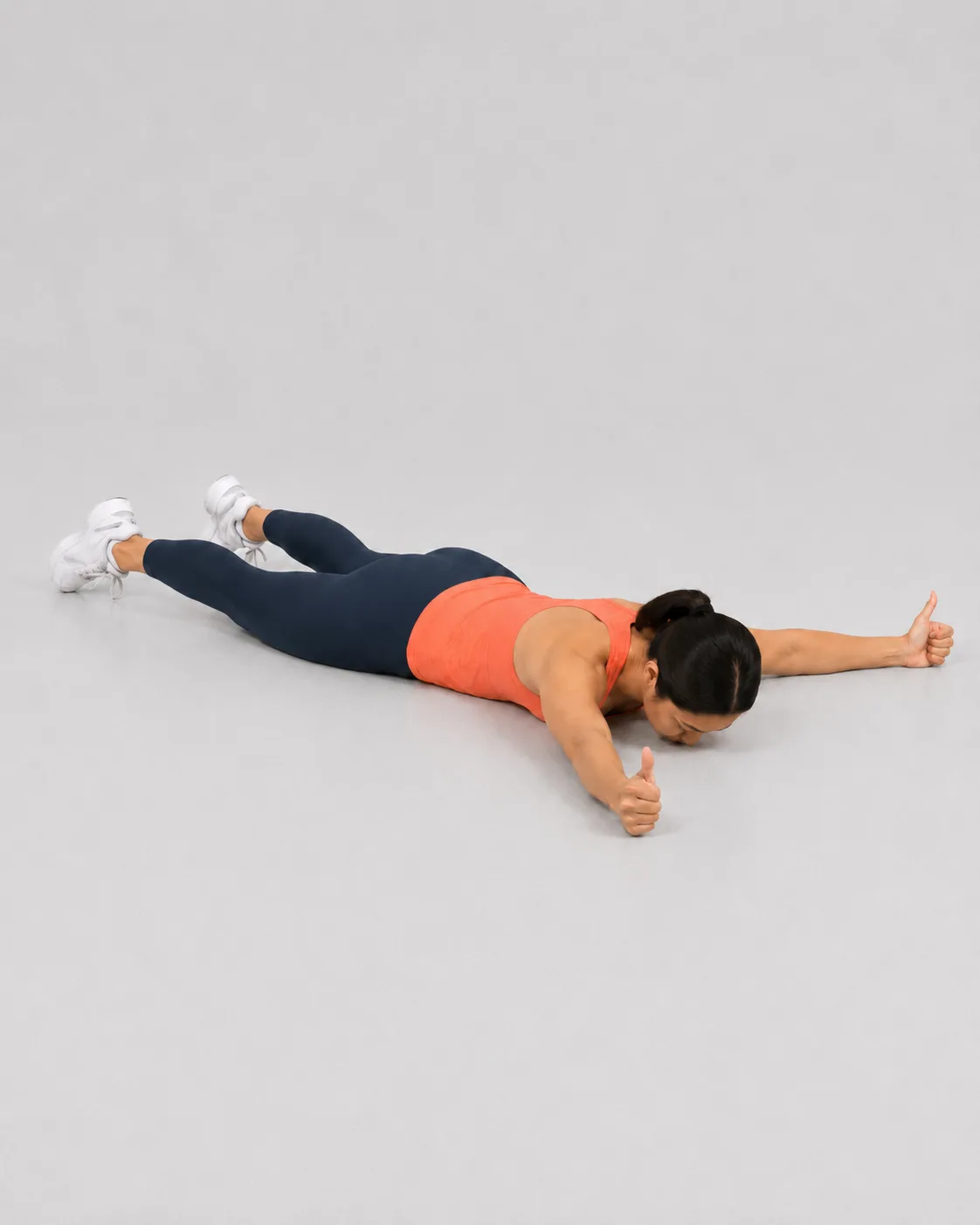
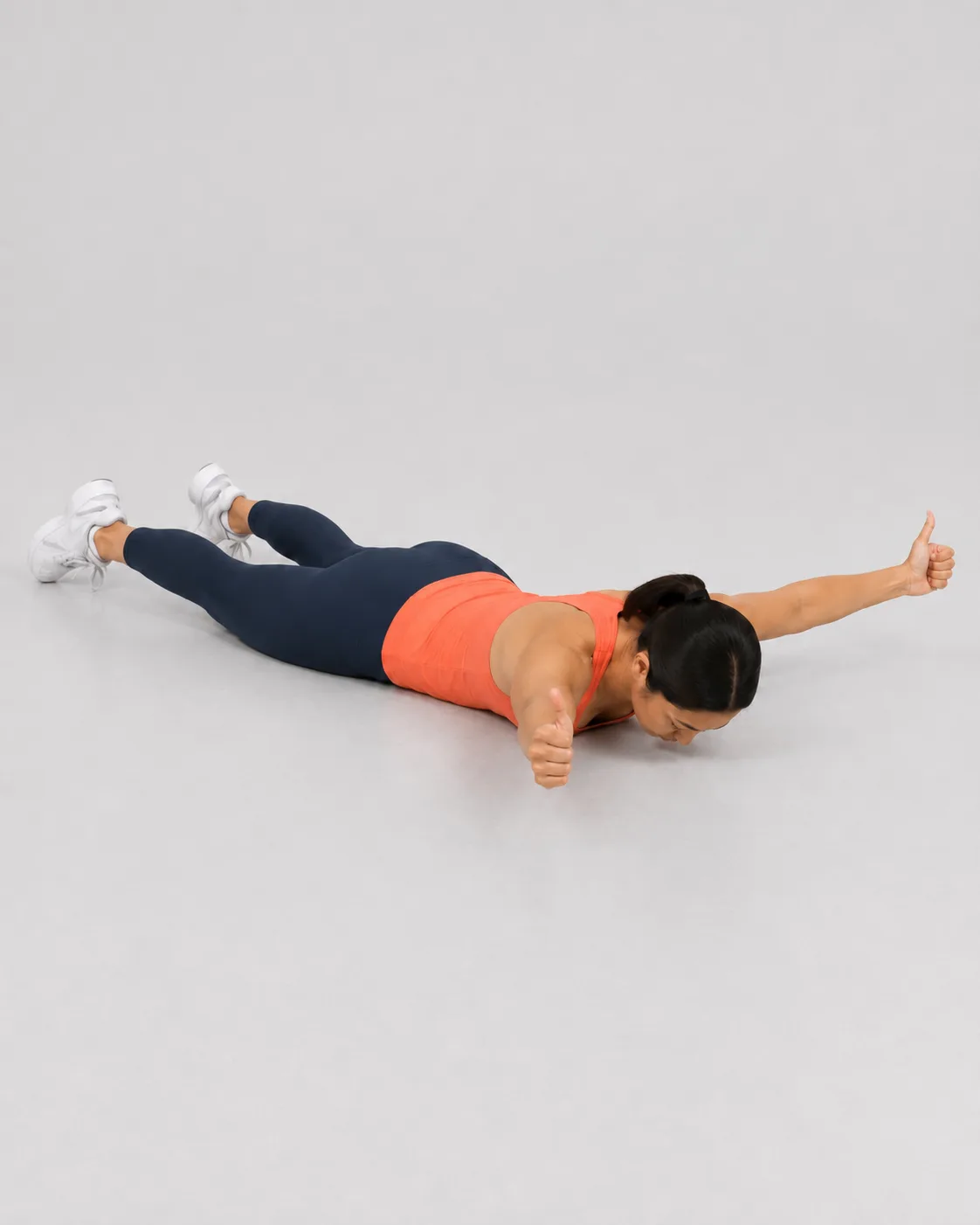
How to do it
- Lie face down with your legs extended and your forehead supported on a thin folded towel.
- Extend both arms diagonally overhead to form a Y shape.
- Position the arms approximately 120–135 degrees from the torso rather than directly out to the sides.
- Keep your elbows straight and point your thumbs upward.
- Lightly brace your abdomen and keep your lower ribs and pelvis in contact with the floor.
- Reach your hands forward and away from your body.
- Lift both arms a small distance from the floor while keeping your neck neutral.
- Allow the shoulder blades to rotate naturally as the arms lift; do not force them together.
- Pause briefly, then lower the arms slowly to the floor.
Form cues
- Think, “reach long before lifting.”
- Keep the arms in a clear Y position; arms placed directly sideways turn the movement into a T raise.
- Keep the shoulders away from the ears and avoid shrugging.
- Keep the forehead supported and do not lift the head to create additional range.
- Avoid lifting the chest, flaring the ribs or arching the lower back.
- Use a smaller range or perform one arm at a time if both-arm lifting causes compensation.
- Begin without weights; the Y raise is more demanding than the T raise.
- Stop for shoulder pinching, neck discomfort, numbness, tingling or radiating arm pain.
Muscles worked
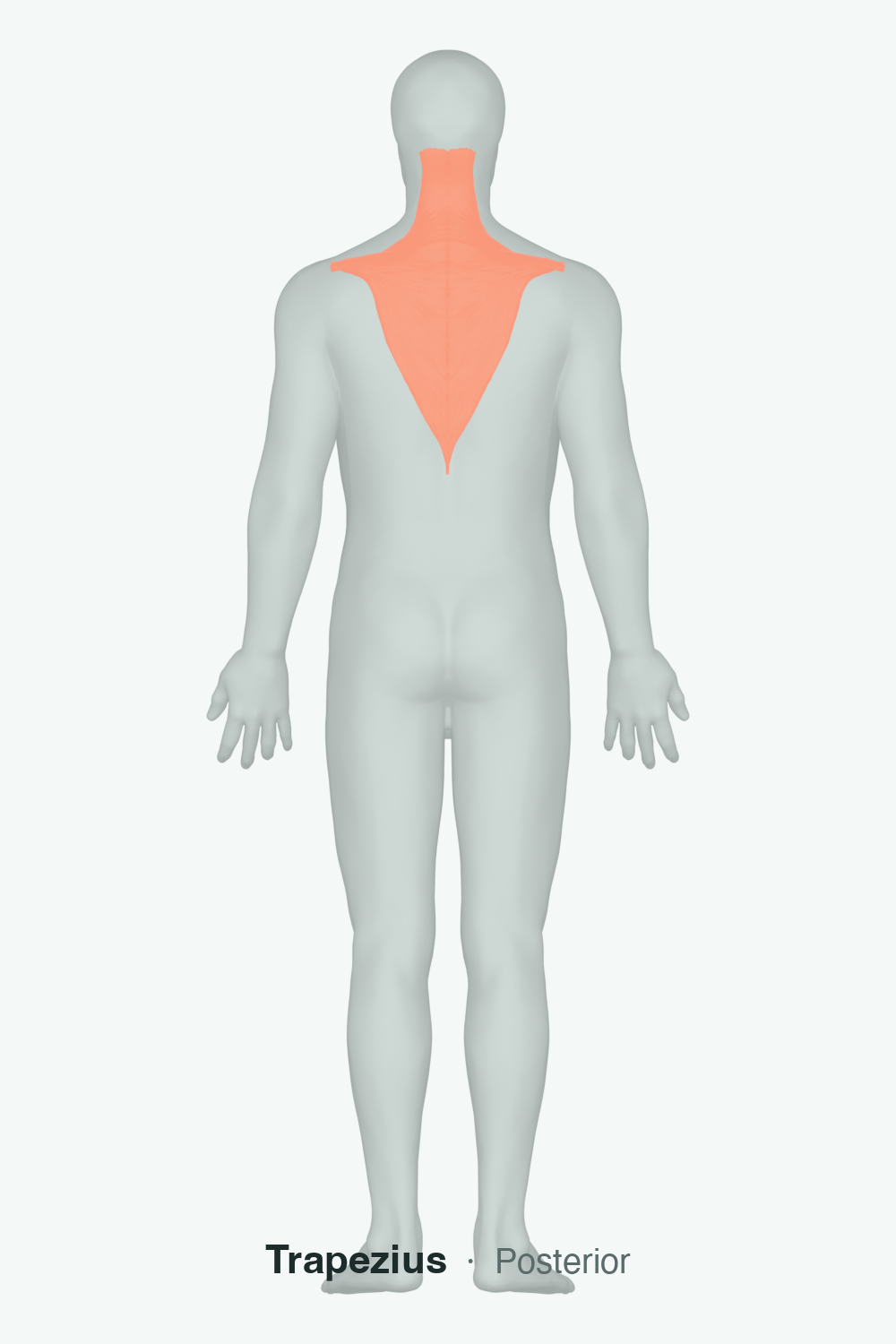
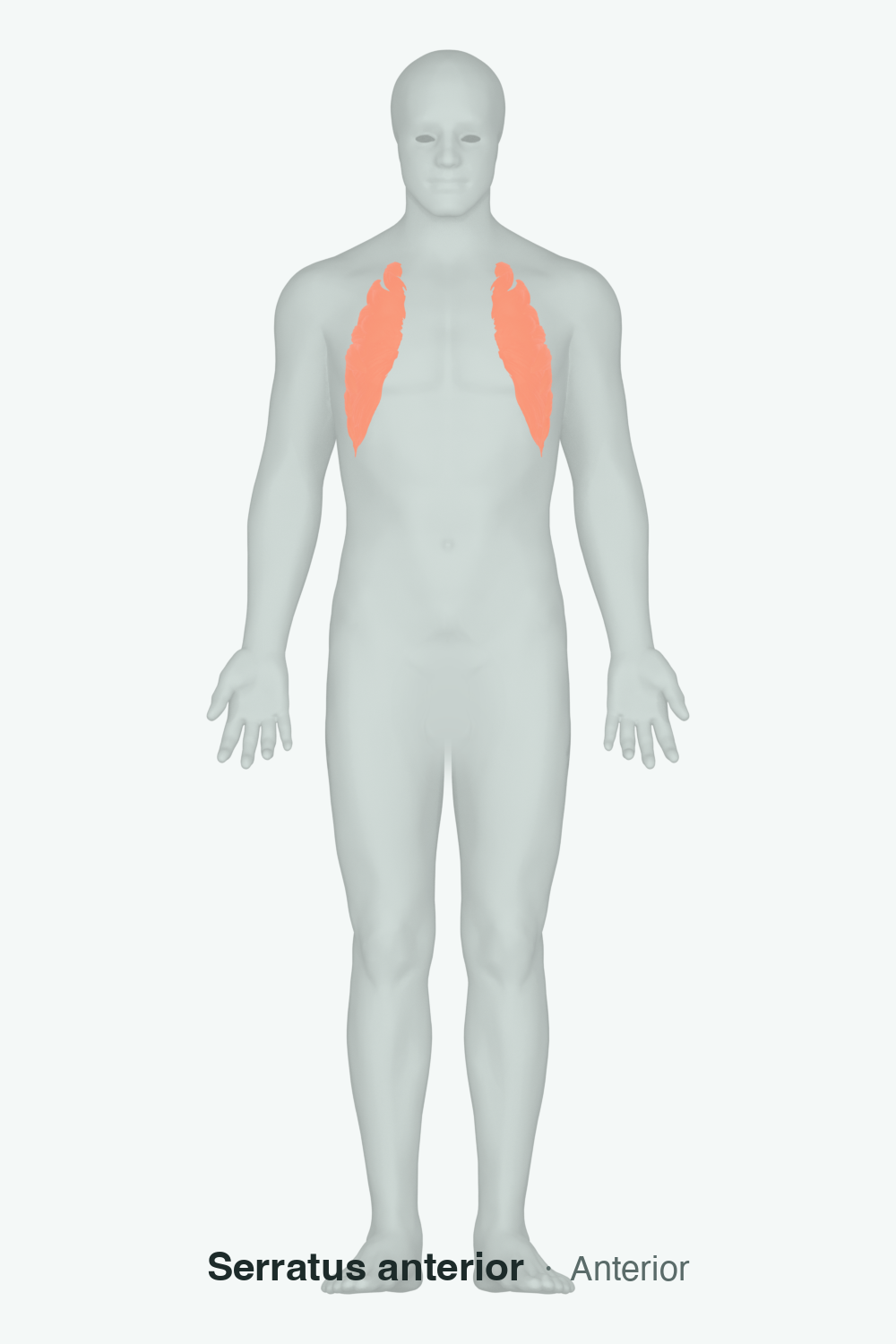
Strengthens: lower trapezius, serratus anterior, rotator cuff
Part of a program
Part of Upper Body Posture Reset
This exercise is one move. Upper Body Posture Reset puts it in a plan — so you know what to do, in what order, and how much, week by week.
- Sequenced & dosed — the right exercises, in the right order, at the right volume.
- Progresses with you — difficulty ramps as you get stronger, not on a fixed calendar.
- Tracks your progress — see what's working and adjust over time.
See the program →
Free · start with Week 1, no assessment needed