Neck Extensor Stretch (Seated/Supine Flatten Neck)
2 × 10 reps
Active chin-tuck that uses the deep neck flexors to flatten the cervical curve and lengthen the posterior neck extensors — seated or supine.
An illustration is coming soon. Follow the step-by-step instructions below.
How to do it
- Lie supine, or sit on a stool with your back against the wall.
- Place hands up beside the head and keep the low back flat.
- Press the head back with the chin down and in, using the anterior neck flexors to straighten (flatten) the neck.
Form cues
- Drive the stretch with the deep front neck flexors
- Chin tucks down and in, not up
Why this exercise helps
The cervical extensors — including semispinalis capitis and the suboccipitals — commonly become facilitated in forward-head posture as they work overtime to support the anteriorly displaced skull. This exercise pairs an active stretch with light neural drive to the anterior flexors. By pressing the head back and tucking the chin down and inward, the deep flexors shorten concentrically while the extensors lengthen, making it both a stretch and a low-load strengthening drill. The wall or floor provides feedback that the head has moved into extension, training proprioception as well as tissue length. If neck symptoms radiate to the arm or worsen, stop and seek clinical assessment.
Stop or modify if
- Tilting the chin up instead of down. The movement is chin down and in — like a slight 'yes' nod — not jutting the chin skyward.
- Moving only the eyes or jaw rather than the whole head. The cervical spine should actively flatten against the surface or wall.
- Using the hands to force range. The hands are positioned beside the head for feedback only; the movement should be entirely neck-muscle driven.
Modifications and progressions
- Begin supine rather than seated: gravity assists the head-pressing motion, making it easier to feel the correct direction.
- Once the seated version is comfortable, try it standing with the back of the head against a wall to add postural context and tactile feedback.
Muscles worked
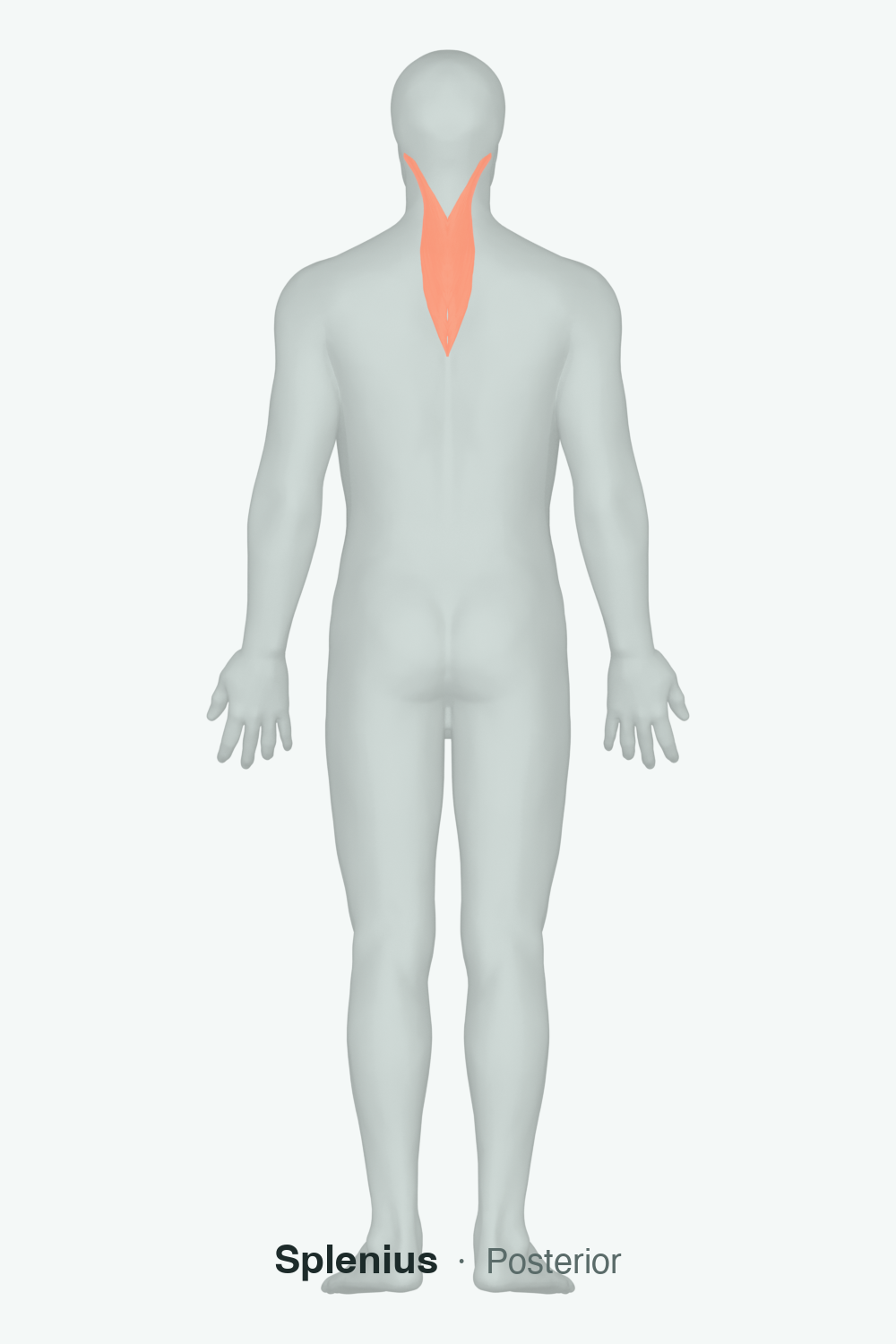
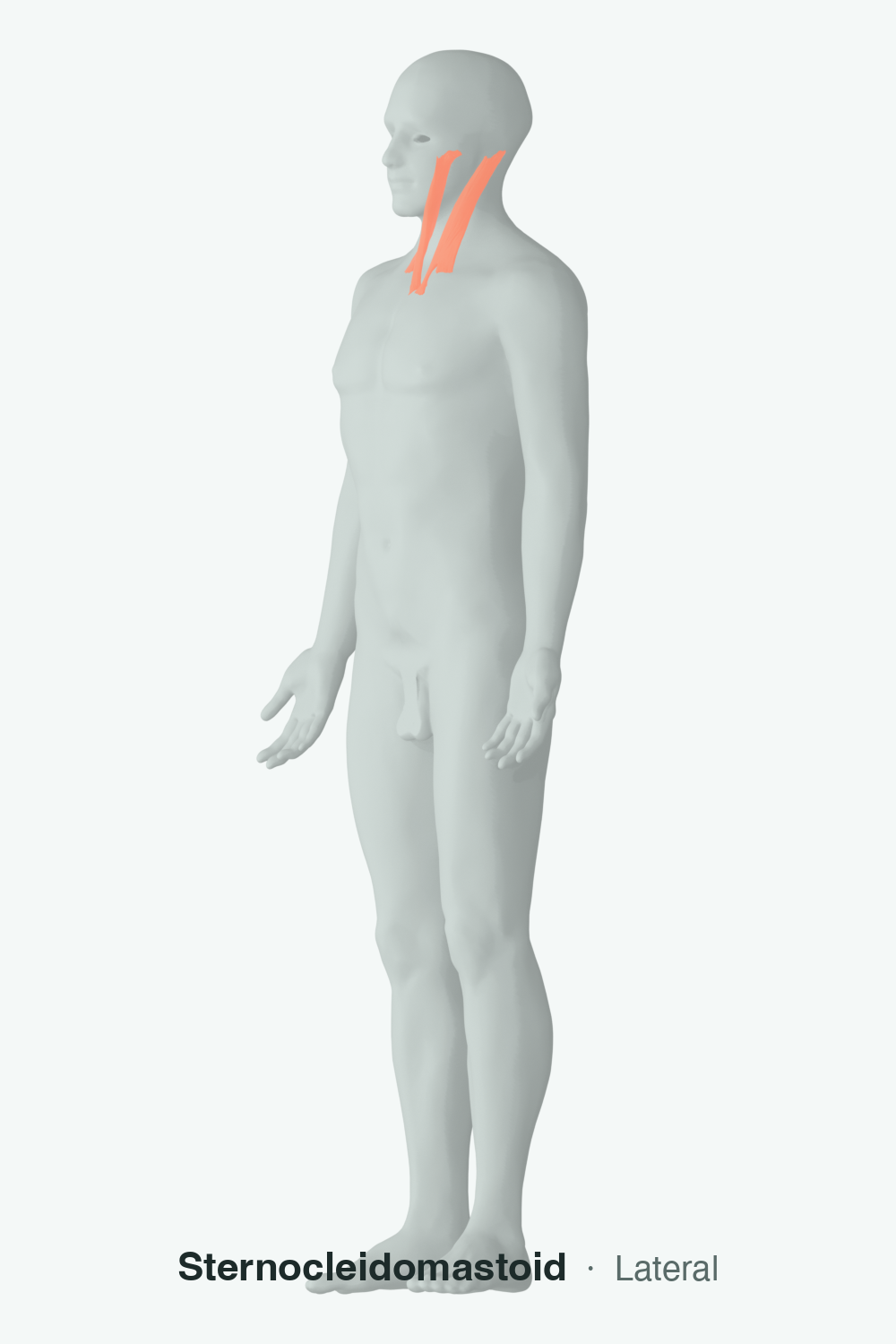
Stretches: neck extensors
Strengthens: neck flexors