Standing Lateral Hip Stretch
3 × 30s per side
Use a wall-supported lateral pelvic shift to create a comfortable stretch sensation around the outer hip and tensor fasciae latae.
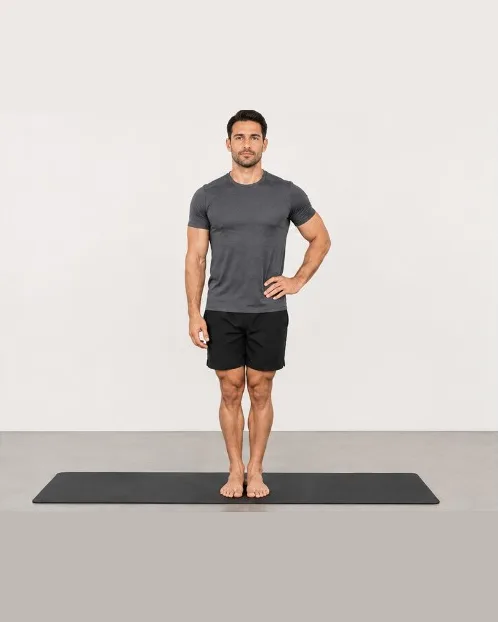
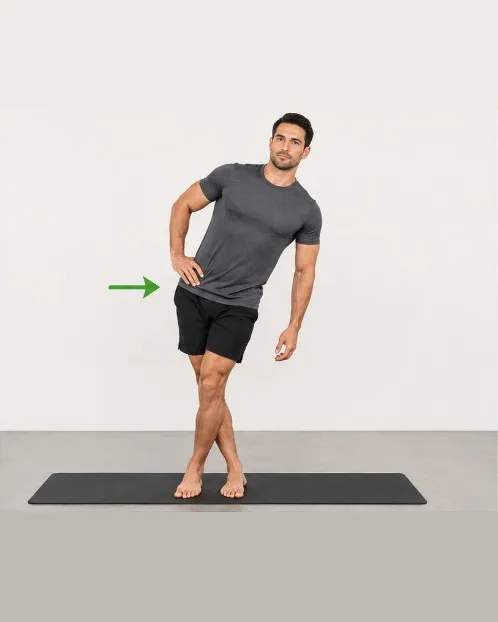
How to do it
- Stand beside a wall for support with the feet together.
- Cross the stretch-leg slightly behind the other foot.
- Shift the pelvis laterally away from the wall while leaning the torso slightly toward it.
- Keep the chest facing forward without rotating and maintain comfortable foot pressure.
- Feel the stretch along the outer hip and thigh; hold, then switch sides.
Form cues
- Move the pelvis sideways rather than collapsing the trunk.
- Use the wall for balance; perfectly even weight is not required.
- Stop for lateral-knee pain or hip pinching.
- Place your hand on the hip you are stretching.
Why this exercise helps
The tensor fasciae latae (TFL) attaches near the front of the outer pelvis and blends into the iliotibial band along the outer thigh. Crossing the stretch-side leg behind and shifting the pelvis away from the wall changes the position of the outer hip and can create a stretch sensation around the TFL region. The iliotibial band itself is dense connective tissue, so the goal is not to force it longer. Wall support reduces the balance demand and makes it easier to adjust the pelvic shift until the position feels clear and comfortable.
Stop or modify if
- Collapsing the trunk sideways instead of shifting the pelvis—this changes the stretch target and can strain the lower back.
- Rotating the torso rather than keeping the chest facing forward, altering which structures are loaded.
- Crossing the foot too far behind instead of just enough to allow the lateral pelvic shift without losing foot contact.
Modifications and progressions
- Use a doorframe or sturdy counter for support if a flat wall feels awkward for the slight lean.
- Reduce the pelvic shift to a smaller range if the stretch feels intense or produces lateral-knee discomfort.
Muscles worked
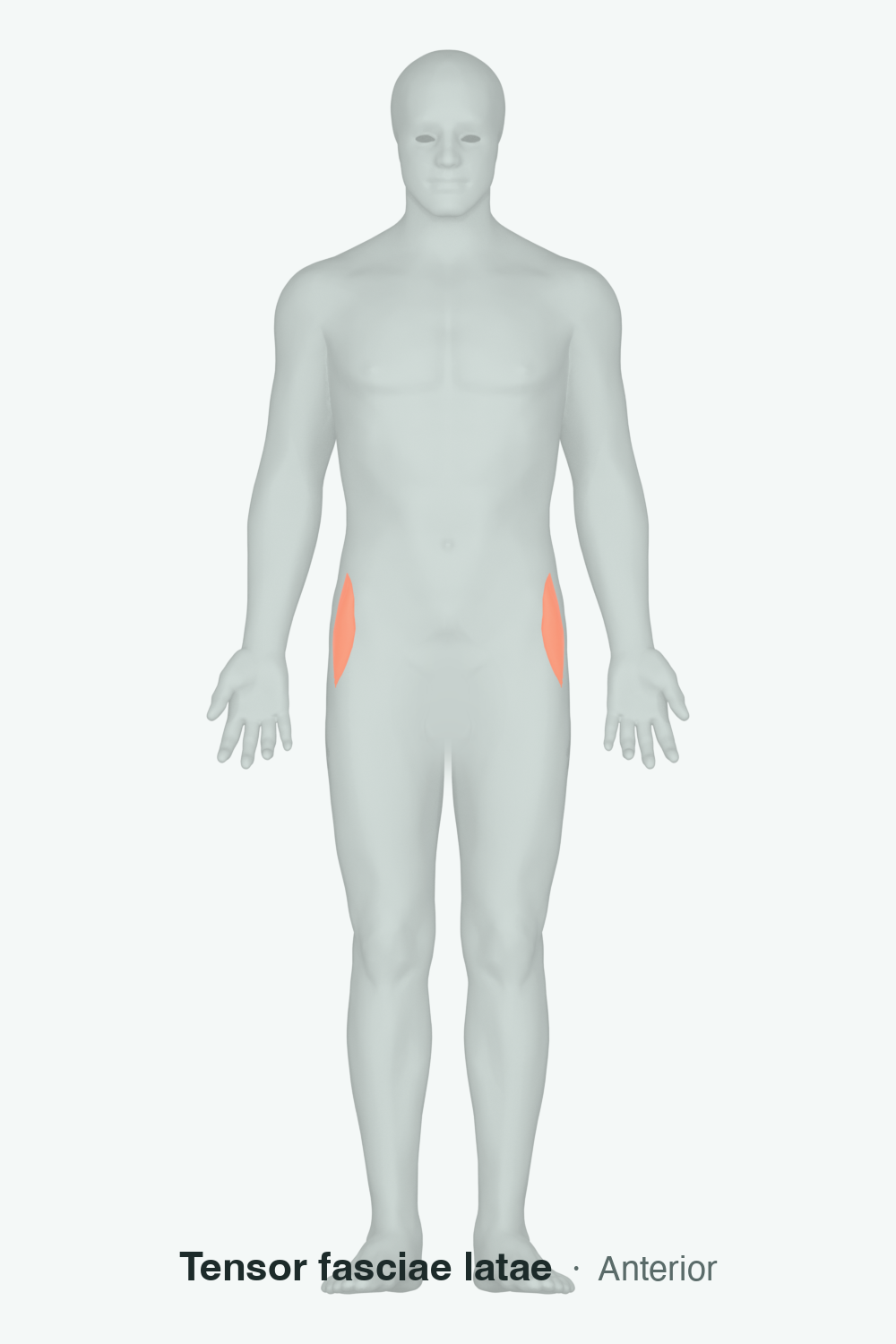
Stretches: tensor fasciae latae
Part of a program
Part of Front Splits
This exercise is one move. Front Splits puts it in a plan — so you know what to do, in what order, and how much, week by week.
- Sequenced & dosed — the right exercises, in the right order, at the right volume.
- Progresses with you — difficulty ramps as you get stronger, not on a fixed calendar.
- Personalized — built around the specific limiter actually holding you back.
- Tracks your progress — see what's working and adjust over time.
Free · a quick assessment finds your starting point
Related exercises
Frequently asked questions
Where should I feel this stretch?
You should feel a mild-to-moderate stretch along the outer hip and upper thigh on the crossed side. Some people also notice a sensation further down the outer thigh toward the knee. You should not feel pain at the lateral knee, a pinch at the front of the hip, or discomfort in the lower back.
How far back should I cross my foot and how much should I lean?
Cross the stretch-leg just far enough behind the other foot to allow the pelvis to shift sideways—usually a small step back rather than a wide cross. The torso lean toward the wall should be slight, mainly to counterbalance the pelvic shift. Experiment with small adjustments until the outer-hip sensation feels clear and comfortable without straining the back or knee.
How often should I do this stretch?
Follow the sets and hold duration shown on this page or in your program. Use a frequency that remains comfortable and does not leave increasing hip or knee symptoms. More stretching is not automatically better.
When should I stop or seek advice?
Stop immediately if you feel sharp or shooting pain, lateral-knee pain, a pinch at the front of the hip, numbness, tingling, or if any symptom worsens during or after the stretch. These responses are not a normal part of stretching. If they occur consistently, do not continue the exercise and consult a qualified health professional before resuming.