Adductor Stretch
stretchhipeasypassiveAdductor length
2 × 25s per side
The posture scan does not measure thoracic kyphosis, lordosis, or flat-back posture directly. This exercise may still help mobility and strength that support overall alignment — it is wellness education, not a diagnosis.
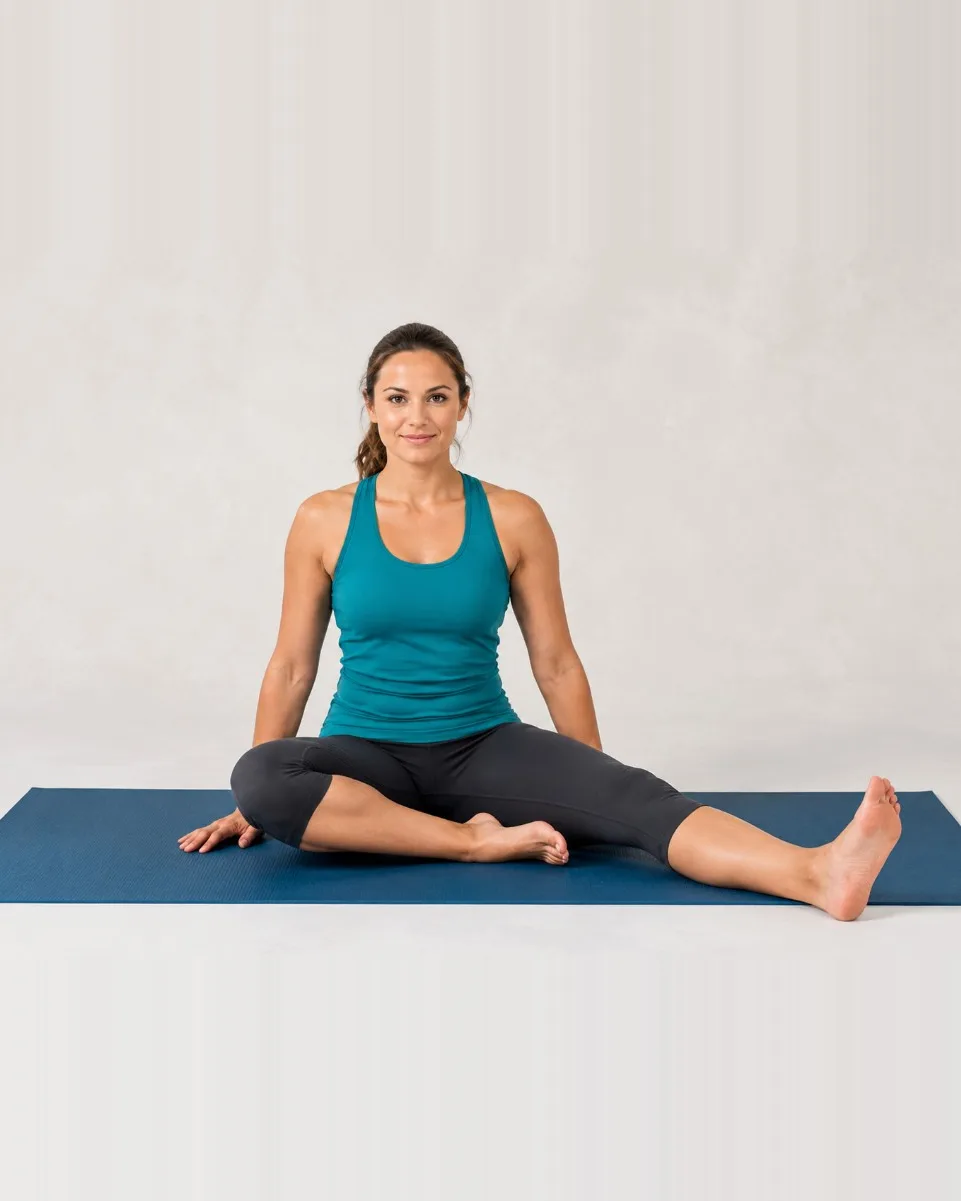
How to do it
- Sit on the floor with your left leg extended comfortably out to the side and the kneecap facing upward.
- Bend the right knee and place the sole of your right foot next to the inside of the left knee.
- Keep both sit bones grounded and hinge forward slightly from the hips toward the straight leg until you feel a mild stretch along the inner thigh.
- Keep the spine long and the torso facing the straight leg without collapsing or bending sideways.
- Repeat on opposite side.
Form cues
- Keep the straight-leg kneecap facing upward and do not force the knee flat.
- The stretch should be felt along the inner thigh, not inside the knee.
- If the straight knee is uncomfortable, soften it and reduce the forward hinge.
Muscles worked
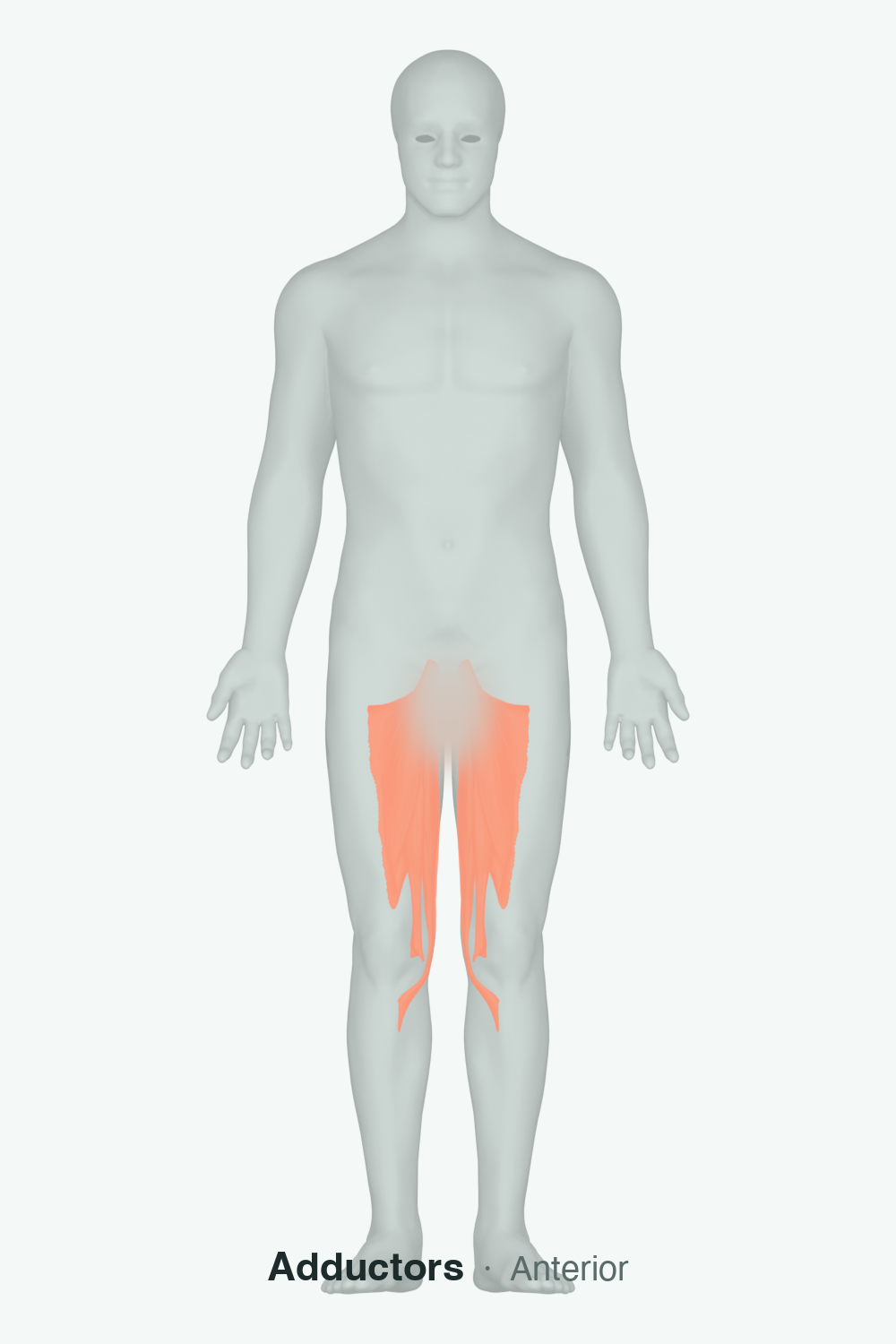
Stretches: hip adductors
Helps with
Part of a program
Part of Front Splits
This exercise is one move. Front Splits puts it in a plan — so you know what to do, in what order, and how much, week by week.
- Sequenced & dosed — the right exercises, in the right order, at the right volume.
- Progresses with you — difficulty ramps as you get stronger, not on a fixed calendar.
- Personalized — built around the specific limiter actually holding you back.
- Tracks your progress — see what's working and adjust over time.
See the program →
Free · a quick assessment finds your starting point