Seated Butterfly
stretchhipeasypassive
3 × 20s
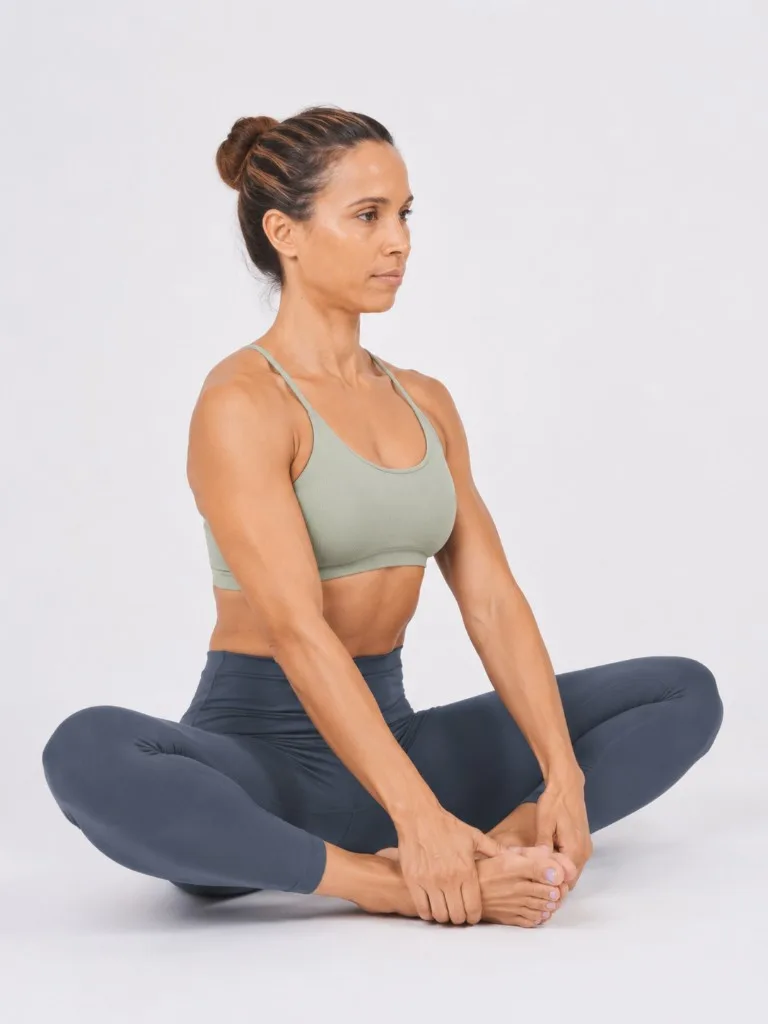
A seated inner-thigh stretch with soles together and knees wide; gravity provides the stretch when you hinge forward with a long spine.
How to do it
- Sit with the soles of the feet together and let the knees fall outward comfortably.
- Rest the forearms lightly on the inner thighs without pushing the knees down.
- Hinge forward from the hips with a long spine until you feel a comfortable inner-thigh stretch.
- Hold for 20 to 30 seconds, then return upright.
Form cues
- Move the feet farther away if the knees or groin feel uncomfortable.
- Do not press the knees toward the floor.
- Breathe evenly and stay within a comfortable range.
Why this exercise helps
Seated Butterfly places the hip joints in external rotation and abduction simultaneously, creating a passive stretch of the adductor group—inner-thigh muscles often shortened by prolonged sitting with legs parallel. Letting the knees fall outward by gravity rather than pressing them down respects individual hip-joint structure and avoids forced rotation. Hinging forward from the hips while maintaining a long spine increases the stretch intensity by altering the angle of the femur relative to the pelvis, rather than by rounding the lower back to reach forward.
Stop or modify if
- Pressing the knees toward the floor with hands or elbows. This forces the hip joints into external rotation beyond their comfortable range and may cause groin or inner-knee discomfort.
- Rounding the lower back to lean forward rather than hinging at the hips. The forward tilt should come from the pelvis rotating over the sit bones, keeping the spine long.
- Sitting with the feet too close to the groin, creating a sharp knee angle. Move the feet farther forward until the inner thighs feel a comfortable stretch without knee pressure.
Modifications and progressions
- Sit on a folded blanket or low cushion to raise the hips above knee level; this encourages natural external rotation and reduces low-back strain during the hold.
- Keep an upright spine without any forward lean if bending forward provokes low-back discomfort; the inner-thigh stretch is still present from the leg position alone.
Muscles worked
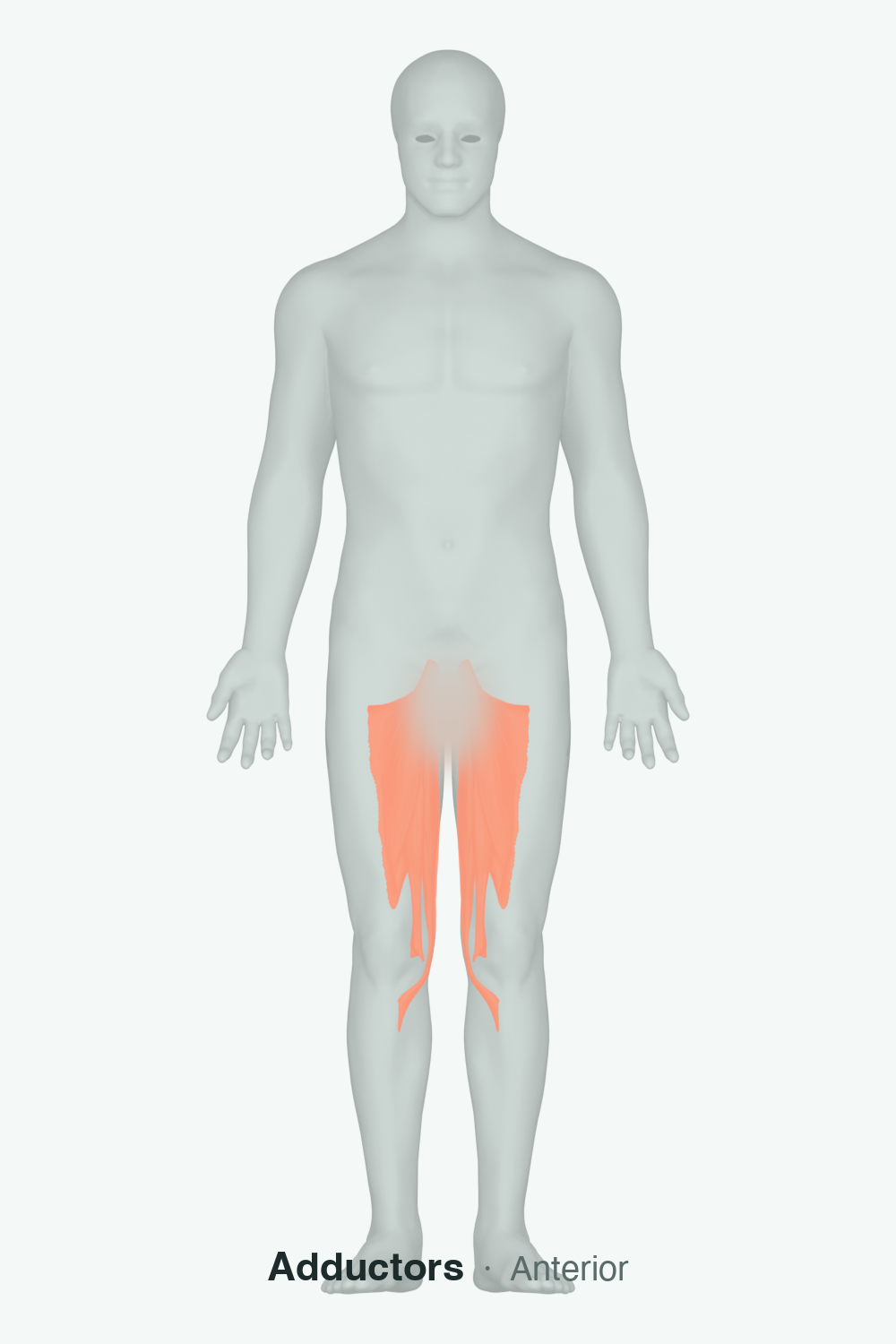
Stretches: hip adductors