Suboccipital Self-Massage & Neck Flexion Stretch
1 × 5 reps
Gentle self-massage below the base of the skull, followed by a small and comfortable neck-flexion stretch.
An illustration is coming soon. Follow the step-by-step instructions below.
How to do it
- Place the thumbs in the soft tissue just below the base of the skull, away from the sides and front of the neck.
- Apply gentle sustained pressure, or rest the head on a folded towel for a hands-free alternative.
- To stretch, flex the neck gently; depress the shoulders to increase the stretch.
- Avoid heavy overpressure if osteoporotic.
Form cues
- Feel the extensors relax as you retract, contract as you extend
- Keep pressure gentle under the skull base
Why this exercise helps
The suboccipital muscles lie between the base of the skull and the upper cervical vertebrae and help control small head movements. Some people notice tenderness or stiffness in this area, but posture alone cannot establish which tissue is responsible. Gentle thumb or towel pressure may temporarily change how the area feels before a small neck-flexion movement. Keep the pressure light, do not press on the front or side of the neck, and stop for dizziness, visual changes, worsening headache, or symptoms into an arm.
Stop or modify if
- Pressing too hard into the soft tissue under the occiput. Use only the weight of the head — the thumbs provide position, not force.
- Forcing neck flexion rather than letting the head drop with gravity. Allow the weight of the head to provide the stretch gradually.
- Forcing the shoulders downward while flexing the neck. Let the shoulders remain relaxed rather than adding a strong second stretch.
Modifications and progressions
- Instead of thumbs, rest the skull on a small rolled towel or book positioned just below the occiput for a hands-free sustained release.
- Begin with just the suboccipital compression and add neck flexion only in a second session once the pressure-release technique is comfortable.
Muscles worked
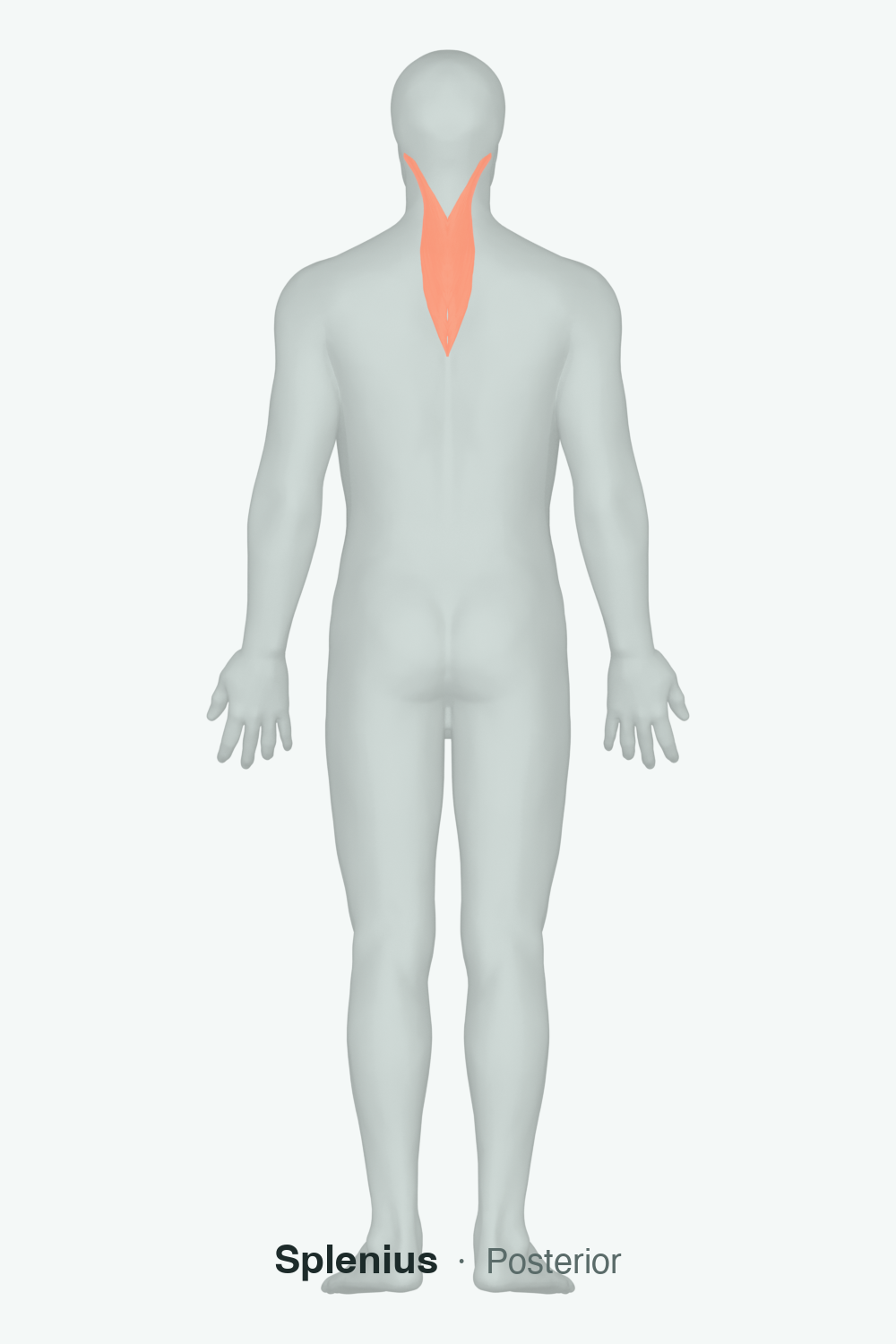
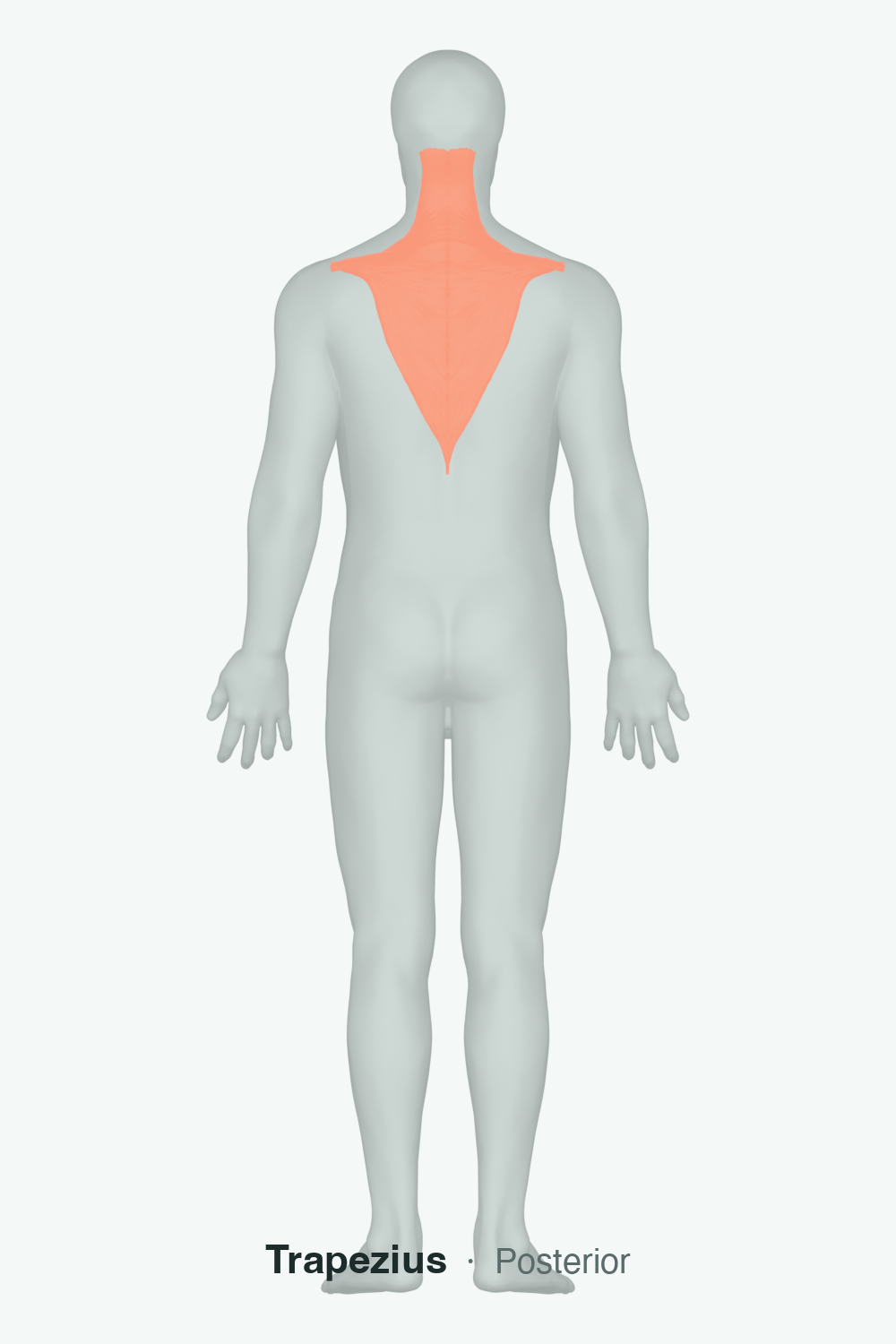
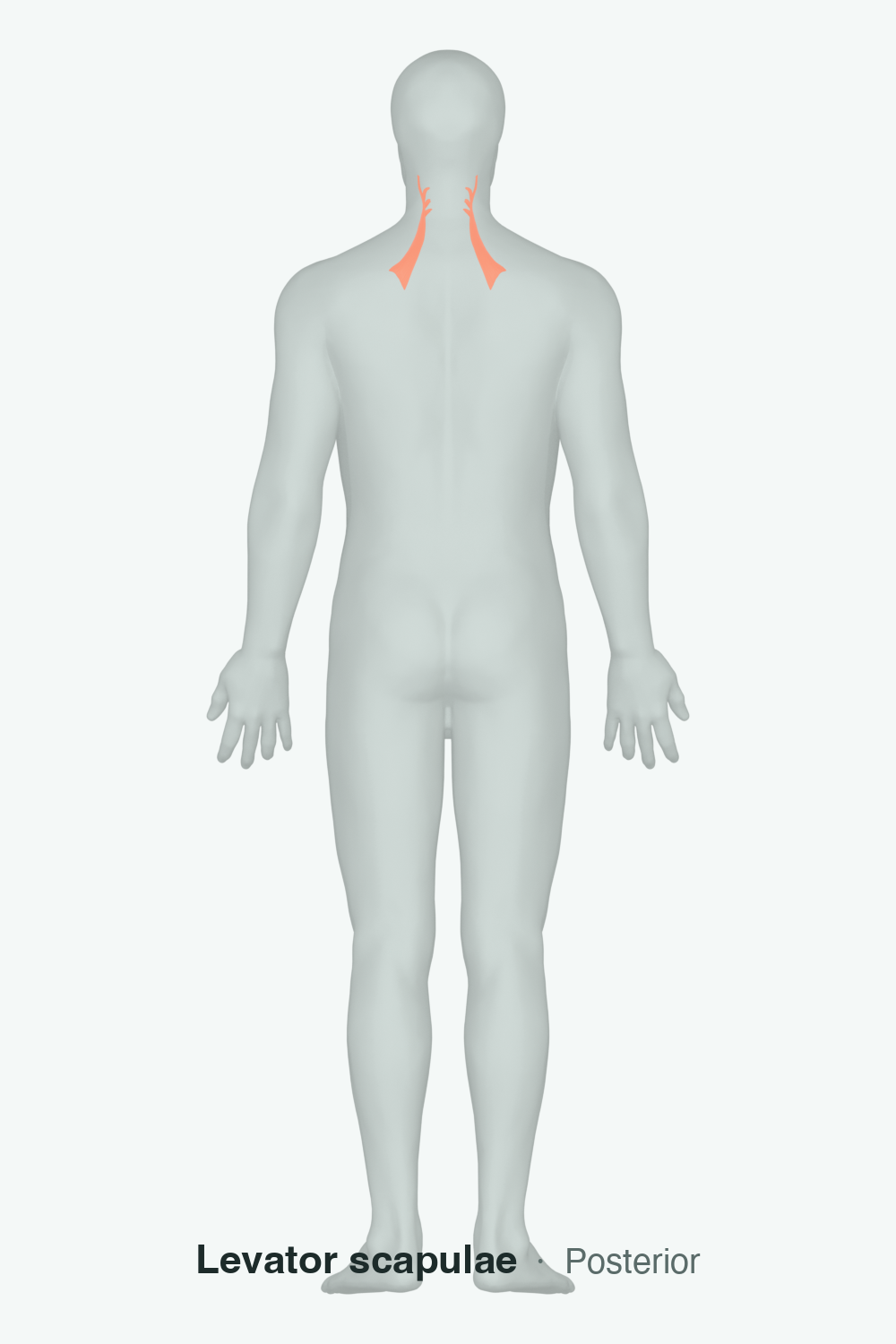
Stretches: suboccipitals, neck extensors, upper trapezius, levator scapulae