Lateral Neck Flexion Stretch
2 × 25s per side
A side-neck stretch for the upper trapezius, scalenes, and levator scapulae; pairs passive lengthening with optional isometric strengthening.
An illustration is coming soon. Follow the step-by-step instructions below.
How to do it
- Sit tall; tilt the head away from the tight side (opposite to the habitual tilt).
- Depress the shoulder on the stretched side to deepen the stretch.
- Optionally take the arm behind the body for a stronger stretch.
- To strengthen the weak side, side-lie with the weaker side up and lift the head to neutral, or press the head into a hand isometrically.
Form cues
- Ear toward the opposite shoulder, shoulder pulled down
- Keep the chin level, don't rotate
Why this exercise helps
The lateral neck flexors on one side can become tight from habitual head tilt, asymmetric desk posture, or prolonged one-sided phone use. This stretch lengthens the upper trapezius, scalenes, and levator scapulae on the tighter side while gently encouraging the opposite side to engage. Depressing the stretched-side shoulder creates additional length by pulling the shoulder girdle away from the ear. The optional isometric component and side-lying lift address the muscular imbalance directly by challenging the underused side to generate controlled force, complementing the passive stretch on the other side.
Stop or modify if
- Rotating the chin toward the shoulder instead of keeping it level. This shifts the stretch from the lateral neck muscles onto the suboccipital region rather than the intended targets.
- Pulling the head down with the opposite hand. The stretch should come from gravity and active shoulder depression, not from forcing additional range with arm pressure.
- Allowing the stretched-side shoulder to elevate as the neck tilts. Actively depressing that shoulder downward is what creates the effective muscle-length change.
Modifications and progressions
- Sit on the hand of the stretched side to anchor the shoulder down using body weight rather than active muscle effort, freeing the arm from the task.
- For the strengthening component, begin isometrically by pressing the head into a palm placed at the temple without movement before progressing to the full side-lying lift.
Muscles worked
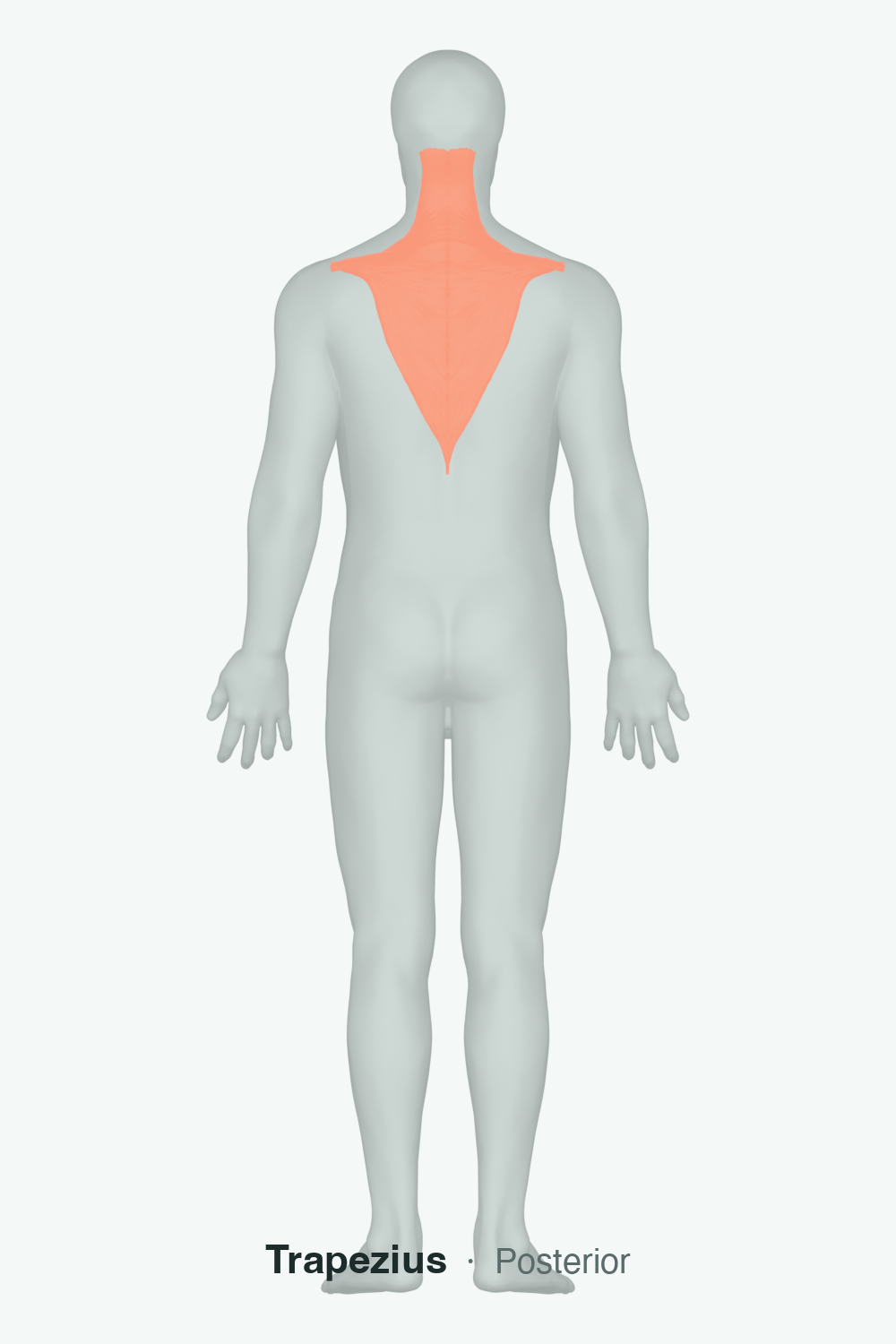
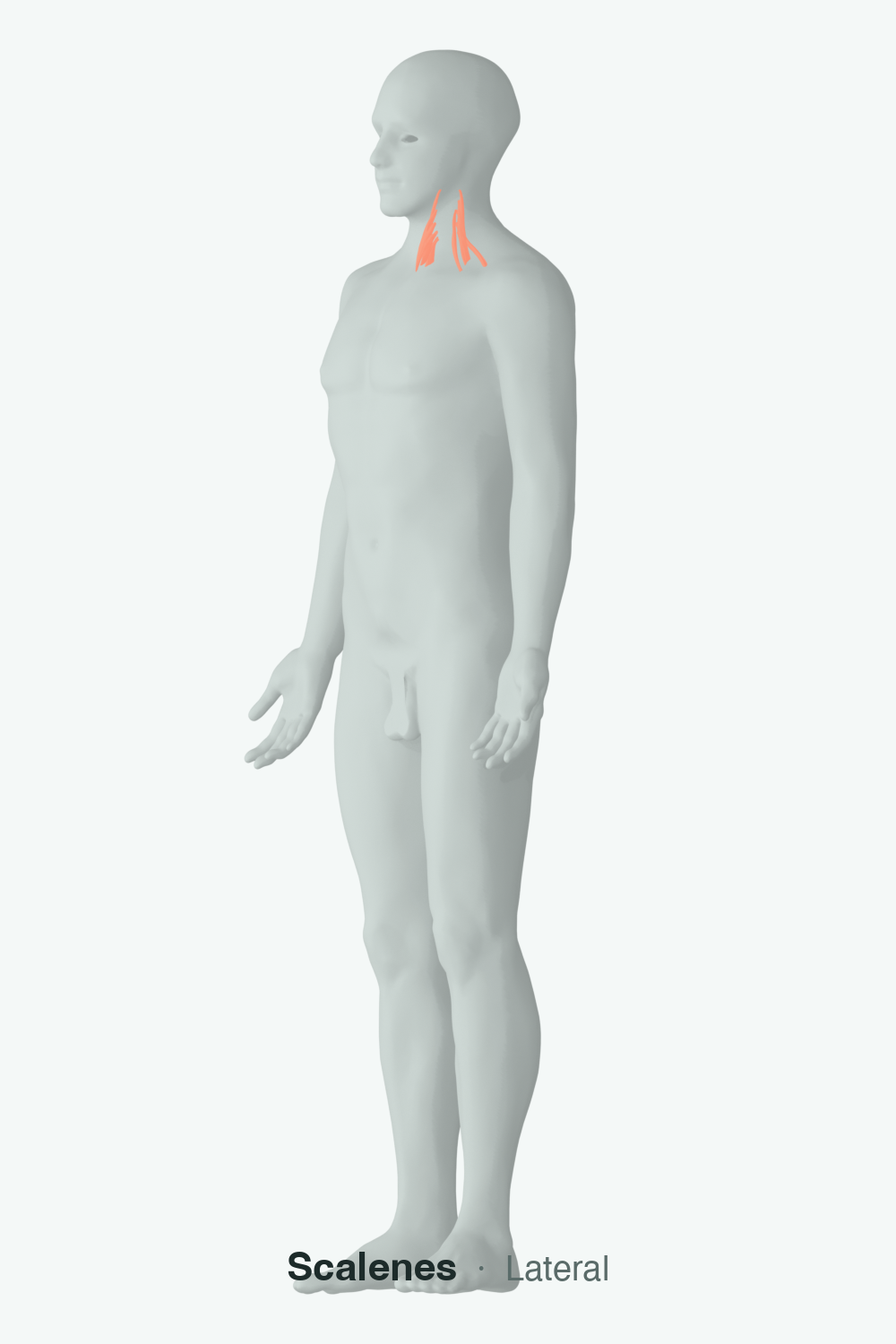
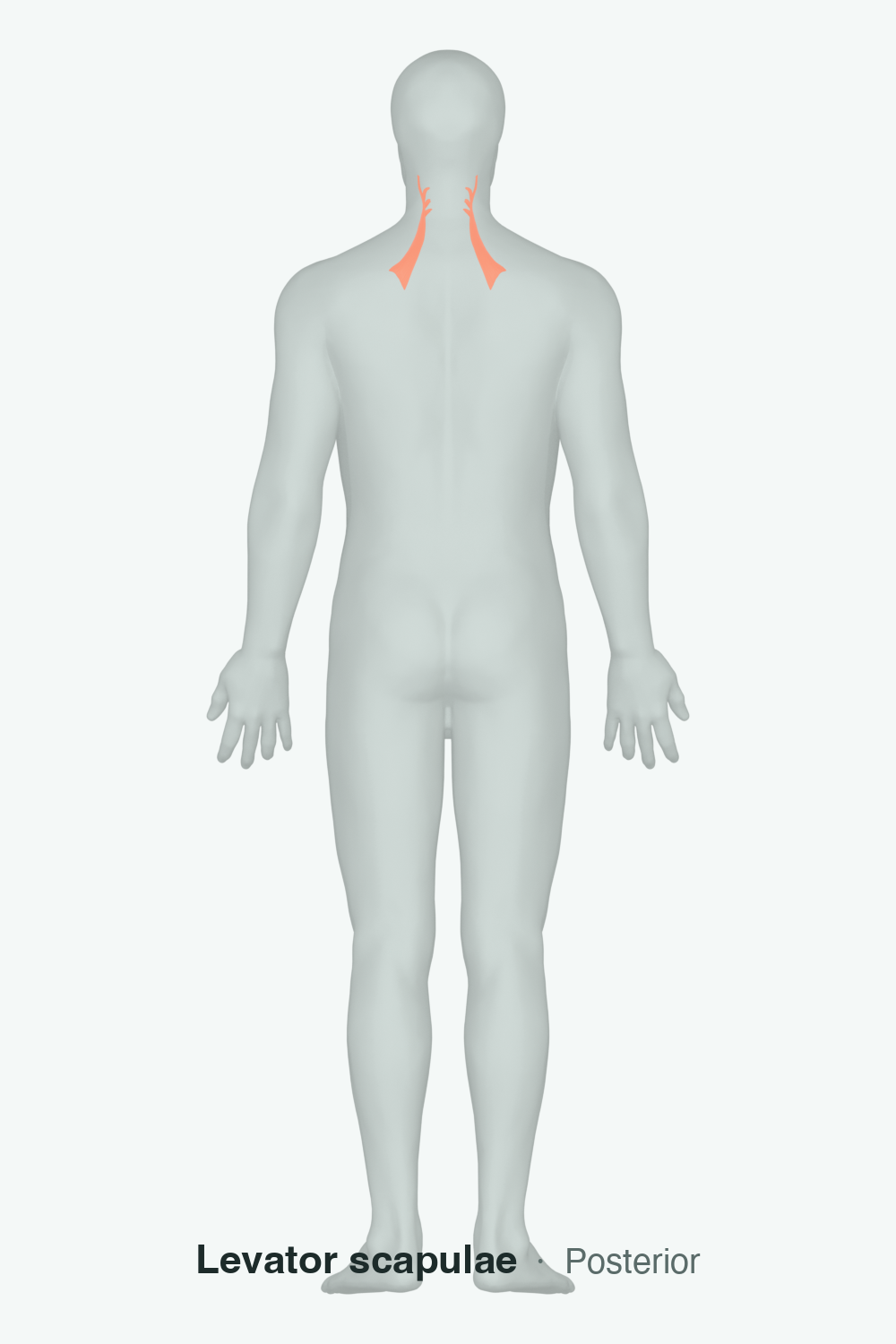
Stretches: upper trapezius, scalenes, levator scapulae
Strengthens: lateral neck flexors