PIR / PFS for the Hip Flexors (Iliopsoas & Rectus Femoris)
stretchhipintermediateHip flexor / iliopsoas length
4 × 25s
The posture scan does not measure thoracic kyphosis, lordosis, or flat-back posture directly. This exercise may still help mobility and strength that support overall alignment — it is wellness education, not a diagnosis.
An illustration is coming soon. Follow the step-by-step instructions below.
How to do it
- In a modified Thomas position (supine at table edge with the test leg hanging into hip extension), take the hip flexors to their barrier.
- Barely contract the hip flexors (lift the thigh slightly) against light resistance and hold 20 to 30 s for PIR (or 8 to 10 s maximal for postfacilitation stretch).
- Relax fully; for PFS, use your hands (or a strap) to move the thigh smoothly into the new stretch range and hold ~15 s.
- Return to rest with full relaxation for ~20 s.
- Repeat 3 to 4 times into progressively greater hip extension.
Form cues
- Keep the lumbar spine flat - do not let the pelvis tip forward (anterior tilt).
- Tight iliopsoas/rectus femoris are the prime drivers of lower-crossed anterior pelvic tilt and lordosis.
- PFS suits larger muscles and requires you to relax instantly the moment you stop contracting; avoid heavy loading right after.
Muscles worked
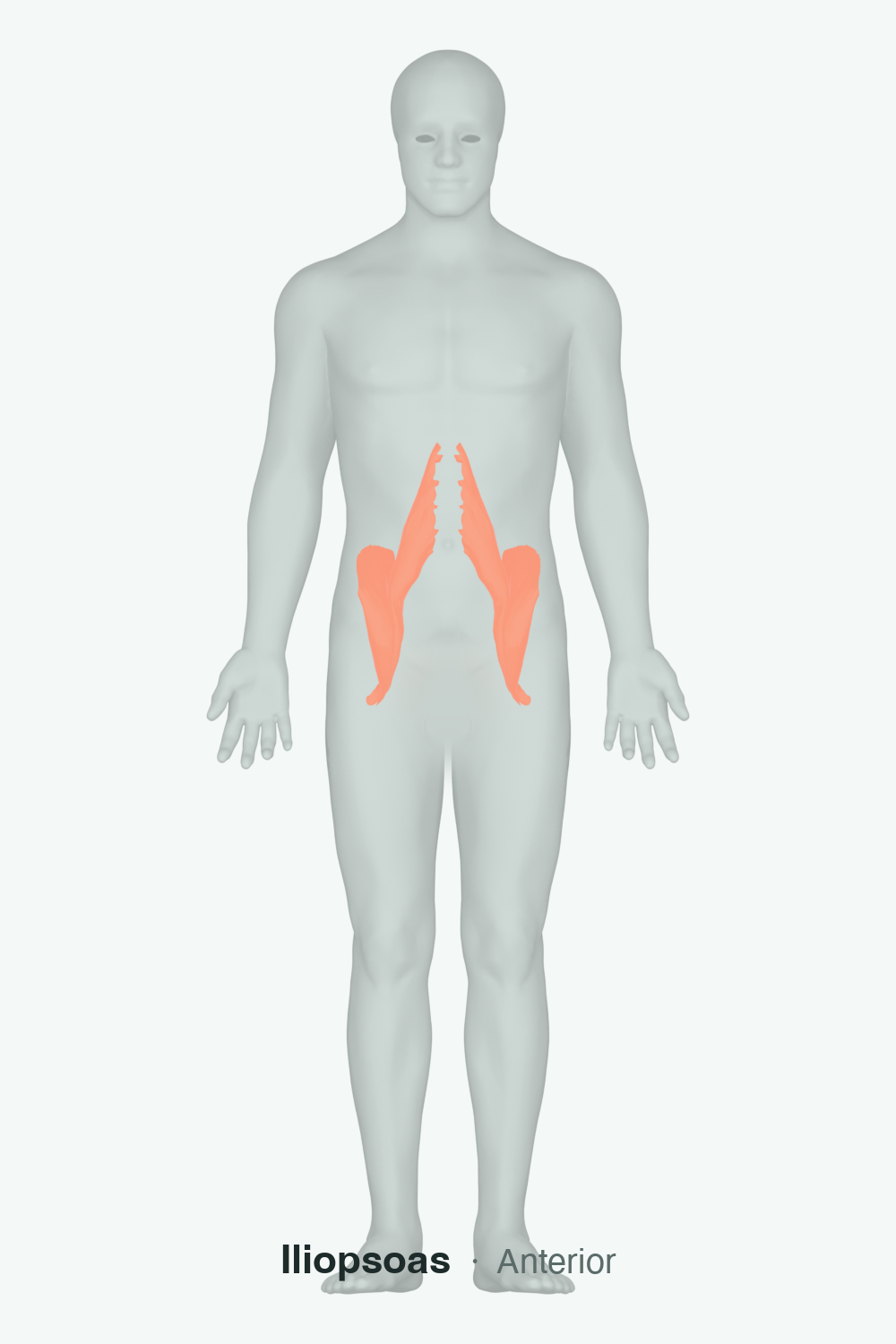
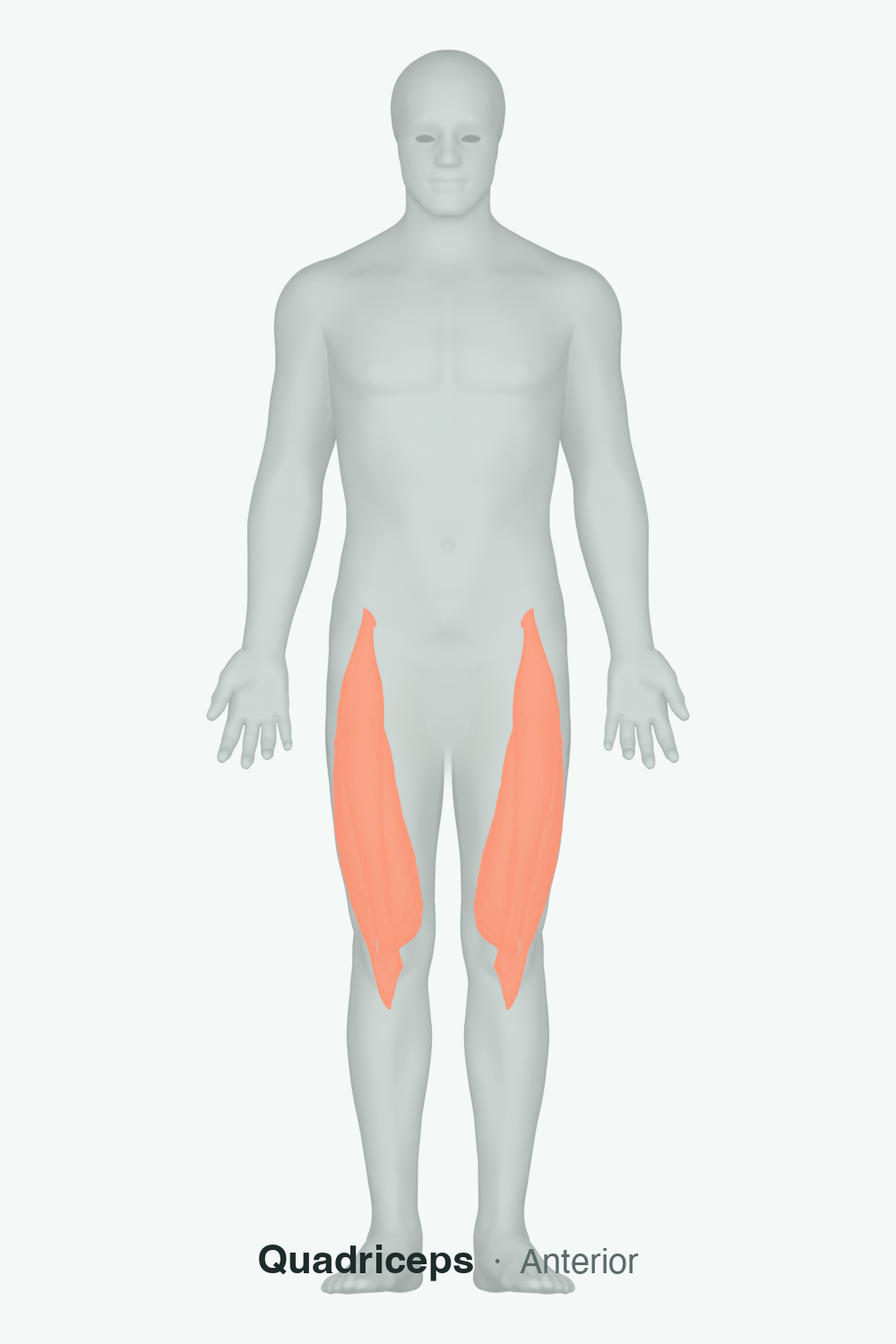
Stretches: iliopsoas, rectus femoris
Part of a program
Part of Lower-Body Posture Reset
This exercise is one move. Lower-Body Posture Reset puts it in a plan — so you know what to do, in what order, and how much, week by week.
- Sequenced & dosed — the right exercises, in the right order, at the right volume.
- Progresses with you — difficulty ramps as you get stronger, not on a fixed calendar.
- Personalized — built around the specific limiter actually holding you back.
- Tracks your progress — see what's working and adjust over time.
See the program →
Free · a quick assessment finds your starting point