Floor T Raise
strengthenshouldereasyactive
2 × 10 reps
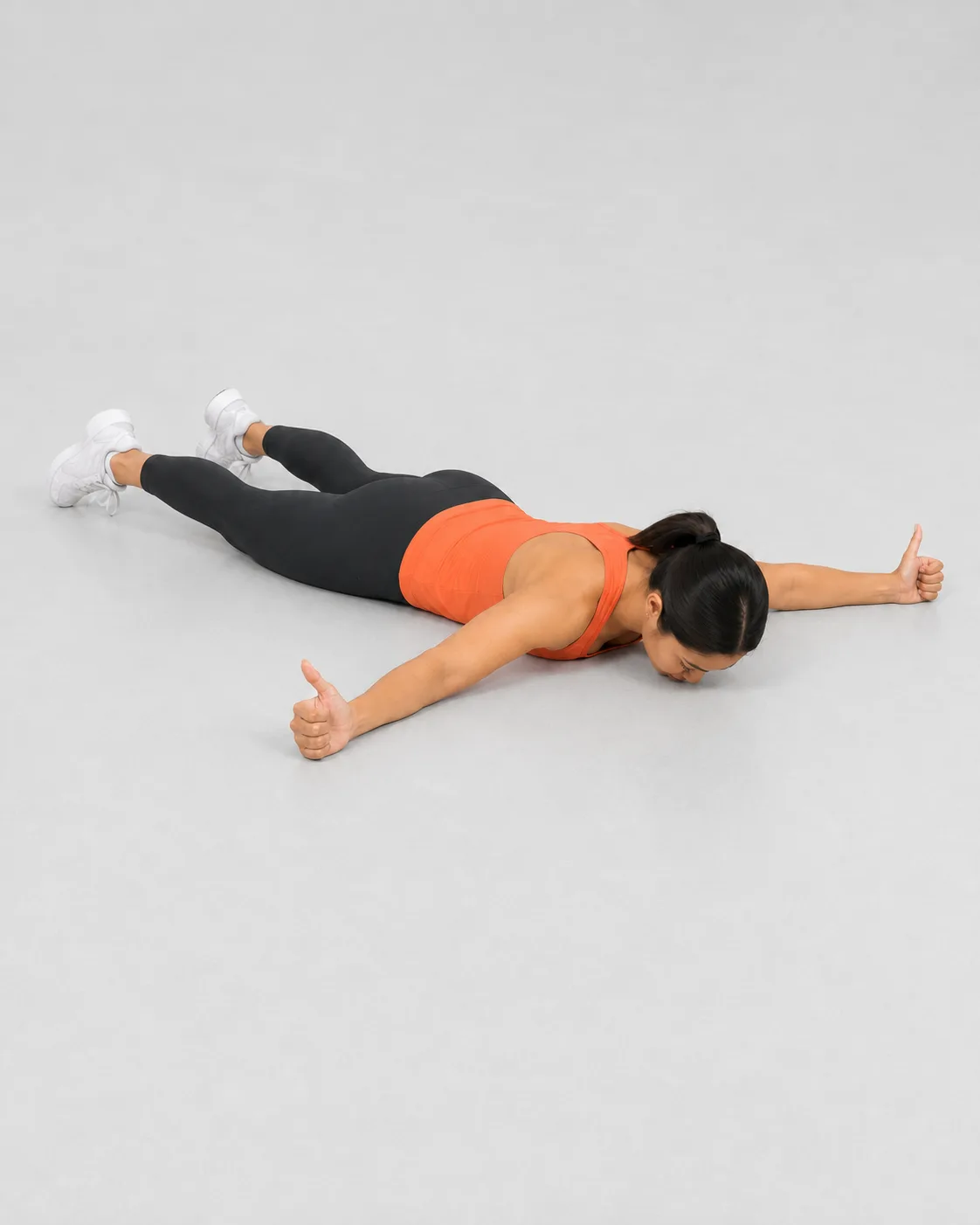
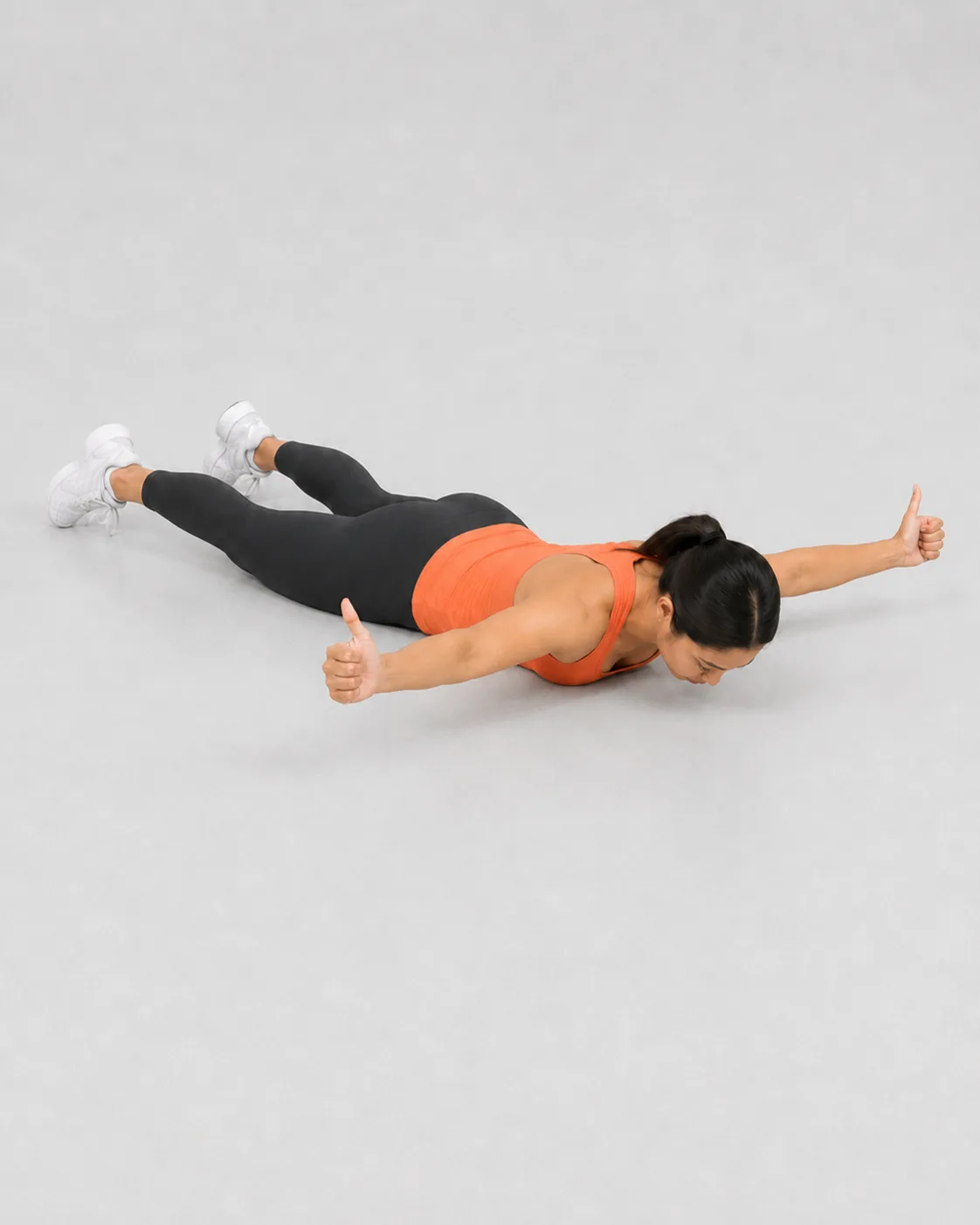
How to do it
- Lie face down with your legs extended and comfortably apart.
- Rest your forehead on a thin folded towel so that your neck remains neutral.
- Extend both arms directly out to the sides to form a T shape.
- Keep your elbows straight but not forcefully locked, with your thumbs pointing upward.
- Lightly brace your abdomen and keep your lower ribs, pelvis and legs supported.
- Reach outward through your fingertips and gently draw your shoulder blades toward the spine.
- Lift both arms a small distance from the floor without lifting your chest or head.
- Pause briefly at the top while keeping the shoulders away from the ears.
- Lower the arms slowly and allow the shoulder blades to return to their resting position.
Form cues
- Think, “reach wide, then lift.”
- Lead the movement with the shoulder blades rather than the hands.
- Keep the forehead supported and the back of the neck long.
- Lift only a few centimetres; additional height is unnecessary if the shoulders begin to shrug.
- Keep the elbows straight and thumbs facing upward throughout the movement.
- Do not arch the lower back, lift the chest or kick the legs upward.
- Begin without weights. Add resistance only after all repetitions remain controlled.
- Stop for shoulder pinching, neck pain, numbness, tingling or pain travelling down the arm.
Muscles worked
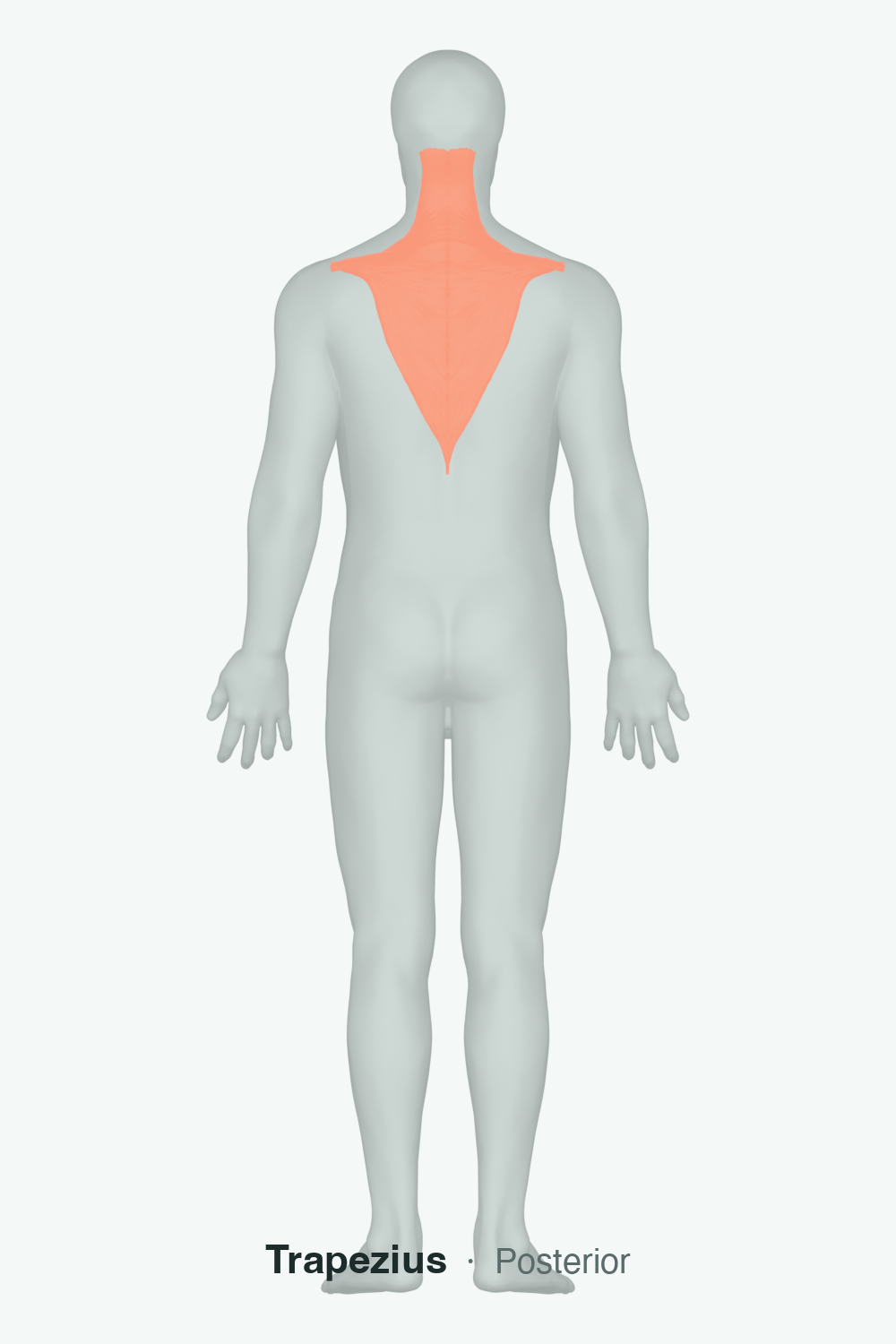
Strengthens: middle trapezius, rhomboids, posterior deltoid, rotator cuff
Part of a program
Part of Upper Body Posture Reset
This exercise is one move. Upper Body Posture Reset puts it in a plan — so you know what to do, in what order, and how much, week by week.
- Sequenced & dosed — the right exercises, in the right order, at the right volume.
- Progresses with you — difficulty ramps as you get stronger, not on a fixed calendar.
- Tracks your progress — see what's working and adjust over time.
See the program →
Free · start with Week 1, no assessment needed