Foam Roller on Inner Thigh
1 × 60s per side
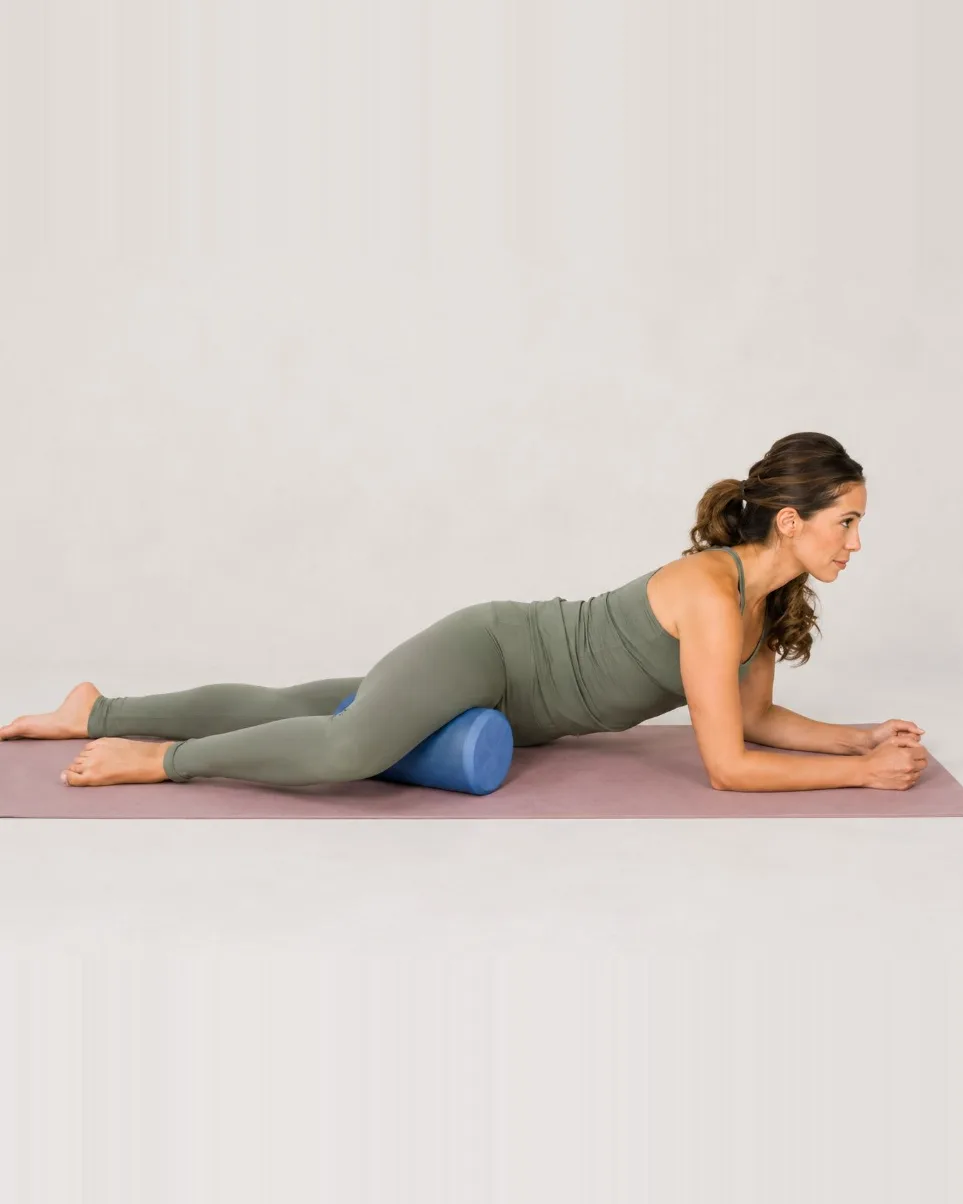
Use controlled foam-roller pressure along the muscular inner thigh while avoiding the groin, inner knee, and other sensitive structures.
The posture scan does not measure thoracic kyphosis, lordosis, or flat-back posture directly. This exercise may still help mobility and strength that support overall alignment — it is wellness education, not a diagnosis.
How to do it
- Lie face down, bend the hip and knee of the working leg, and place the roller perpendicular to the muscular inner thigh.
- Support body weight with the arms and opposite leg, keeping the roller away from the groin crease, genital tissue and inner knee.
- Roll gradually along the adductor muscle group and pause briefly over tolerably tender areas without forcing pressure.
Form cues
- Keep the lower back comfortable and use the arms to control pressure.
- Avoid bruised, acutely strained, swollen or unexplained painful tissue.
- Stop for numbness, tingling, pulsing or sharp pain.
Why this exercise helps
The adductor muscles run along the inner thigh and help control the leg during walking, balance, and changes of direction. Foam rolling applies broad external pressure to the muscular area and may temporarily change how stiff or tender it feels, making subsequent movement practice more comfortable for some people. It does not permanently lengthen tissue or prove that the adductors caused a posture pattern. Supporting the body with the arms lets you regulate pressure precisely, while keeping the roller away from the groin crease and inner knee protects more sensitive structures.
Stop or modify if
- Rolling directly into the groin crease or onto the inner knee, both of which contain sensitive nerve and vascular structures.
- Allowing the lower back to arch or rotate during the roll instead of keeping it comfortable with the arms controlling pressure.
- Dropping the hips to add body weight onto the roller, causing sharp pain rather than tolerable tenderness.
Modifications and progressions
- Use a softer or smaller ball instead of a foam roller for more localized, lighter pressure if the adductors are very sensitive.
- Reduce rolling time to 30 seconds per side if 60 seconds produces lingering soreness beyond mild post-session tenderness.
Helps with
Part of a program
Part of Front Splits
This exercise is one move. Front Splits puts it in a plan — so you know what to do, in what order, and how much, week by week.
- Sequenced & dosed — the right exercises, in the right order, at the right volume.
- Progresses with you — difficulty ramps as you get stronger, not on a fixed calendar.
- Personalized — built around the specific limiter actually holding you back.
- Tracks your progress — see what's working and adjust over time.
Free · a quick assessment finds your starting point