Tongue Posture and "Mewing": What It Is and What the Evidence Actually Shows
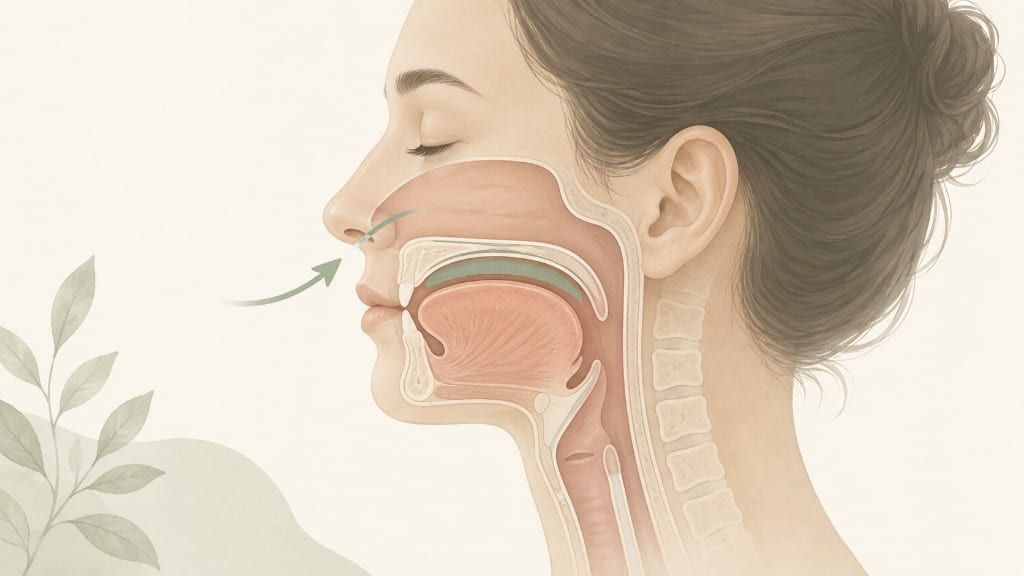
Tongue posture — where your tongue rests when you are not eating or speaking — is a small habit with a reasonable place in overall wellness. Proper tongue position for most people means the tongue gently on the roof of the mouth, lips closed, and breathing through the nose. Online, that idea collides with "mewing", a social-media trend that promises far more than the evidence supports. This article separates healthy resting habits from hype so you can make calm, informed choices.
What proper tongue posture looks like
At rest, a typical proper tongue position includes:
- Tongue on the palate — the tip near the ridge behind the upper front teeth, with the middle and back portions lightly spread against the roof of the mouth (not jammed forward or thrust against the teeth).
- Lips together — without clenching the jaw.
- Nasal breathing — air in and out through the nose when you are not exercising or talking.
- Teeth slightly apart or lightly touching — jaw relaxed, not gripped.
This is the resting posture many speech therapists, orthodontists, and myofunctional therapists describe for normal oral function. It supports swallowing, speech, and — together with nasal breathing — a closed-lip, relaxed jaw position that fits well with balanced head and neck alignment.
Why nasal breathing and tongue position matter
Nasal breathing filters, warms, and humidifies air. It also tends to keep the mouth closed, which reduces dry-mouth habits and the open-mouth "slack" posture some people adopt when breathing through the mouth at rest.
A healthy tongue posture habit is reasonable for general wellness: it is low-risk, requires no equipment, and aligns with what many clinicians already teach for oral rest position. It is not, by itself, a substitute for dental care, orthodontics, or treatment of sleep-disordered breathing — those need qualified professionals.
"Mewing": what it claims vs. what evidence shows
Mewing — named after British orthodontist John Mew, whose ideas spread widely online — promotes sustained tongue posture pressure on the palate as a way to reshape the jaw, widen the face, and improve breathing in adults.
Here is the evidence-cautious summary:
What is plausible. Tongue position and oral habits influence swallowing patterns and muscle tone around the mouth and jaw in children whose bones are still growing. Myofunctional therapy is a recognized field for retraining oral habits, often alongside orthodontic or ENT care.
What is not well supported for adults. Claims that an adult can dramatically remodel jaw structure, "expand" the maxilla, or reverse years of skeletal growth through tongue pressure alone are not supported by high-quality clinical evidence. Bone adaptation in mature adults is far more limited than social-media before-and-after posts suggest. Anecdotes and influencer timelines are not controlled trials.
Risk of overpromising. Aggressive "hard mewing" — pushing the tongue with force, clenching, or adopting painful positions — can cause jaw tension, headaches, or tooth contact problems without delivering the facial changes people expect.
If you are interested in mewing because of jaw pain, breathing difficulty, sleep apnea symptoms, or bite concerns, see a dentist, orthodontist, or ENT clinician. They can evaluate structure and function with tools no blog post can replace.
How tongue posture relates to head and neck alignment
Your tongue, jaw, and neck share real estate. Chronic mouth breathing often goes with an open-mouth rest posture, a slightly forward head position, and increased activity in neck and jaw muscles trying to keep the airway open. That picture overlaps with patterns people describe as forward head posture and the phone-related drift in text neck and neck posture.
Improving tongue posture and nasal breathing may support a more relaxed closed-lip rest position — which can complement neck and upper-back work. It will not single-handedly fix forward head or rounded shoulders. Those patterns involve the whole chain: deep neck flexors, chest tightness, thoracic stiffness, and daily screen habits.
Think of tongue position as one tile in a larger mosaic, not the whole floor.
Practical habits without the hype
You do not need a branded technique to adopt sensible proper tongue position:
- Notice your default — where does your tongue sit right now? On the floor of the mouth? Thrust forward?
- Practice rest position briefly — tongue on palate, lips closed, breathe through the nose for a few minutes, a few times a day. No forceful pushing.
- Address mouth breathing — if your nose is chronically blocked, that is a medical question for a clinician, not something to muscle through with tongue pressure.
- Pair with postural work — supine chin tucks and general alignment habits from how to fix posture address the visible neck and shoulder drift that tongue habits alone cannot fix.
- Track what you can measure — our posture scan captures head and shoulder position from photos; it will not measure your palate, but it helps you see whether overall alignment is shifting as you change habits.
When to see a professional
Book a qualified clinician if you have:
- Persistent nasal obstruction, snoring, or suspected sleep apnea
- Jaw pain, clicking, or locking (TMJ symptoms)
- Orthodontic or bite concerns in yourself or a child
- Speech or swallowing difficulty
Tongue posture training belongs in that clinical context when symptoms are present — not as a DIY jaw-sculpting project.
Bottom line
Resting with your tongue on the roof of your mouth, lips closed, and nasal breathing is a normal, healthy habit worth cultivating. The broader mewing claims — dramatic adult facial restructuring through tongue pressure — outrun the evidence. Use measured expectations, combine oral rest habits with proven postural work, and let dentists and orthodontists guide anything structural.
Sources
This article draws on established clinical references:
- Orthopedic Physical Assessment (7th ed.) — David J. Magee
Wellness, not medical advice. This article is educational. If you have pain, numbness, or a medical concern, see a qualified clinician.