Soleus
Exercises that target the soleus, grouped by whether they stretch or strengthen it.
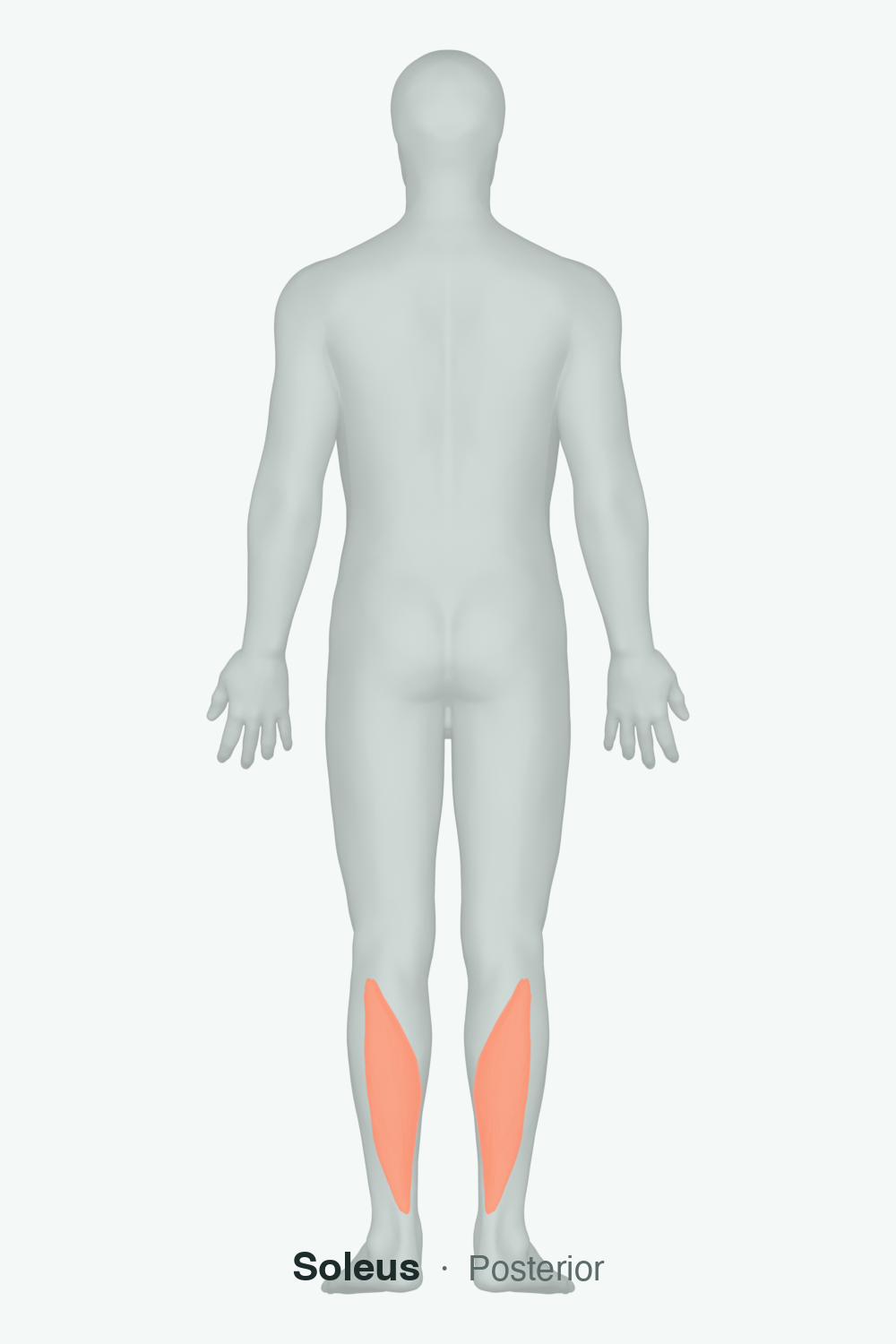
The soleus is a broad calf muscle that sits underneath the gastrocnemius and attaches to the heel through the Achilles tendon. Because it crosses the ankle but not the knee, it helps point the foot downward whether the knee is straight or bent. During standing and walking it also controls how quickly the shin moves forward over a planted foot.
Weight-bearing ankle dorsiflexion — the shin moving toward the foot while the heel stays down — is used during walking, stairs, squats, and lunges. The soleus can influence this motion, especially with the knee bent, but it is not the only possible limiter. Ankle-joint mobility, foot position, comfort, previous injury, and movement technique can all affect the available range.
Bent-knee calf raises train soleus capacity, while bent-knee calf stretches and controlled knee-to-wall glides practice length and ankle motion. Keep the heel and forefoot grounded and use a comfortable range rather than forcing a sharp pinch at the front of the ankle.
Compare sides using the same setup and progress load or range gradually. Persistent Achilles or ankle pain, swelling, or a hard block to movement warrants professional assessment rather than aggressive stretching.
Stretch the soleus
Strengthen the soleus
Frequently asked questions
What is the difference between the soleus and gastrocnemius?
Both contribute to calf function and join the Achilles tendon, but the gastrocnemius crosses the knee while the soleus does not. Bending the knee reduces some gastrocnemius tension and places relatively more emphasis on the soleus.
Can the soleus limit ankle dorsiflexion?
Soleus stiffness can influence bent-knee dorsiflexion, but it is only one possible factor. Ankle-joint motion, foot position, previous injury, comfort, and technique can also change a knee-to-wall result.
How do I strengthen the soleus?
Bent-knee calf raises are a practical option because the knee position places relatively more demand on the soleus. Begin with a controlled range and suitable support, then progress repetitions, load, or single-leg difficulty gradually.