Double-Leg Pogo Hops
3 × 20 reps
Small, quick two-foot hops that build reactive ankle stiffness, calf endurance and elastic control for running and jumping.
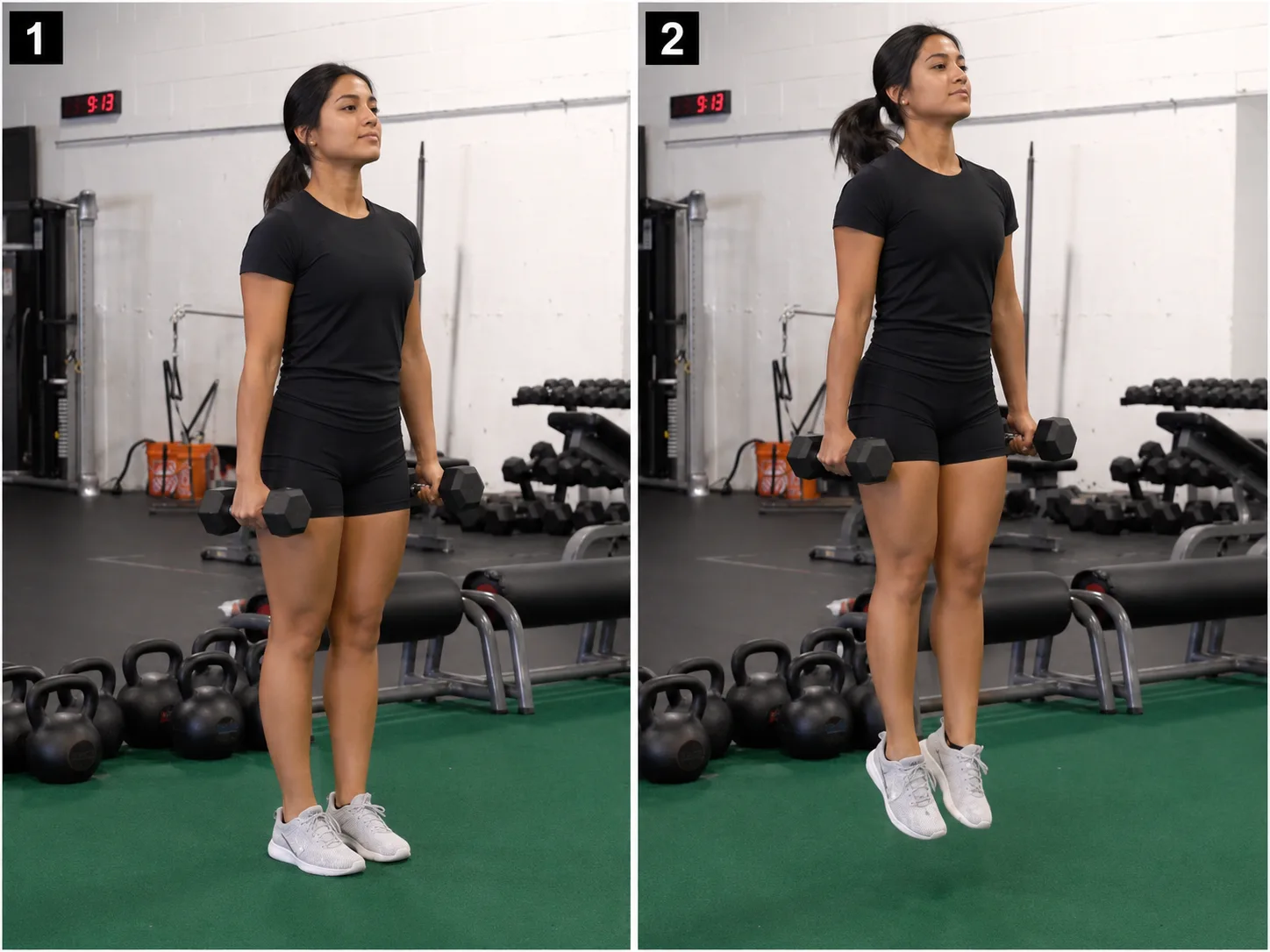
How to do it
- Stand tall with the feet about hip-width apart, knees soft and weight balanced across both forefeet.
- If using dumbbells, hold light weights at your sides with the arms relaxed; otherwise begin with body weight.
- Push through both feet and make a small vertical hop, keeping the torso upright and using the ankles for most of the movement.
- Land quietly through the forefoot or midfoot with both feet at the same time, allowing the heels to settle naturally.
- Rebound into the next low hop with a steady rhythm while keeping the knees aligned over the toes.
Form cues
- Before starting, be able to walk briskly and do controlled double-leg calf raises without pain.
- Stay tall and keep the hops low, quick and quiet.
- Use the ankles like springs rather than dropping into a squat.
- Keep both feet parallel and land evenly on the left and right sides.
- Rest about 60–90 seconds between sets and stop when contacts become loud, slow or uneven.
- Start without weights and stop for shin, foot, ankle or Achilles pain.
Why this exercise helps
Pogo hops train the ankle and calf complex to absorb and return force during short, repeated contacts with the ground, building reactive ankle stiffness rather than reducing ankle mobility. Keeping the hops low encourages a spring-like action through the feet and ankles rather than a deep squat on every repetition. This can help prepare the lower legs for the repeated impact demands of running and jumping when introduced gradually, but it does not automatically prevent running injuries. Pogo hops are a higher-impact exercise and should not be used to push through active shin, foot or Achilles pain.
Stop or modify if
- Jumping too high or bending deeply at the hips and knees. Keep the hops small and let the ankles provide most of the spring.
- Landing loudly or heavily on the toes. Contact the ground quietly through the forefoot or midfoot and allow the heels to settle naturally.
- Letting the ankles roll outward or the knees collapse inward. Keep both feet facing forward and the knees tracking over the middle toes.
- Continuing after the rhythm or landing quality deteriorates. End the set while the contacts are still quick, quiet and symmetrical.
Modifications and progressions
- Begin without weights and use a wall or rail for light balance support if needed.
- Start with small calf-raise pulses that keep the toes on the floor before progressing to hops.
- Use shorter sets and a lower hop height, then add repetitions before adding external load.
Muscles worked
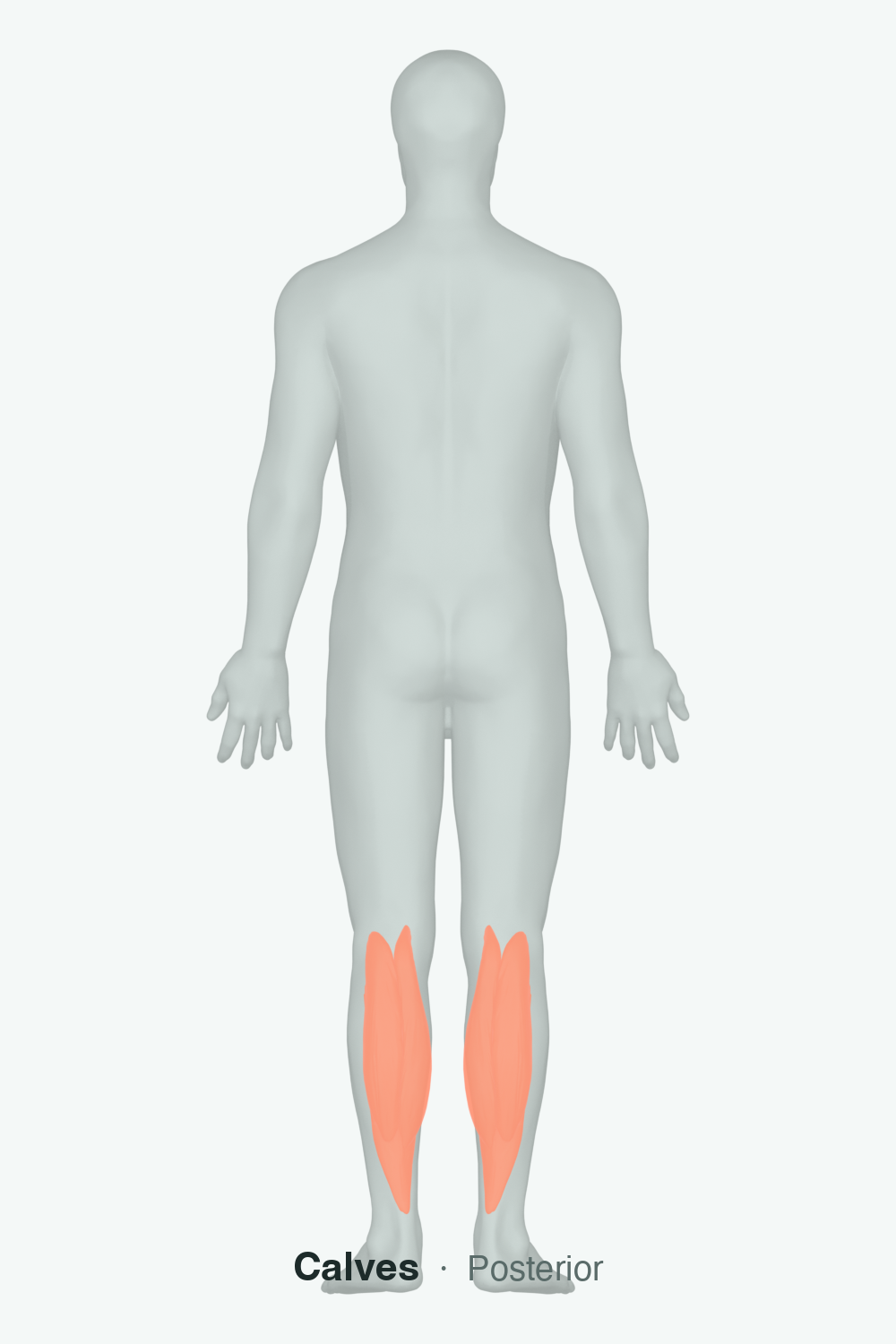
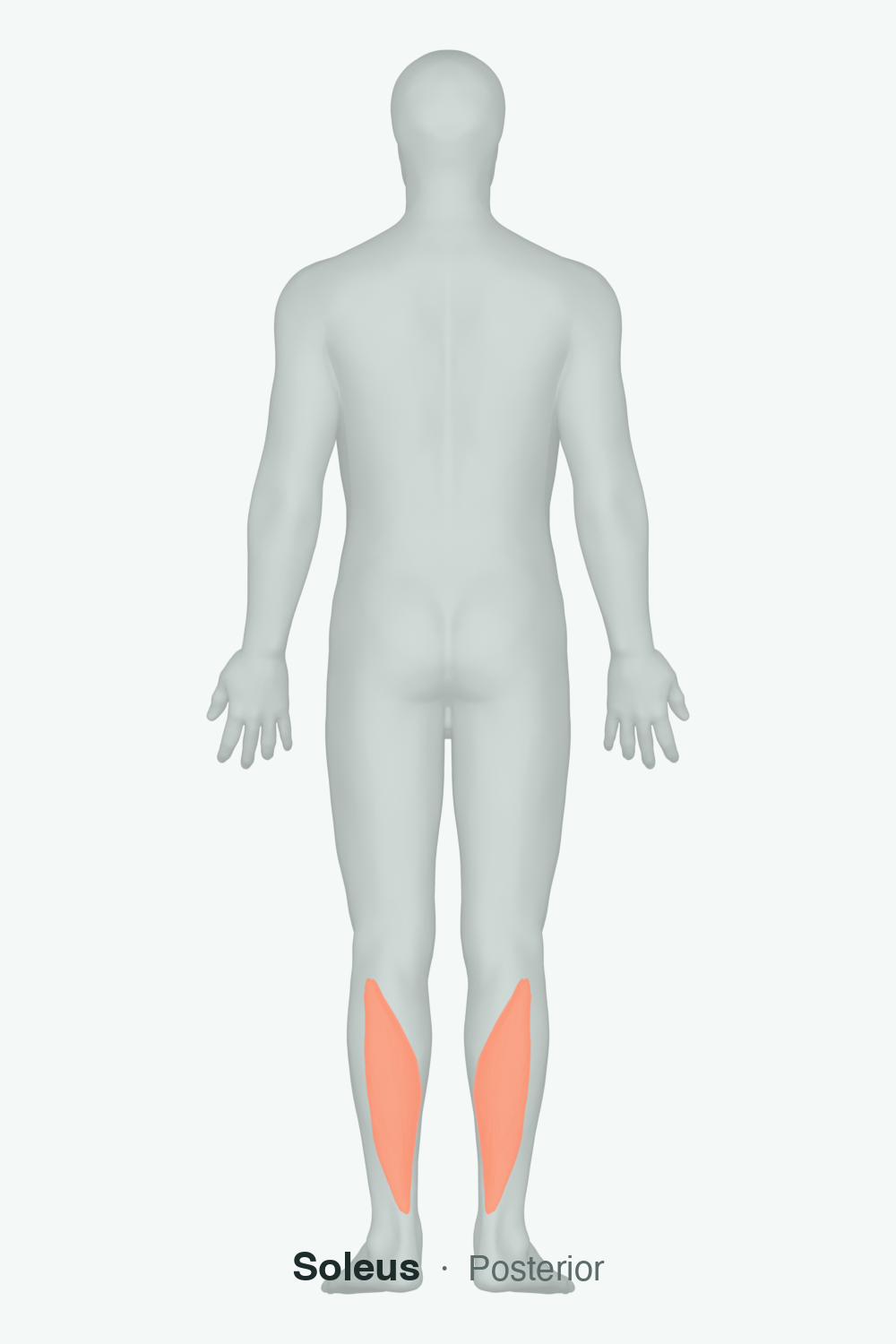
Strengthens: gastrocnemius, soleus, intrinsic foot muscles
Related exercises
Frequently asked questions
How high should I jump during pogo hops?
Only high enough for both feet to leave the floor. The goal is a low, quick and quiet bounce with consistent rhythm, not maximum jump height.
Should my heels touch the floor?
Land through the forefoot or midfoot and let the heels settle naturally as much as needed for a controlled, springy contact. Do not force a rigid tiptoe landing.
Should I hold dumbbells?
Start with body weight. Add light dumbbells only after you can complete every repetition with quiet, symmetrical landings and no shin, foot, ankle or Achilles pain.