Straight-Knee Calf Raise
3 × 15 reps
A standing heel raise with the knees straight that builds calf strength and endurance with relatively greater emphasis on the gastrocnemius.
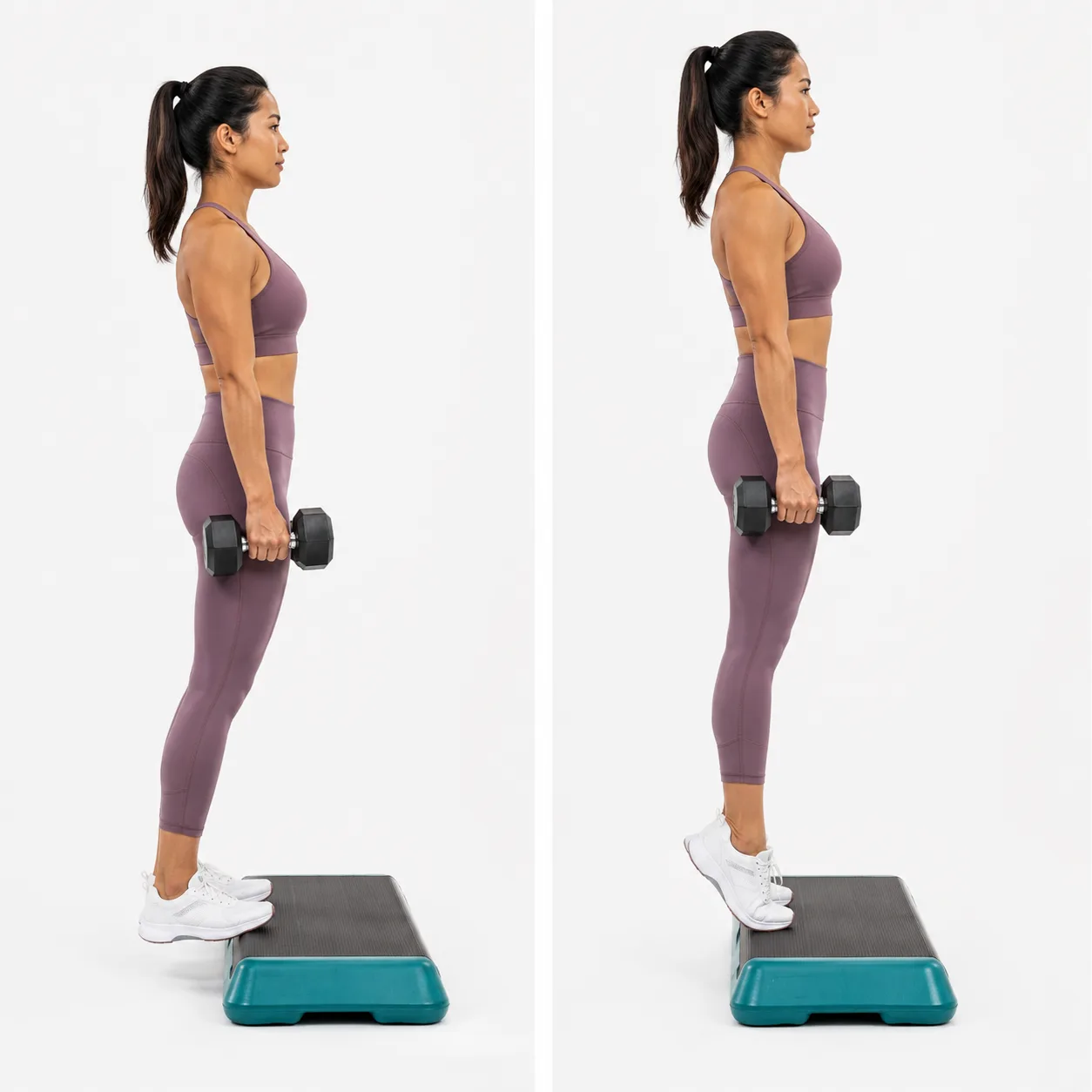
How to do it
- Stand with the forefeet on a secure step and keep a wall or rail within reach for balance.
- Keep the knees straight and the chest tall, with the heels lowered below the step edge to start.
- Press through the forefeet and raise both heels as high as you can control while keeping the knees straight.
- Pause briefly at the top without rolling the ankles outward.
- Lower the heels slowly below the step to the starting position, then repeat.
Form cues
- Keep the knees straight from start to finish.
- Maintain pressure through the base of the big toe and little toe as the heels rise.
- Lift smoothly over about 1 second and lower under control over 2–3 seconds.
- Use a sturdy support and stop for sharp shin, Achilles, ankle or foot pain.
Why this exercise helps
The gastrocnemius is the large calf muscle that crosses both the knee and the ankle and helps raise the heel during walking, running and pushing off. Keeping the knees straight lengthens the gastrocnemius and places relatively more demand on it than a bent-knee raise, although the soleus still works. Training this position builds calf capacity for activities performed with an extended knee and may be one part of a gradual shin-splint rehabilitation or prevention program, but it does not address every possible cause of shin pain.
Stop or modify if
- Bending the knees as the heels rise. Keep the knees straight throughout so the emphasis stays on the gastrocnemius.
- Rolling onto the outer edges of the feet. Keep pressure across the base of the big and little toes.
- Bouncing through the movement or dropping the heels. Lift smoothly and lower under control.
- Using an unstable step. Choose a secure, non-slip surface and keep a sturdy support within reach.
Modifications and progressions
- Begin on level ground instead of a step and hold a wall, rail or sturdy chair for balance.
- Use a smaller heel-rise range or fewer repetitions if balance or symptoms limit control.
- Progress by adding a light dumbbell only after you can lift and lower with control through a full range.
Muscles worked
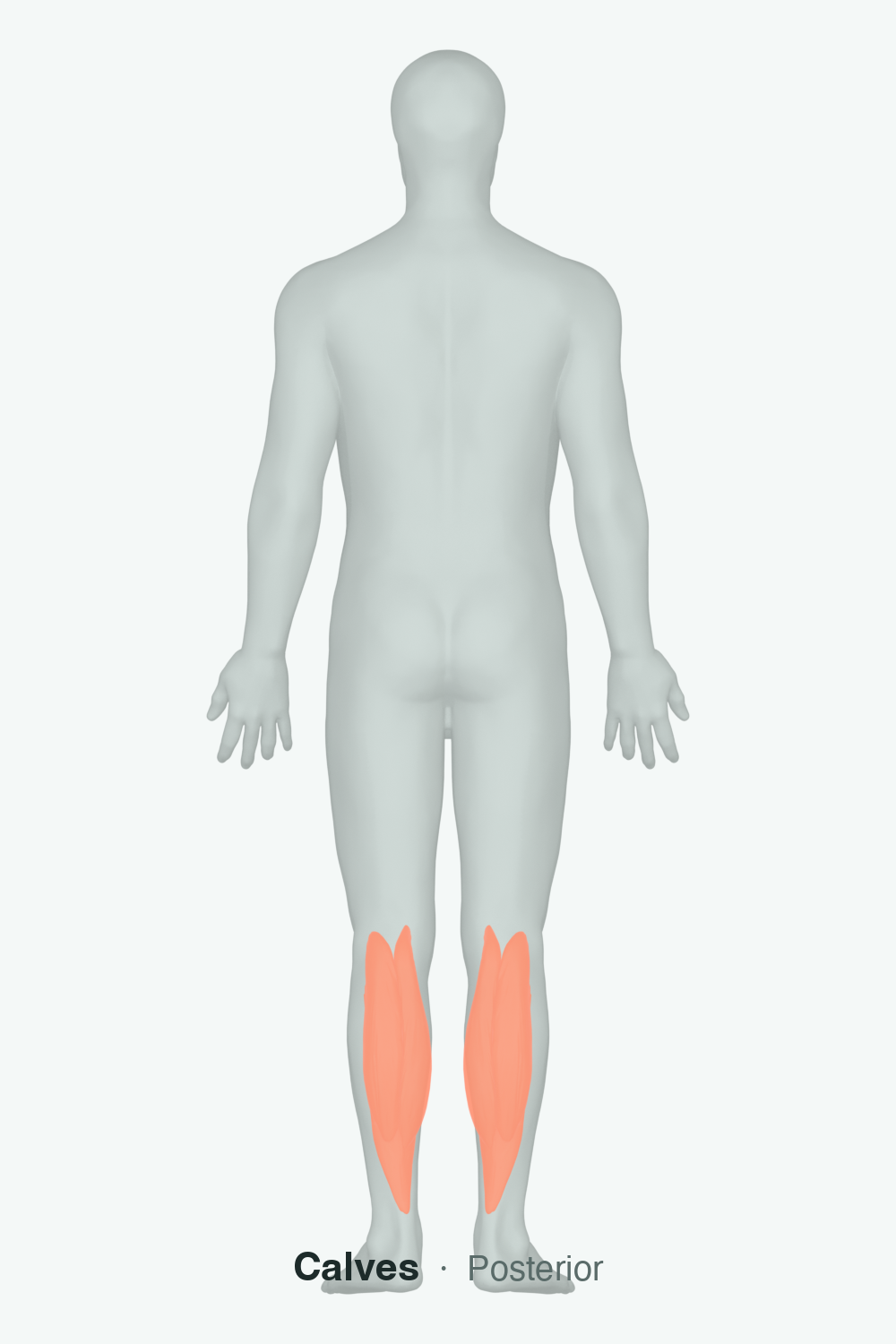
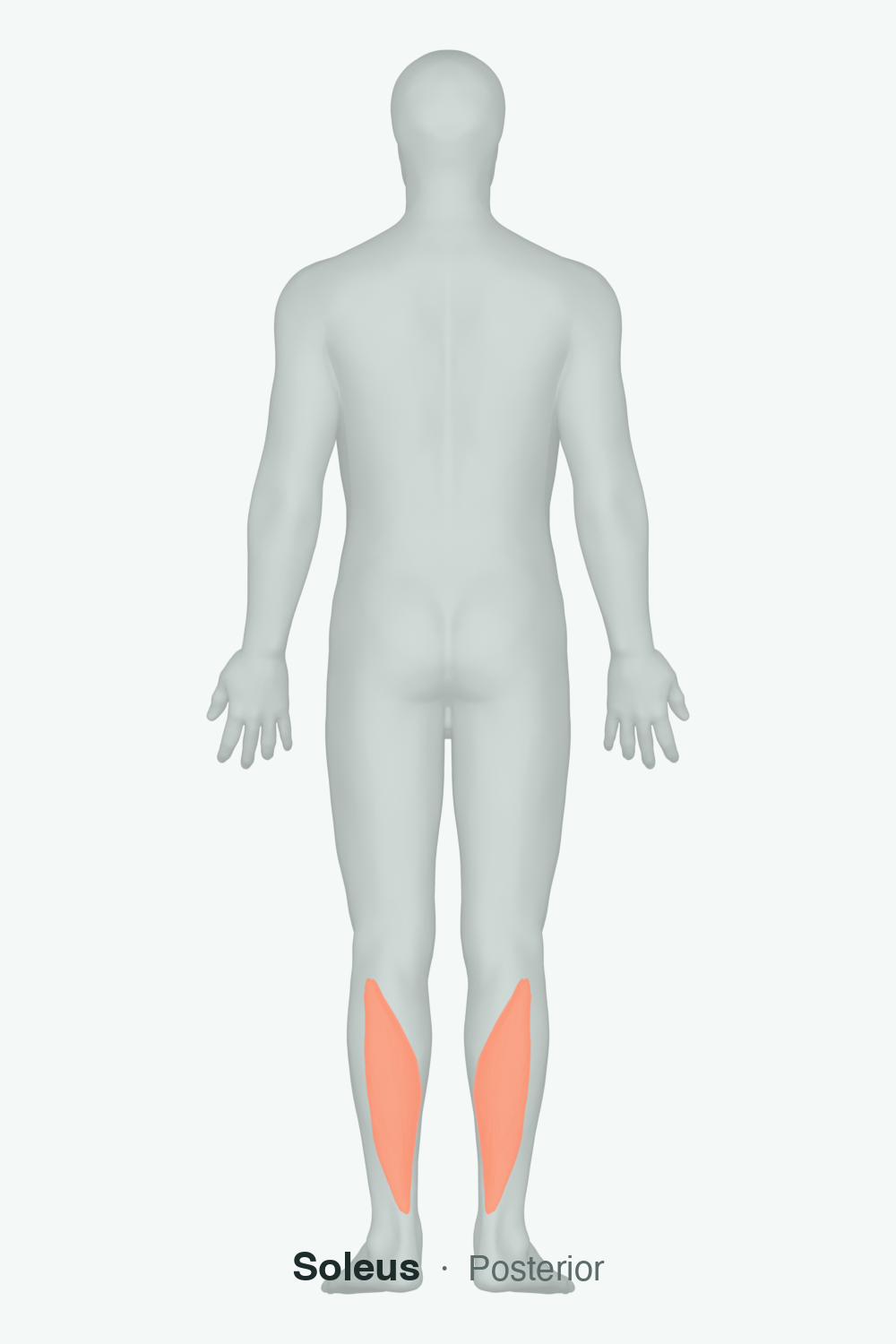
Strengthens: gastrocnemius, soleus
Related exercises
Frequently asked questions
Why keep the knees straight during this calf raise?
The gastrocnemius crosses both the knee and the ankle, so keeping the knee straight lengthens it and shifts relatively more of the work toward the gastrocnemius. The bent-knee version instead biases the soleus. Neither exercise completely isolates either muscle.
Should I perform this exercise on a step?
A step adds range at the bottom, but it is not required. Start on level ground if balance, strength or symptoms limit control. If using a step, make sure it is secure and use a sturdy hand support.
Where should I feel straight-knee calf raises?
You should mainly feel muscular effort through the calf. Stop for sharp pain in the shin, Achilles tendon, ankle or foot, and seek assessment if pain persists or worsens.