Supine Posterior Pelvic Tilt Drill
3 × 10 reps
Supine activation drill that trains gentle backward pelvic tilting using the abdominals, building awareness of lumbar position without forcing the spine flat.
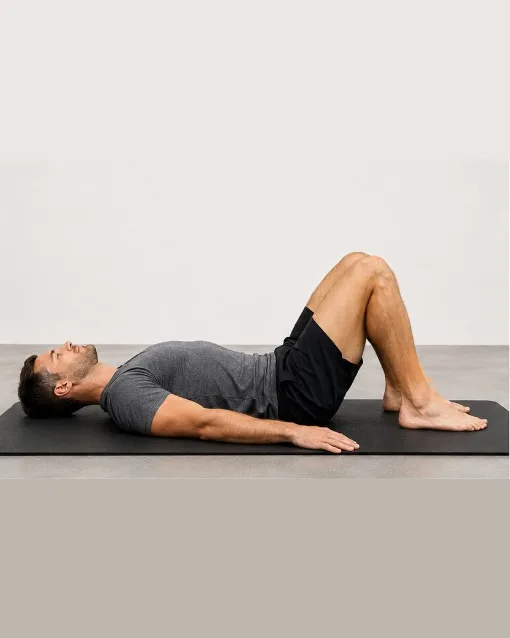
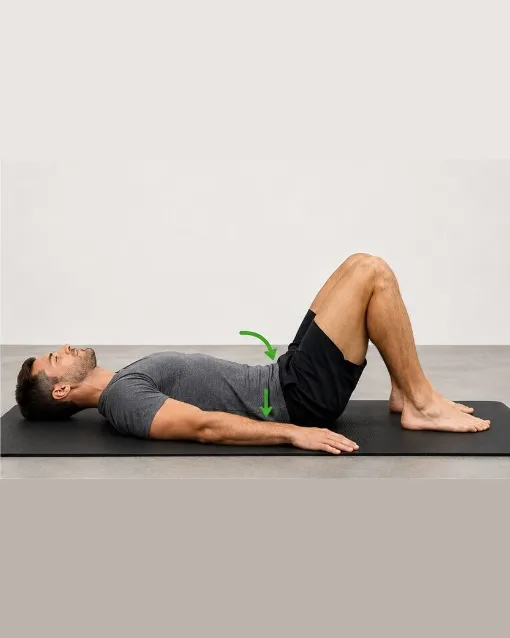
How to do it
- Lie on your back with knees bent, feet flat and relaxed, ribs quiet.
- Notice the small natural arch under your low back.
- Exhale and gently tilt the pelvis backward without forcefully pressing the spine into the mat.
- Keep the ribs down and the abs lightly braced — do not push with the feet.
- Hold for 2–5 seconds, then return to a comfortable neutral position and repeat.
Form cues
- Exhale without holding your breath.
- Keep the feet relaxed and avoid gripping the glutes hard.
- Stop if the drill increases back pain.
- Hold without tensing or squeezing the neck.
Why this exercise helps
The posterior pelvic tilt drill practices awareness and control of the relationship between the pelvis and lower back. A gentle exhale and abdominal effort initiate the motion without relying on a hard push from the feet or an aggressive glute squeeze. Because the drill is performed lying down, the load and balance demand are low, making the movement easier to explore. It can be used as an introductory motor-control exercise before more demanding trunk or hip work, but it is not a test of ideal posture and the lower back does not need to remain flattened during daily life.
Stop or modify if
- Pushing down with the feet to tilt the pelvis, which uses the hip extensors rather than the abdominals.
- Forcefully pressing the entire spine flat onto the mat rather than allowing a gentle backward rotation from the pelvis.
- Holding the breath during the hold instead of breathing evenly for the full 2–5 seconds.
Modifications and progressions
- Reduce the hold to 2 seconds if maintaining 5 seconds causes straining, breath-holding, or lower-back discomfort.
- Use a smaller tilt and return to a comfortable neutral position if flattening the low back feels strained.
Muscles worked
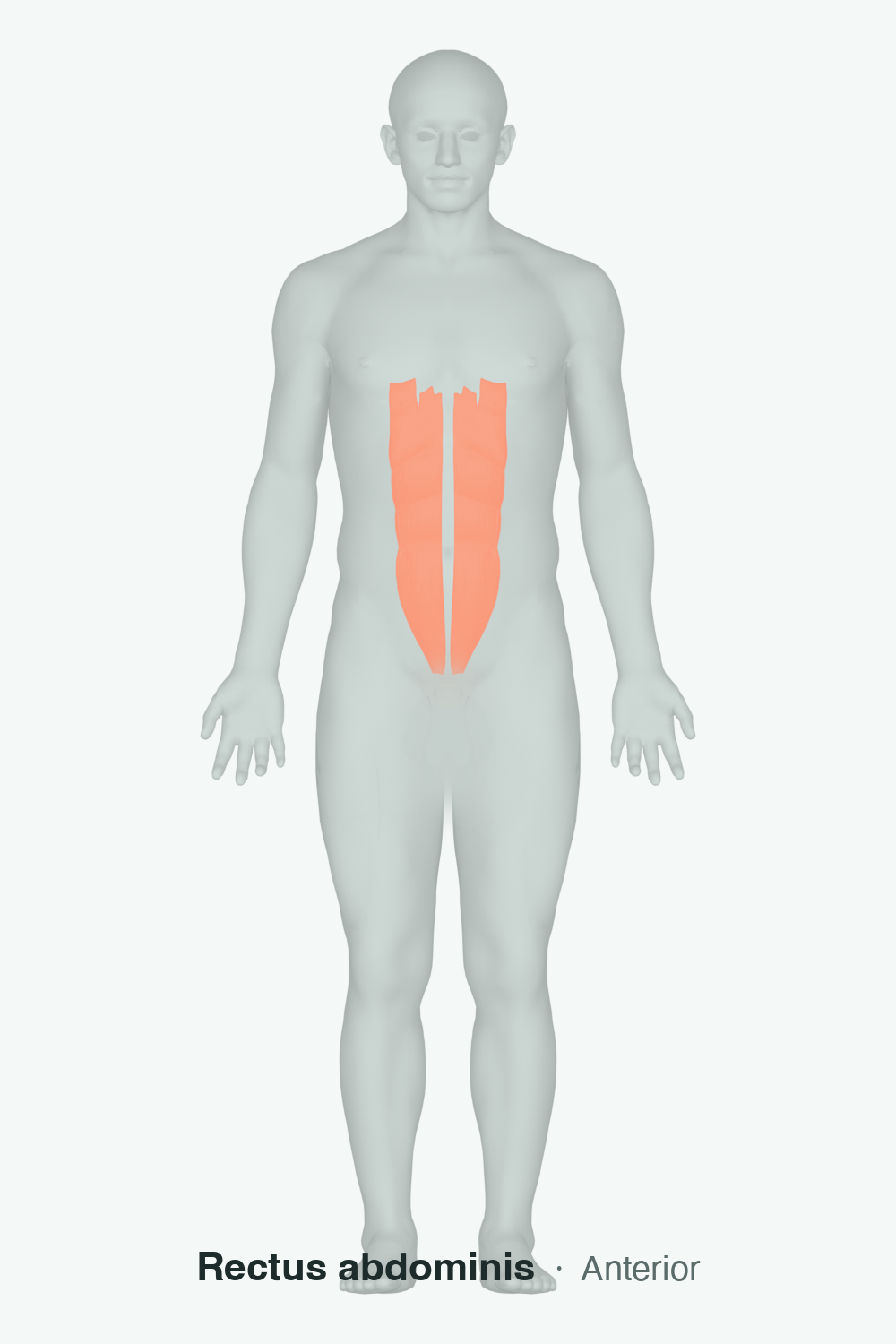
Strengthens: abdominals
Part of a program
Part of Lower-Body Posture Reset
This exercise is one move. Lower-Body Posture Reset puts it in a plan — so you know what to do, in what order, and how much, week by week.
- Sequenced & dosed — the right exercises, in the right order, at the right volume.
- Progresses with you — difficulty ramps as you get stronger, not on a fixed calendar.
- Personalized — built around the specific limiter actually holding you back.
- Tracks your progress — see what's working and adjust over time.
Free · a quick assessment finds your starting point
Related exercises
Frequently asked questions
What is this drill for?
The posterior pelvic tilt drill is a motor-control exercise that teaches a small backward rotation of the pelvis with abdominal support. It can help you explore pelvic and lower-back position before more demanding trunk or hip exercises. It does not correct posture on its own and is not a diagnosis or treatment.
What should I feel, and how do I know I'm doing it correctly?
You should feel a gentle engagement of the lower abdominals as the pelvis tilts backward and the small arch under the low back reduces. The movement is subtle—the spine should not be pressed forcibly flat. If you mainly feel it in your feet, glutes, or thighs, shift the initiation to the abdominals: exhale, gently draw the lower belly in, and let the pelvis follow.
How often should I practice the pelvic tilt drill?
Follow the sets and reps shown on this page or prescribed in your program. If a weekly frequency is not specified, defer to your practitioner's guidance. This is a low-load awareness drill; consistent practice within the recommended schedule is more valuable than adding sessions beyond what is programmed.
When should I stop or seek advice?
Stop if the drill increases or provokes lower-back pain, radiating leg pain, numbness, or tingling. Mild effort in the abdominals is expected; pain anywhere is not. If symptoms develop or worsen during or after the drill, stop the exercise and consult a qualified health professional before continuing.