Supine Lower-Back Ball Release
mobilizelumbareasypassive
1 × 30s per side
The posture scan does not measure thoracic kyphosis, lordosis, or flat-back posture directly. This exercise may still help mobility and strength that support overall alignment — it is wellness education, not a diagnosis.
How to do it
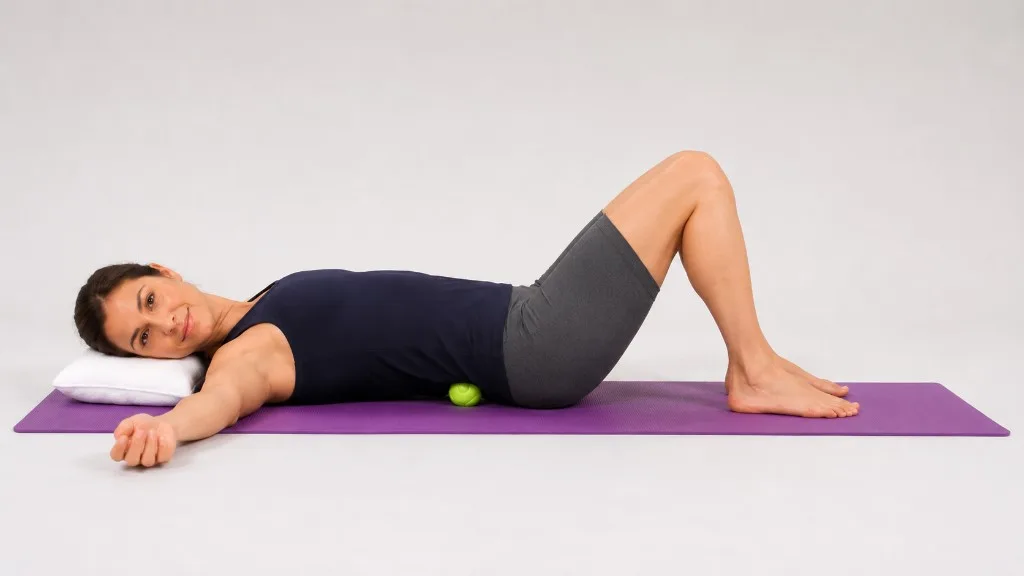
- Lie on your back with your knees bent and feet flat; use a small pillow if needed to keep the neck comfortable.
- Place a soft tennis or massage ball under the muscle on one side of the lower back, leaving clear space beside the spine.
- Settle only enough weight onto the ball to create tolerable pressure and breathe slowly.
- Lift your hips to reposition the ball rather than dragging it, then repeat on the other side.
Form cues
- Do not place the ball on the spine, pelvis or lower ribs.
- Keep pressure light and stay below the bottom rib.
- Stop for sharp pain, abdominal discomfort, numbness, tingling or symptoms traveling into a leg.