Scapular Depression (Elevated Shoulder)
2 × 10 reps
A seated shoulder-blade depression drill using stable armrests for feedback and light resistance.
An illustration is coming soon. Follow the step-by-step instructions below.
How to do it
- Sit tall with elbows bent ~90 degrees resting on chair arms.
- Press the elbows down into the armrests, driving the shoulder blades down.
- Alternatively, with elbows extended, push down to try to lift the body slightly off the seat.
- Finish by actively stretching the neck muscles on the elevated side (lateral flexion away).
Form cues
- Pull the shoulder down away from the ear
- Strengthen depressors to inhibit the elevators
Why this exercise helps
Pressing into stable armrests while allowing the shoulders to move gently away from the ears practices shoulder-blade depression under light resistance. The lower trapezius, serratus anterior, latissimus dorsi, and other shoulder-girdle muscles may contribute depending on arm position and effort. The drill can help someone learn the movement before more demanding support exercises, but a raised shoulder in a photograph does not prove that one muscle is overactive or another is weak. Keep the neck relaxed and use the same comfortable control on both sides unless an individual program directs otherwise.
Stop or modify if
- Shrugging the shoulder up before pressing it down, which reinforces the elevation pattern. Start from a neutral position and depress directly.
- Pressing down with the whole arm rather than initiating from the shoulder blade. Think 'shoulder blade slides down the ribcage' rather than 'push the arm down.'
- Forcing one shoulder lower than the other. Use a small controlled movement and avoid chasing visual symmetry during the set.
Modifications and progressions
- If no armrest chair is available, sit on the edge of a firm surface with hands placed beside the hips and push down through the heels of the hands.
- For a harder progression, use slightly more arm pressure without lifting the body, provided the shoulders and neck remain comfortable.
Muscles worked
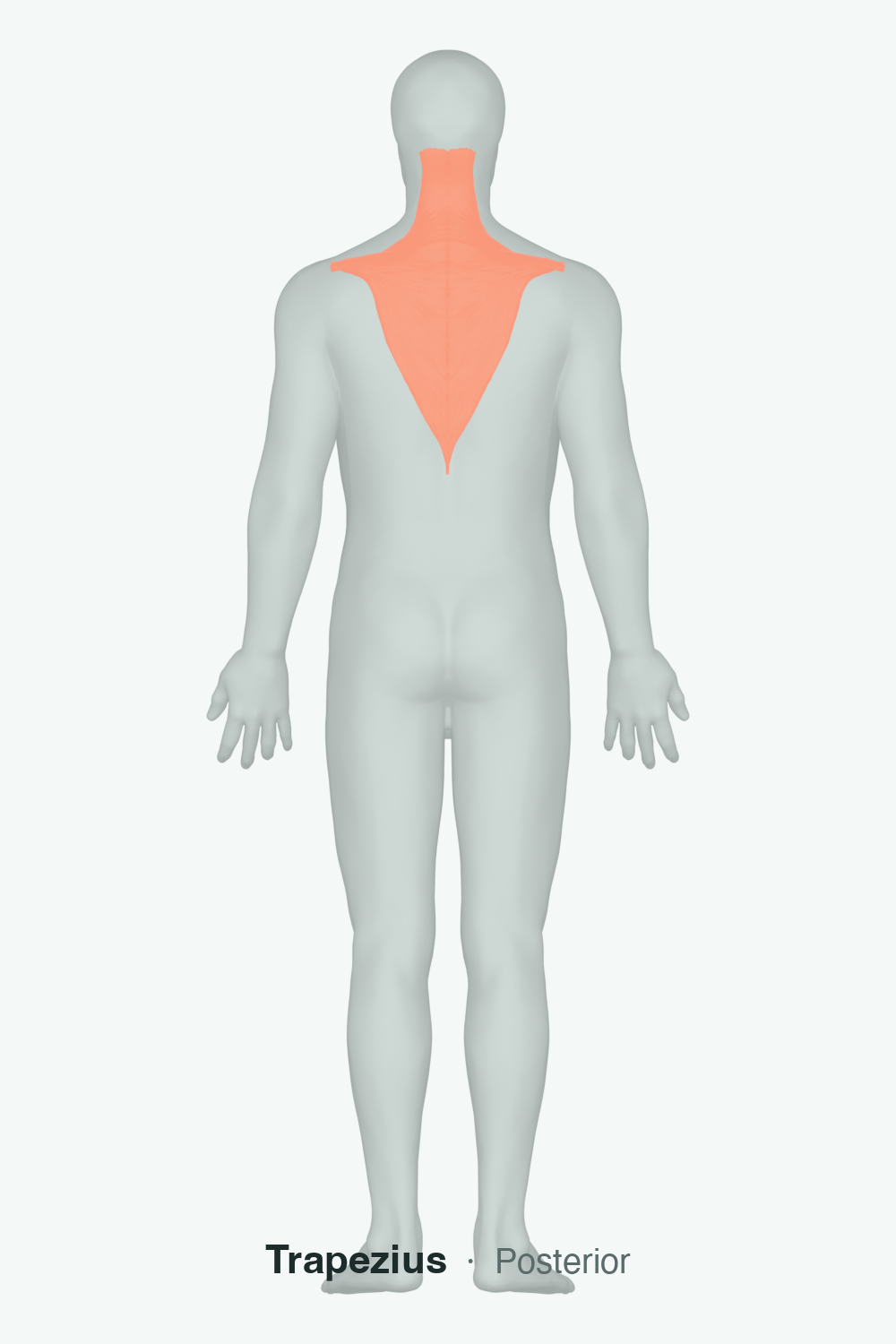
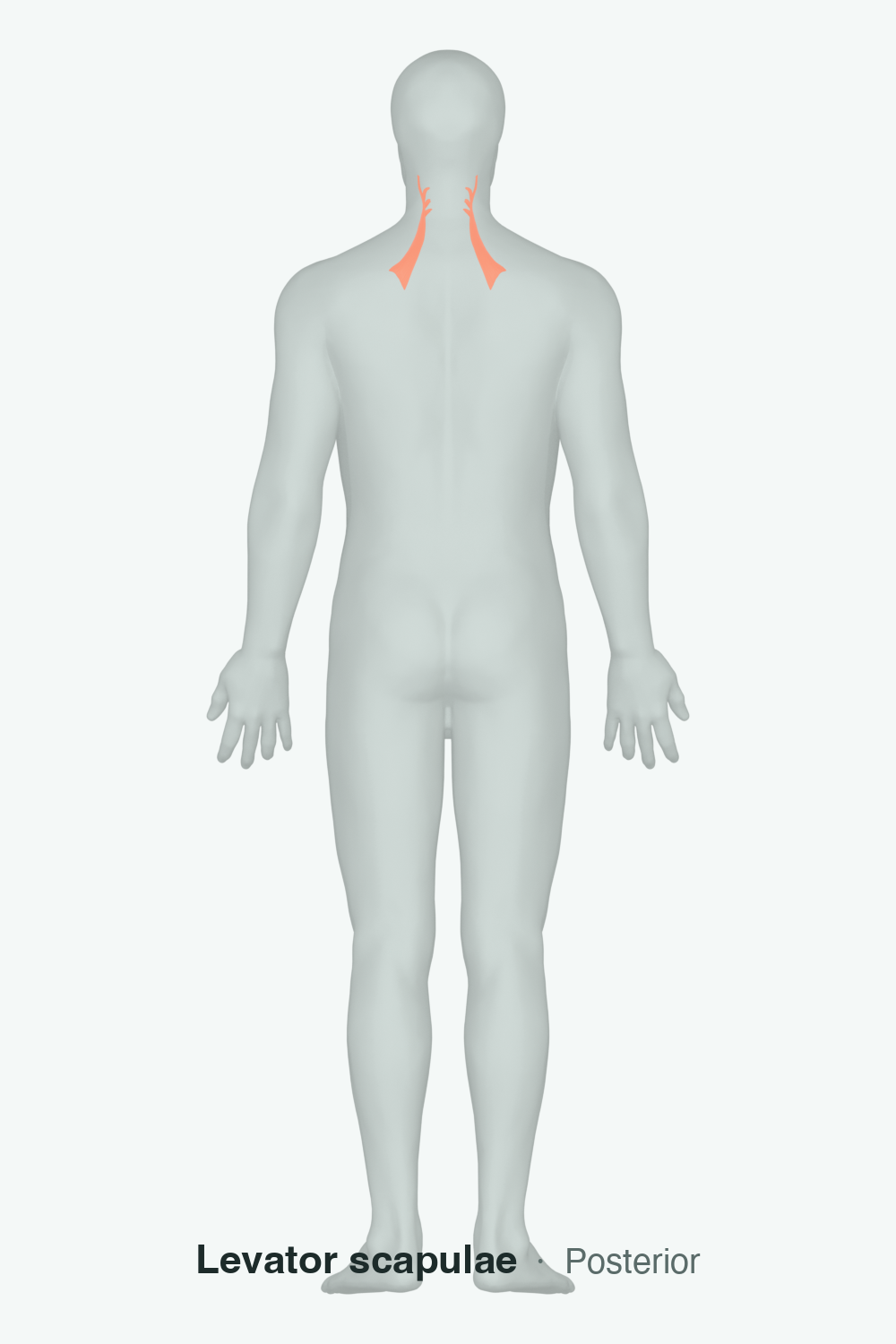
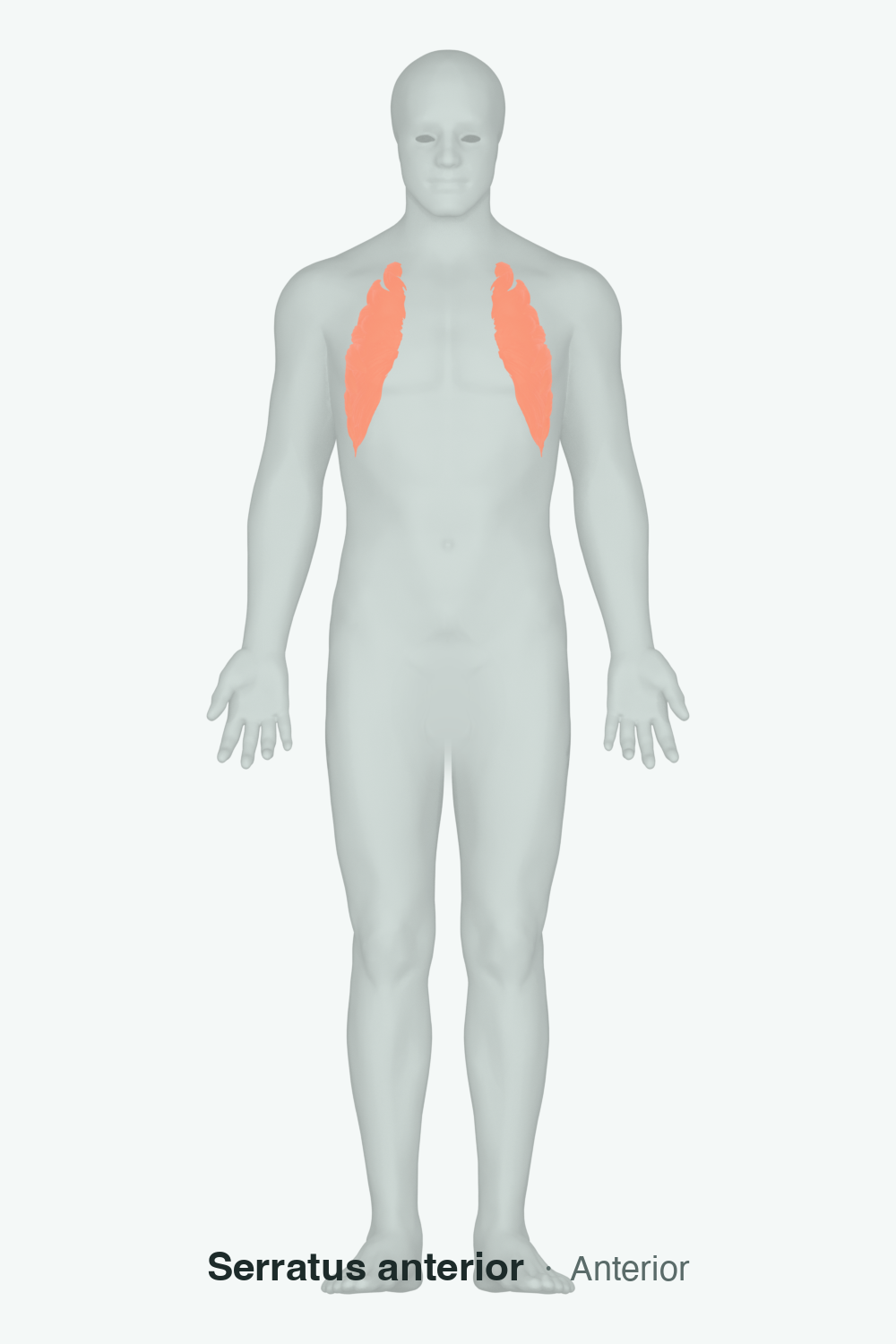
Stretches: upper trapezius, levator scapulae
Strengthens: lower trapezius, serratus anterior