Foot Doming
3 × 8 reps, hold 8s per side
A short-foot exercise that lifts the arch without curling the toes, building intrinsic foot-muscle control for standing and walking.
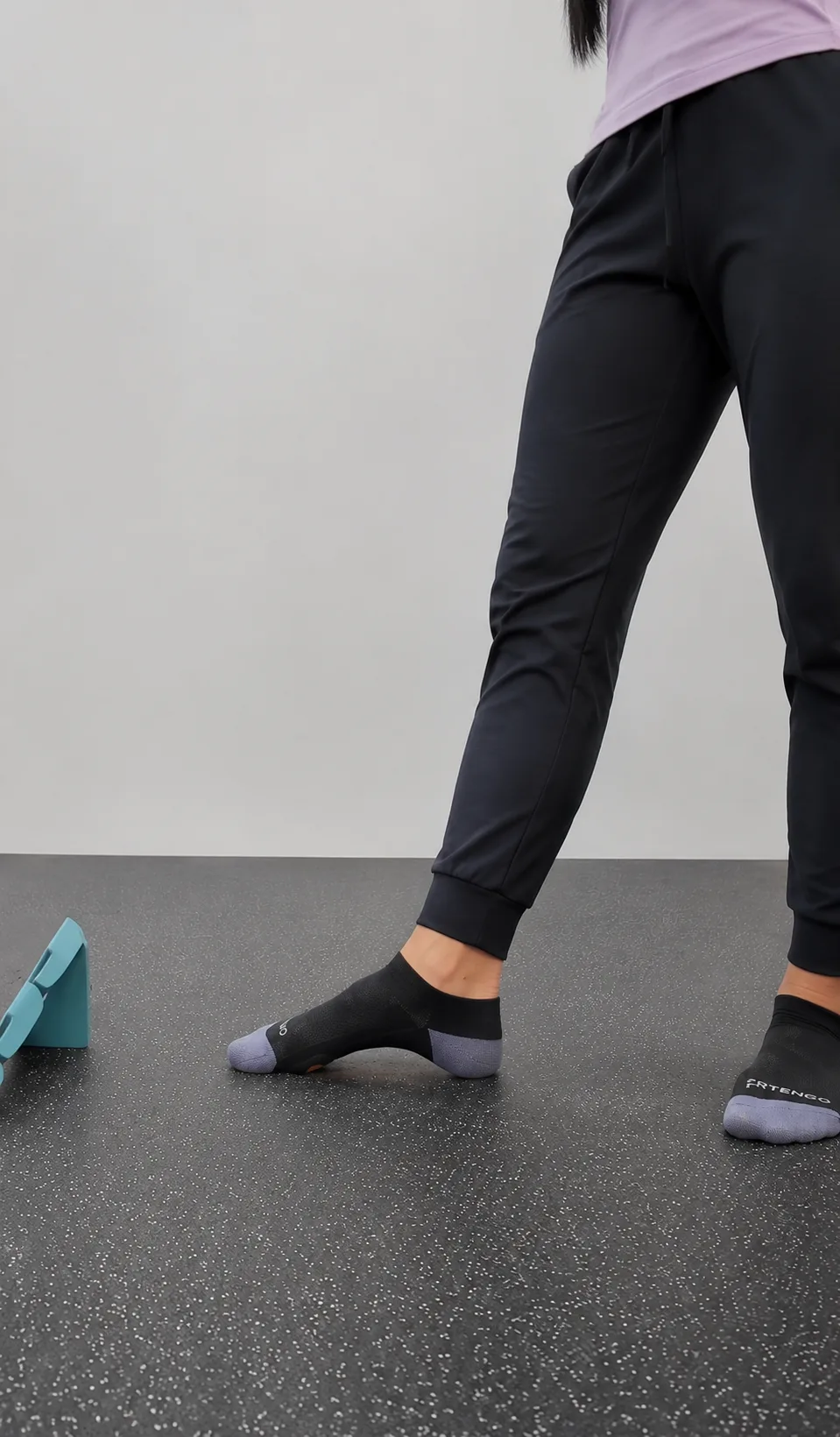
How to do it
- Stand with one foot slightly forward and keep the heel, the base of the big toe and the base of the little toe in contact with the floor.
- Relax and lengthen the toes without pressing them forcefully into the floor.
- Without curling the toes, gently draw the ball of the foot toward the heel to lift the arch.
- Hold the domed position while keeping all three foot-contact points grounded and the ankle centered.
- Release slowly, repeat, then change sides.
Form cues
- Keep the toes long and relaxed.
- Shorten the foot without lifting the heel or toe joints.
- The arch lift may be subtle — do not force a dramatic movement.
- Maintain pressure through the heel and both sides of the forefoot.
- Use a gentle contraction and stop for sharp foot or ankle pain.
Why this exercise helps
Foot doming trains the intrinsic foot muscles that help support the arch and control the foot during standing, walking and running. Gently drawing the ball of the foot toward the heel creates a short-foot position while the heel and toes stay grounded. Practising this action can improve active arch control and may be one part of a broader program for overpronation or lower-leg loading, but it does not permanently reshape the foot or address every cause of shin pain.
Stop or modify if
- Curling or gripping the toes to lift the arch. Keep every toe long and relaxed against the floor.
- Rolling onto the outside edge of the foot. Maintain contact through the heel and the bases of the big and little toes.
- Lifting the heel or toe joints from the floor. Shorten the foot subtly while keeping all three contact points grounded.
- Using so much effort that the foot cramps. Reduce the contraction and focus on a small, controlled arch lift.
Modifications and progressions
- Begin seated with the foot flat on the floor to reduce the amount of body weight on the working foot.
- Practise one foot at a time and use a wall or sturdy chair for balance when progressing to standing.
- Use a shorter hold or a gentler contraction if the arch cramps, then build duration gradually.
- Prioritise relaxed toes and stable contact points rather than a dramatic lift — the arch movement may be subtle.
Muscles worked
Strengthens: intrinsic foot muscles
Related exercises
Frequently asked questions
Should my toes curl during foot doming?
No. Keep the toes long and in contact with the floor while the ball of the foot draws gently toward the heel. If the toes curl, reduce the effort and practise seated.
Where should I feel foot doming?
You should feel a gentle contraction through the arch and sole rather than gripping in the toes. Stop if the exercise causes sharp foot or ankle pain.
Can foot doming correct flat feet or overpronation?
It can improve active control and endurance of muscles that support the arch, but foot posture is influenced by many factors. It should not be treated as a guaranteed structural correction.