Alternating Toe Control
2 × 10 reps per side
A neuromuscular foot drill that trains the big toe and lesser toes to move independently, building intrinsic foot muscle control.
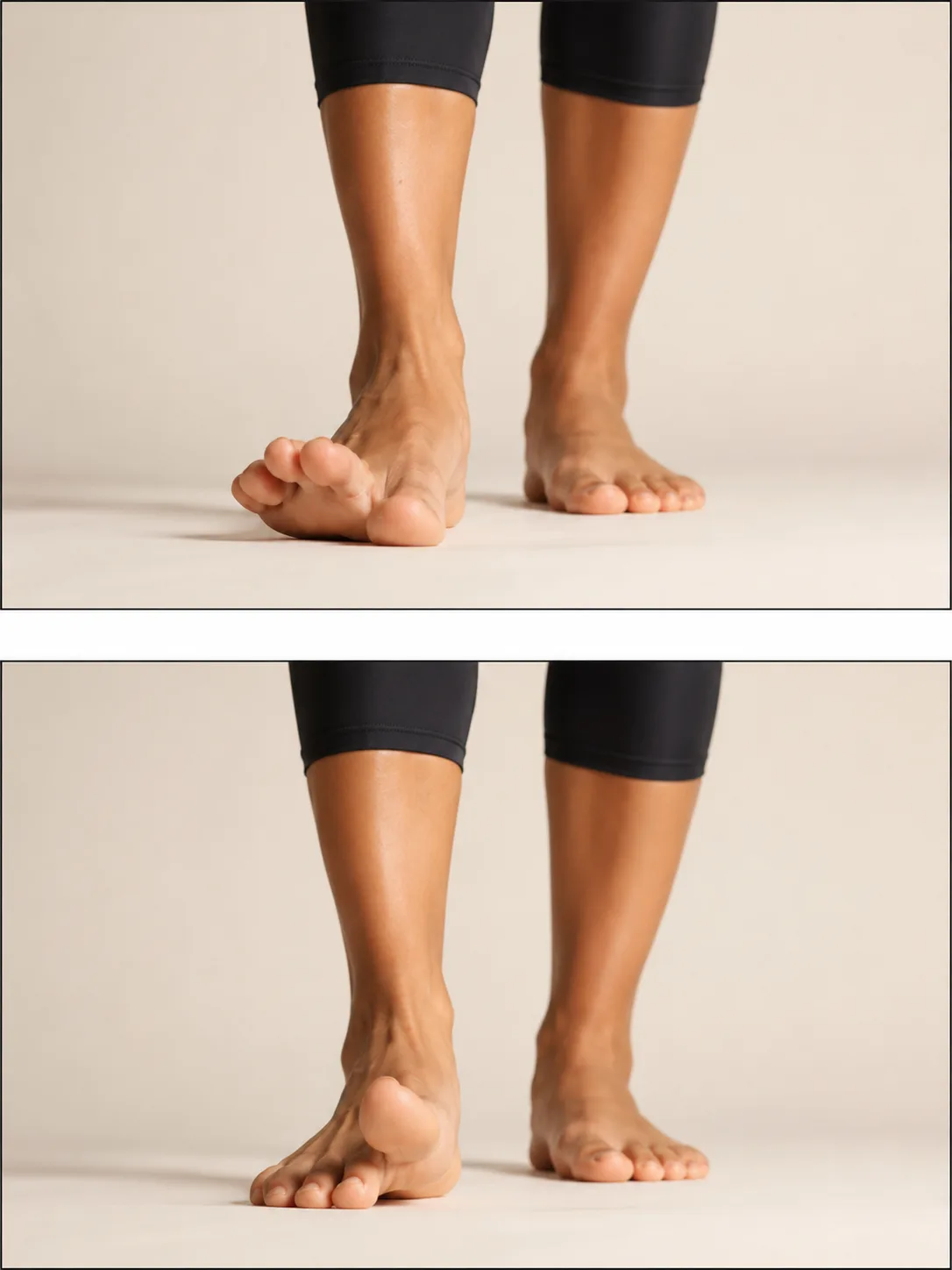
How to do it
- Stand or sit with your foot flat and relaxed.
- Press the big toe down while lifting the other four toes.
- Then reverse: keep the big toe lifted while pressing the four smaller toes down.
- Move slowly and deliberately to build independent control of your toes.
Form cues
- Keep the heel and both sides of the forefoot in contact with the floor.
- Lift the toes rather than curling or gripping them.
- Start seated if the foot rolls inward or outward while standing.
Why this exercise helps
Healthy foot function relies on independent activation of the intrinsic foot muscles, which stabilize the arch and control toe contact during walking and standing. When toes habitually move as a unit rather than independently, the foot tends to rely on passive structures—such as the plantar fascia and ligaments—for stability instead. Practicing deliberate, alternating big-toe-down and lesser-toes-down patterns trains the short foot muscles to produce movement in isolation. Starting seated reduces the balance demand so attention can stay fully on the movement quality of the toes rather than on staying upright.
Stop or modify if
- Gripping or curling the toes downward instead of pressing them flat. The goal is controlled downward contact with the toe lying flat against the floor, not a claw-like grip.
- Allowing the whole foot to roll inward or outward as compensation. Keep the heel, the base of the big toe, and the base of the little toe grounded throughout each repetition.
- Moving too quickly through the repetitions. Slowing down gives the nervous system time to distinguish and recruit the correct toe muscles rather than reverting to a global pattern.
Modifications and progressions
- Perform seated on a firm chair if the foot rolls or if standing balance limits concentration on the toe movement itself.
- Place a small mirror on the floor to watch the toes during the exercise and get visual feedback on which toes are actually moving versus compensating.
Muscles worked
Strengthens: intrinsic foot muscles