Lower-Calf Soft-Tissue Mobilization
1 × 90s per side
Hands-on soft-tissue mobilization of the lower calf to ease restrictions in the soleus and surrounding muscles before or after activity.
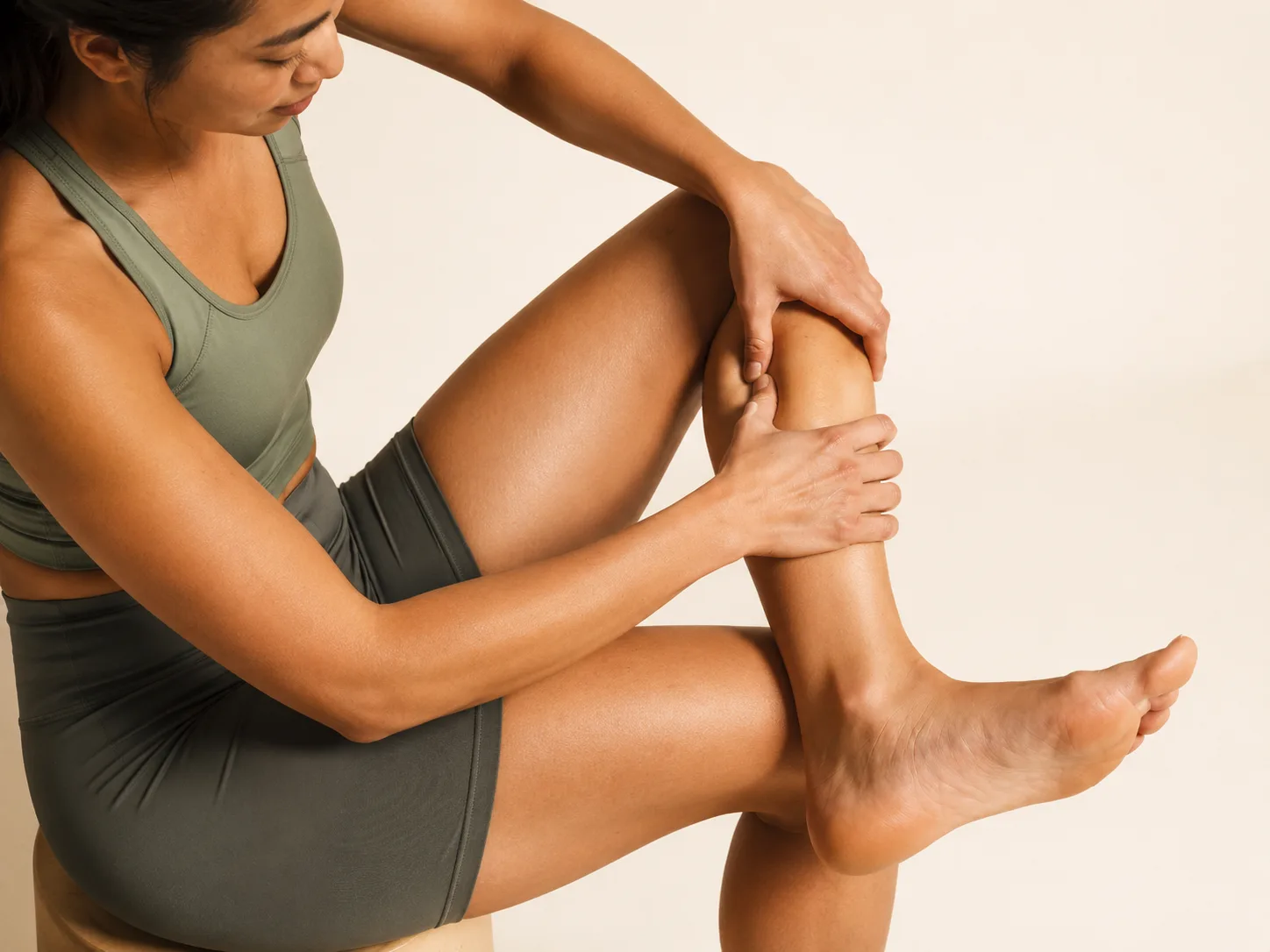
How to do it
- Sit with one ankle resting across the opposite thigh so you can reach the lower calf.
- Use the fingers or thumbs to apply moderate pressure to the muscular lower-calf region.
- Work slowly through the area while gently pumping the ankle up and down; do not try to isolate one deep muscle.
Form cues
- Avoid the Achilles tendon, shin bone and area directly behind the knee.
- Do not massage unexplained swollen, hot or red calf tissue.
- Stop for numbness, tingling, electrical pain, bruising or worsening symptoms.
Why this exercise helps
The soleus and surrounding lower-calf muscles contribute to push-off during walking and running, and restricted tissue in the area can influence how the ankle and calf load during movement. Applying moderate finger or thumb pressure to the muscular lower calf while gently pumping the ankle helps work through the soft tissue across a comfortable range. The technique targets the broad muscular area rather than trying to isolate a single structure, distributing the mobilization stimulus through the lower calf. Moving the ankle during pressure helps the technique reach more of the surrounding tissue rather than concentrating force on one spot.
Stop or modify if
- Working directly over the Achilles tendon rather than the muscular belly of the lower calf above it.
- Massaging swollen, hot, or red calf tissue—these signs may indicate a contraindication and warrant medical assessment.
- Applying pressure so firmly that discomfort crosses into pain; moderate pressure that allows the ankle to move is sufficient.
Modifications and progressions
- Use lighter fingertip pressure if the calf is particularly sensitive or if firm pressure causes sharp discomfort.
- Hold static gentle pressure without pumping the ankle if the combined movement causes discomfort.
- Shorten the session to 60 seconds per side if 90 seconds feels too long for the area.