Medial-Calf Soft-Tissue Mobilization
1 × 90s per side
Gentle soft-tissue mobilization of the medial-calf region beside the inner shin, addressing tightness in the lower leg without bone pressure.
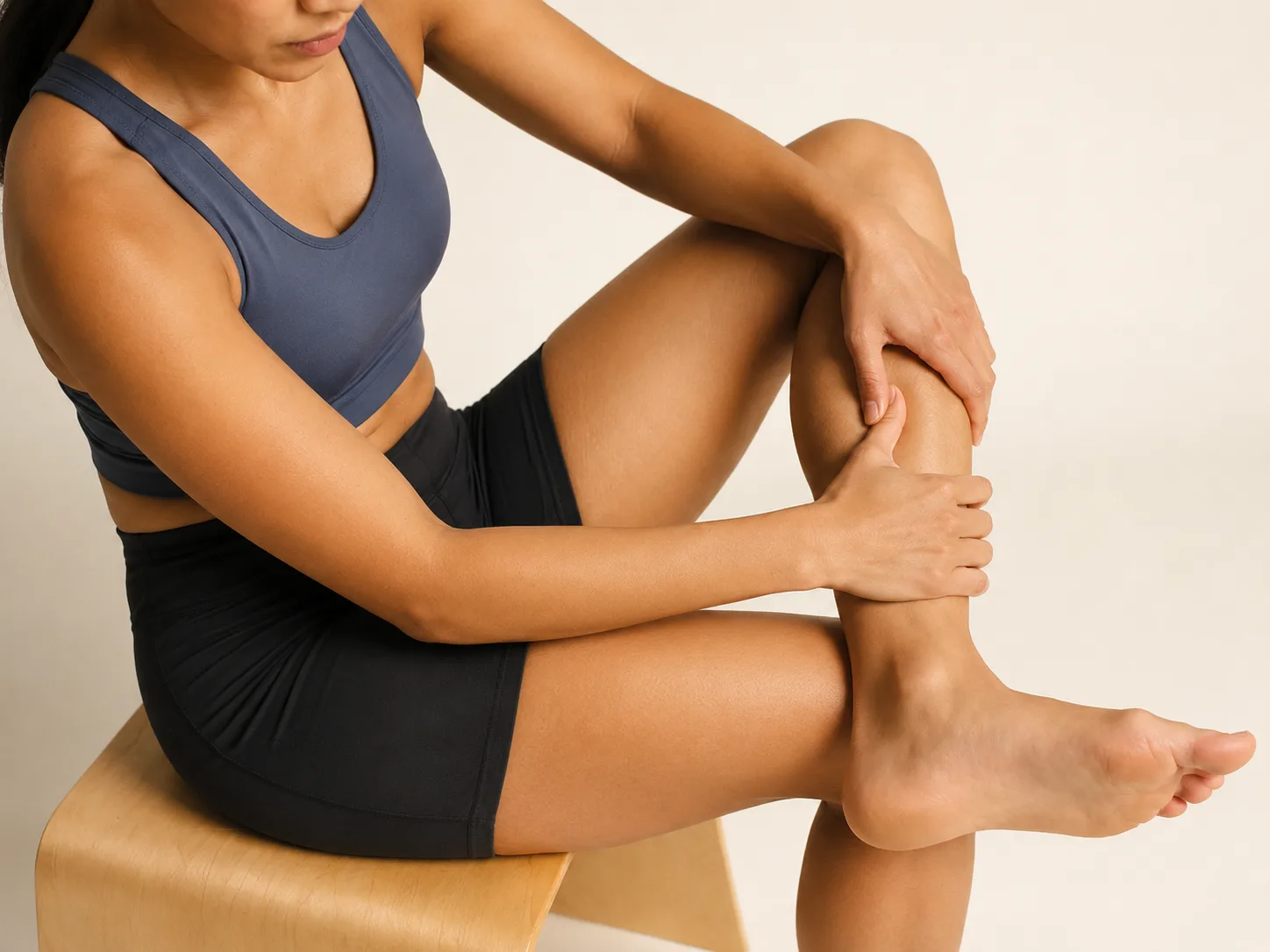
How to do it
- Sit with one ankle resting on the opposite thigh.
- Use a soft ball or the fingers on the muscular tissue beside—not on—the inner shin bone.
- Work slowly through the medial-calf region without claiming to isolate one deep muscle.
- Use gentle pressure while moving the ankle through a comfortable range.
Form cues
- Work the soft muscular area just behind the inner edge of the shin, not on the bone.
- Avoid strong pressure behind the inner ankle or near the knee.
- Stop for numbness, tingling, electrical pain or bruising.
Why this exercise helps
The tibialis posterior and neighboring deep medial-calf muscles assist with arch control and ankle stability during walking, running, and standing. Tightness or restricted tissue in this region can influence ankle movement and lower-leg loading. This mobilization uses gentle ball or finger pressure to the muscular area beside the inner shin bone—not on the bone itself—while the ankle is moved through a comfortable range. The combination of pressure and movement helps work through the soft tissue without claiming to isolate a single deep muscle. It is not a diagnostic tool and does not replace clinical assessment.
Stop or modify if
- Pressing directly onto the inner shin bone instead of the muscular tissue just beside it.
- Applying pressure behind the inner ankle where nerves and vessels pass—keep work in the muscular mid-calf area.
- Using excessive force expecting faster results; firm pressure that reproduces sharp pain is not appropriate.
Modifications and progressions
- Use fingertips instead of a ball for lighter, more controlled pressure across the medial-calf area.
- Skip the ankle movement and apply static gentle pressure only if moving the ankle increases discomfort.